

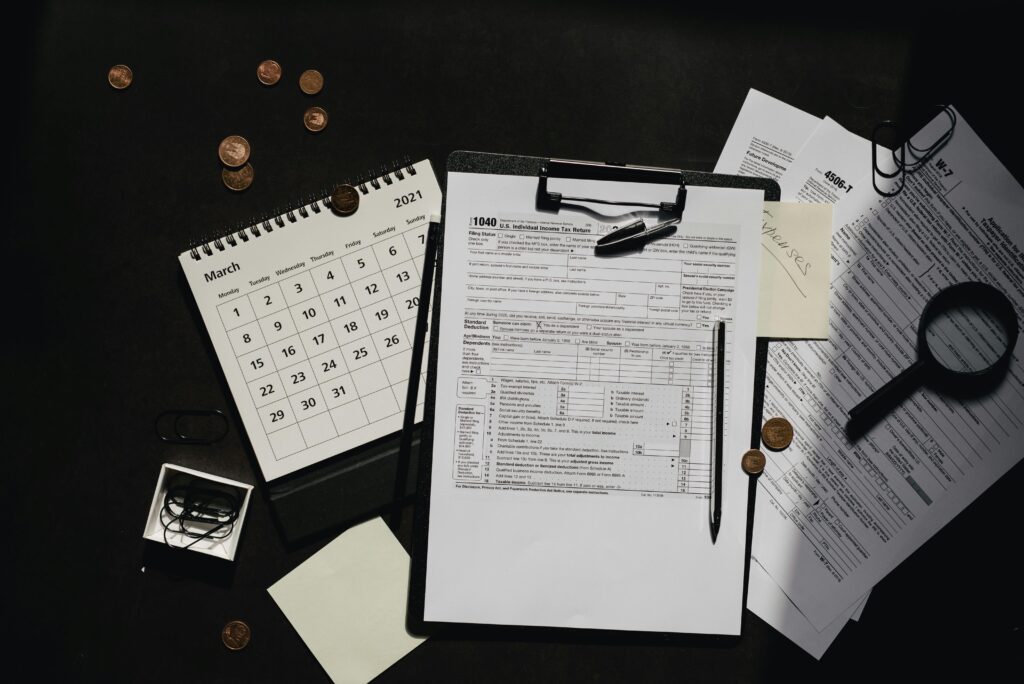
Timelines matter. A letter from IRS often comes with a strict response date, so mark your calendar immediately to avoid additional penalties. Image: Leeloo The First/Pexels
Introduction
Walking to your mailbox and finding a letter from IRS is a universal source of anxiety for Americans. Your heart sinks, your palms might get sweaty, and your mind immediately jumps to the worst-case scenario. Did I make a mistake? Do I owe thousands of dollars? Am I going to jail?
First, take a deep breath. You are not alone. Millions of notices are mailed out by the Internal Revenue Service every year. While legitimate concern is healthy, panic is not helpful. The vast majority of these letters are not about audits or criminal investigations. Often, a letter from IRS is simply a notification about a change to your account, a request for more information, or even a notice that you are owed a larger refund than you calculated.
However, ignoring the envelope is the worst thing you can do. The IRS has strict timelines, and failing to respond can turn a minor fix into a major financial headache. In this guide, we will decode what your letter from IRS actually means, how to spot scams, and the exact steps you need to take to resolve the issue.
Why Am I Getting a Letter from the IRS?
One of the most common questions people ask is: Why am I getting a letter from the IRS?
The IRS generally does not initiate contact with taxpayers by email, text messages, or social media channels to request personal or financial information. The postal service is their official method of communication. You might receive a letter from IRS for several reasons, ranging from benign to serious:
You have a balance due: This is the most common reason. You filed your return, but you did not pay the full amount, or interest has accrued.
Refund adjustment: The IRS changed your refund amount (either up or down) because of a math error or a mismatch in records.
Identity verification: They need to verify that you are actually the person who filed the return to prevent fraud.
Information request: They need more documentation to support a claim you made, such as a specific deduction or credit.
Delays: They are simply notifying you that processing your return is taking longer than the standard 21 days.
If you are confused about refund delays or adjustments, it is helpful to understand the process. You can read more about Tax Topic 152 refund information here.
Common Types of Notices You Might Receive
Not every letter from IRS carries the same weight. Identifying the code in the top right corner of the notice is your first step in decoding the message.
The CP2000 Notice
This is not a formal audit, but it feels like one. This notice means the income you reported on your return does not match the income reported to the IRS by your employer or bank (via W-2s or 1099s). It is a proposed adjustment to your tax liability.
The Audit Letter
An audit letter is less common but requires immediate professional attention. This notification means the IRS intends to examine your books and records to verify that your tax return is correct. If you are worried about how far back they can look, you should check out this guide on how far back the IRS can audit you.
The Certified Letter
If you receive a certified letter from IRS, pay close attention. The IRS uses certified mail when they need legal proof that you received the document. This is typically reserved for “Statutory Notices of Deficiency” (giving you 90 days to petition the Tax Court) or “Final Notices of Intent to Levy.” Ignoring a certified letter from IRS usually leads to bank levies or wage garnishments.
Specific Letters Explained: EIN, Lock-In, and Verification
Readers often search for very specific types of correspondence. Let’s address three complex situations that generate a lot of questions.
What is a Lock In Letter from the IRS?
What is a lock in letter from the IRS? This is a specific directive sent to employers regarding an employee’s tax withholding.
If the IRS determines that you are not having enough income tax withheld from your paycheck to cover your tax liability, they may send a “lock-in letter” (Letter 2800C) to your employer. This letter dictates the withholding arrangement your employer must use for you. Once this happens, you cannot decrease your withholding rate unless the IRS approves it. It essentially “locks in” a higher tax rate to ensure you pay what you owe throughout the year.
The Verification Letter
Sometimes, the IRS halts a refund because they suspect identity theft. They will send a verification letter (often Letter 5071C or 4883C). This letter from IRS asks you to go online or call a specific number to prove you are who you say you are. You cannot get your money until you complete this step.
How to Get 147c Letter from IRS (and the EIN Letter)
Business owners often panic when they lose their Employer Identification Number (EIN). They need an EIN letter from IRS (often the original CP575 notice) to open a bank account or apply for loans. If you lost that original letter, you need a replacement, known as the 147c letter.
Here is how to get 147c letter from IRS:
- Call the IRS Business & Specialty Tax Line at 1-(800) 829-4933.
- Operate between 7:00 a.m. and 7:00 p.m. local time.
- Select the option for EIN information.
- Answer security questions to prove you are authorized for the business.
- Ask the agent to send you a 147c letter. The agent can often fax it to you immediately if you are near a secure fax machine, or they will mail it.
Steps to Take When You Receive a Letter
When that letter from IRS arrives, follow this protocol to protect your rights and your wallet.
Read the entire notice carefully. Do not just look at the dollar amount. Read the explanation of why they sent it.
Compare it with your records. Pull out your tax return for that year. Did you actually make the error they are claiming? If they say you missed a W-2, check your files.
Check for Gift Tax Issues. Sometimes letters arise from large financial transfers. If you have been generous with assets, ensure you understand the rules. You can review the annual gift tax exclusion for 2026 and the broader lifetime gift tax exemption guide to see if you are compliant.
Respond by the deadline. Most letters have a strict “response date.” Missing this kills your ability to appeal.
Pros and Cons of DIY vs. Hiring a Pro
Should you handle a letter from IRS yourself? That depends on the severity of the notice.
| Feature | Handling it Yourself (DIY) | Hiring a Tax Professional |
|---|---|---|
| Cost | Free (just your time/postage). | Fees vary ($500 – $5,000+). |
| Effort | High. You must call the IRS and write letters. | Low. They handle communication. |
| Risk | Moderate. You might say the wrong thing. | Low. They know the legal limits. |
| Best For | Math errors, identity verification, small balances. | Audits, large debts, unfiled returns. |
If you are unsure where to turn, it is wise to look at the top-rated services. You can compare the best tax relief companies here to find a partner that fits your needs.
Recommended Tax Relief Companies
If the letter from IRS indicates a debt you cannot pay, or an audit you are afraid to face, professional help is vital. Based on our reviews, here are trustworthy options for different needs:
1. For Fast Action on Levies:
If your letter threatens a bank levy, Priority Tax Relief is known for quick intervention. They focus on stopping collection actions immediately.
Read our full review: Priority Tax Relief Review.
2. For Debt Settlement:
If you owe a significant amount and hope to settle for less (Offer in Compromise), Alleviate Tax has a strong track record of negotiating reductions for qualified clients.
Read our full review: Alleviate Tax Review.
3. For Contractors and Freelancers:
Gig workers often receive a letter from IRS regarding underreported 1099 income. 1099 Tax Problems specializes specifically in this area, helping independent contractors navigate self-employment tax issues.
Read our full review: 1099 Tax Problems Review.
4. For Comprehensive Audit Defense:
If you are facing a complex audit, Tax Group Center offers a team of attorneys and enrolled agents who can represent you before the IRS, ensuring you do not get steamrolled during the examination.
Read our full review: Tax Group Center Review.
A Critical Warning: Is it Fake?
We cannot discuss receiving a letter from IRS without mentioning fraud. Scammers are getting smarter. They send letters that look very official, often referencing a “Distraint Warrant” or “Public Judgment.”
According to the Federal Trade Commission (FTC), a clear sign of a scam is a demand for payment via gift cards, wire transfers, or cryptocurrency. The real IRS will never demand payment method specifics like that. Also, the real IRS usually allows you to appeal taxes. Scammers demand immediate payment without questions.
If your letter directs you to a website that is not an irs.gov address, or asks you to call a number that does not match the official numbers on the IRS website, proceed with extreme caution.
Final Verdict
Receiving a letter from IRS is never the highlight of anyone’s week. However, it is a manageable event if you strip away the emotion and focus on the facts. Remember that a notice is simply an initiation of a conversation. Whether it is a simple math correction or a more serious audit notification, the mechanism for resolving it is defined and accessible.
Do not let the envelope sit on your counter unopened. The “ostrich strategy” of burying your head in the sand is the only guaranteed way to lose against the IRS. Open the letter, identify the code, and decide if you can write a response yourself or if you need to bring in the heavy artillery of a tax professional.
By taking immediate action, you protect your bank account, your credit score, and your peace of mind.
 1099 Tax Problems
 Alleviate Tax
 Five Star Tax Resolution
 Priority Tax Relief
 Tax Group Center
 Tax Relief Advocates