Some companies pay us when you click their button. Paying partners are labeled and can be listed first.Some companies pay us. Partners are labeled.Advertiser disclosure
OTC and prescription hearing aids from $99 to $2,498 a pair, compared on trial length, warranty and access to a licensed professional, plus the symptoms that call for a doctor first.
By BestGuide Editorial Team, Editorial Team. See their work.Published December 9, 2025Updated October 17, 2026This page was compiled from primary sources: company disclosures and terms, the BBB and regulators. Our ratings method is described on the methodology page.
Jabra Enhance is our top pick for most adults with mild to moderate hearing loss: its FDA-cleared self-fitting OTC aids cost $1,195 to $1,995 per pair (as listed October 2026) and include a 100-day trial, a 3-year warranty and 3 years of remote audiology. To choose, start with a hearing test, then compare trial length, warranty and support; pick a prescription option like ZipHearing if your loss is severe or you have red-flag symptoms.
Our top picks
Best overall for mild to moderate hearing lossJabra EnhanceThis company pays BestGuide when you connect with it through our site. Verified partners are scored on our partner verification program and can be listed first. Payment never changes what we report about fees, terms or complaints.BestGuide Score: 4.8 out of 5. Set by our editorial team from published factors such as cost, credentials, reputation, customer experience, services and guarantees. Verified partners are scored on our partner verification program and can be listed first; they are always labeled BestGuide Partner.Price$1,195 to $1,995 per pairTypeOTC, FDA-cleared self-fitting
Best for lifetime remote audiology support and a choice of battery or rechargeableAudicusThis company pays BestGuide when you connect with it through our site. Verified partners are scored on our partner verification program and can be listed first. Payment never changes what we report about fees, terms or complaints.BestGuide Score: 4.6 out of 5. Set by our editorial team from published factors such as cost, credentials, reputation, customer experience, services and guarantees. Verified partners are scored on our partner verification program and can be listed first; they are always labeled BestGuide Partner.Price$1,698 to $2,498 per pairTypeOTC
Best budget pick for a choice of stylesCeretone Hearing AidsThis company pays BestGuide when you connect with it through our site. Verified partners are scored on our partner verification program and can be listed first. Payment never changes what we report about fees, terms or complaints.BestGuide Score: 4.6 out of 5. Set by our editorial team from published factors such as cost, credentials, reputation, customer experience, services and guarantees. Verified partners are scored on our partner verification program and can be listed first; they are always labeled BestGuide Partner.Price$129.99 to $499TypeOTC
This guide is for adults who think they have hearing loss and want to know whether over-the-counter (OTC) aids are enough or whether they need a professional fitting. We compared companies, from budget online sellers to a prescription discount network and a national clinic chain.
Your first decision is OTC or prescription, and it shapes the price more than any brand does. After that, the details that separate a good buy from a frustrating one are the trial length and what a return actually refunds, the warranty and loss coverage, and whether a licensed professional can adjust the aids for you. Original Medicare does not pay for hearing aids, so most buyers pay out of pocket or with an HSA or FSA.
Below you will find each pick's price, battery life, trial and warranty, a cost breakdown, red-flag symptoms that call for a doctor first, coverage options and free hearing screenings.
Best overall for mild to moderate hearing loss: Jabra EnhanceThis company pays BestGuide when you connect with it through our site. Verified partners are scored on our partner verification program and can be listed first. Payment never changes what we report about fees, terms or complaints.
4.8/5
Price
$1,195 to $1,995 per pair
Type
OTC, FDA-cleared self-fitting
Battery
Rechargeable
Why we picked it. Jabra Enhance pairs OTC pricing with something most OTC brands skip: a licensed audiology team that can program the aids from your audiogram and adjust them remotely for 3 years. Its 100-day trial with no restocking fee and 3-year warranty are among the longest terms we compared.
More details, pros and cons
Warranty
3 years, with loss and damage coverage
App and Bluetooth: Yes, app control, streaming, Bluetooth LE Audio and Auracast ready
Pros
3 years of remote audiology and unlimited adjustments included
100-day trial with full refund and free return shipping
3-year warranty with loss and damage coverage
Financing and FSA/HSA cards accepted
Cons
Costs more than budget OTC brands like MDHearing or Ceretone
Battery hours per charge not published
OTC only, so not built for severe or profound loss
Skip it if: You have severe hearing loss or red-flag ear symptoms, or you want in-person fittings, since prescription aids from an audiologist suit you better.
More about Jabra Enhance
Jabra combines advanced audio engineering with hearing care, offering top tier connectivity, streaming and remote adjustments. Best for tech oriented adults.
Best for lifetime remote audiology support and a choice of battery or rechargeable: AudicusThis company pays BestGuide when you connect with it through our site. Verified partners are scored on our partner verification program and can be listed first. Payment never changes what we report about fees, terms or complaints.
4.6/5
Price
$1,698 to $2,498 per pair
Type
OTC
Battery
Disposable batteries or rechargeable
Why we picked it. Audicus includes free lifetime audiology support and unlimited reprogramming, which is rare at online prices. It is also one of the few online brands that still offers a disposable-battery option, plus a nearly invisible CIC model.
More details, pros and cons
Warranty
2-year manufacturer warranty
App and Bluetooth: Yes, universal Bluetooth streaming (iPhone and Android), up to 2 active connections
Pros
Free lifetime audiology support and reprogramming
100-day trial
Battery or rechargeable choice on Omni models
Discreet CIC option (Mini 2)
Cons
Rechargeable costs extra ($50 per ear)
Warranty is 2 years, shorter than Jabra Enhance or ZipHearing
Loss replacement and supplies sit behind a paid add-on plan
Skip it if: You want the lowest possible price, since budget OTC brands cost a fraction as much.
More about Audicus
Audicus offers modern OTC devices with app controls and remote programming. Best for adults who want convenience, flexibility and an all online experience.
Best budget pick for a choice of styles: Ceretone Hearing AidsThis company pays BestGuide when you connect with it through our site. Verified partners are scored on our partner verification program and can be listed first. Payment never changes what we report about fees, terms or complaints.
4.6/5
Price
$129.99 to $499
Type
OTC
Battery
Rechargeable
Why we picked it. Ceretone covers more styles than most budget brands, from a tiny in-canal aid to a behind-the-ear model, and its top seller costs $299 per pair. The 100-day trial gives you as long to decide as brands that cost five times more.
More details, pros and cons
Warranty
12 months
App and Bluetooth: Only on some models (Beacon has app and Bluetooth); Core One Pro has no app
Pros
Low prices, starting at $129.99
100-day trial with free return shipping
Several styles, including a nearly invisible in-canal model
Controls on the charging case, no phone needed on Core One Pro
Cons
12-month warranty, the shortest tier we compared
No audiologist programming; preset programs on most models
App and streaming only on select models
Skip it if: You need Bluetooth streaming on a small aid or want a professional to program the aids to your audiogram.
More about Ceretone Hearing Aids
Ceretone Hearing Aids offers several low-cost OTC devices that deliver excellent value for the price. The brand provides both manual and app-based options designed for users seeking simple daily amplification. While noise reduction capabilities are modest compared to premium brands, Ceretone remains a highly-rated, affordable entry-level solution for those on a strict budget.
HearingLife runs 600+ hearing centers where you can get a hearing test and be fitted the same day, and its AfterCare program includes cleanings, adjustments, repairs and disposable batteries for the life of the aid. Oticon aids bought there carry 3 years of repair and loss coverage.
AudioNova provides clinical hearing care with diagnostic testing, personalized fittings and long term support. Ideal for users who want professional guidance and a wide selection of prescription devices.
Lexie: Lexie entered a wind-down (assignment for the benefit of creditors) in July 2026; its app was removed October 8 and customer support is scheduled to end October 22, 2026.
Eargo: Eargo entered a wind-down in July 2026; its app shuts off and customer support is scheduled to end October 22, 2026.
YesHearing: YesHearing’s website was offline when we checked on October 11, 2026, so we could not confirm it is taking orders.
Bose Hearing Aids: Bose stopped making and selling its SoundControl hearing aids in 2022 and moved the technology to Lexie, which began winding down in July 2026. Bose.com no longer has a hearing aid page.
Lucid Hearing: Lucid’s website has been offline since May 2026 and owners report that Sam’s Club, its main seller, stopped warranty repairs after handing its hearing centers to NationsBenefits. We don’t recommend buying Lucid now.
OmniHear: OmniHear’s site names no company, its domain was registered in June 2025, we found no FDA listing under its name, and its own pages contradict themselves on price, shipping and reviews. We can’t recommend it.
AmpliHear: AmpliHear’s own site says the product is not approved by the FDA, we found no FDA listing, the BBB rates the seller D+, and its checkout shows a one-aid price with an add-on where it advertises a pair.
Soundwave: Soundwave hearing aids aren’t for sale right now: Since about April 2026 Soundwave’s store has shown only an “Opening Soon” page, its models were sold out by December 2025, and its app hasn’t been updated since April 2024. We found no closure announcement, but you can’t buy Sontro aids from the company today.
How we chose
We compared each company on price per pair, OTC or prescription status, style, battery type and life, trial and return terms, warranty, app and Bluetooth support, and access to professional help. Prices and terms come from each company's official website, checked October 11, 2026. Rules on OTC eligibility, red-flag symptoms, coverage and tax treatment come from the FDA, Medicare.gov, NIH (NIDCD), the VA and the IRS. We did not test the devices. Where a company did not publish a fact, or its site was offline, we say so. Read our full methodology.
How much hearing aids cost
What you pay depends mostly on one choice: over-the-counter (OTC) aids you fit yourself, or prescription aids fitted by a licensed professional. Among the brands we compared, OTC pairs run from about $100 to $2,500, while prescription pairs from a discount network start around $2,500 and climb past $4,500, as listed October 2026. The NIH notes that hearing aids range from hundreds to several thousand dollars, and that a higher price does not guarantee a better fit for you.
Preset or app-adjusted aids, phone or chat support, 45 to 100 day trial, 1-year warranty where published
OTC with audiology (Jabra Enhance, Audicus)
$1,195 to $2,498
Remote programming from your audiogram, 100-day trial, 2 to 3 year warranty
Prescription via discount network (ZipHearing)
$2,498 to $4,598 (Phonak)
Local fitting, first-year follow-ups, 45-day trial, 3-year warranty; hearing test often extra
What bundled pricing covers
Many clinics and some online sellers bundle the device with fittings, follow-up visits, a warranty and supplies. Before you compare prices, list what each quote includes: the hearing test, programming, adjustment visits, warranty length, loss and damage coverage, and batteries or a charger. ZipHearing, for example, includes first-year follow-ups but lets providers charge $0 to $150 for the hearing test. Jabra Enhance includes 3 years of remote audiology.
Financing and tax-advantaged accounts
Most brands we compared offer monthly payment plans through lenders such as Bread Pay, Affirm, Cherry or CareCredit. Read the APR: Jabra Enhance lists rates from 0% to 34.99% APR depending on credit. Hearing aids, batteries, repairs and maintenance count as medical expenses under IRS rules, so you can usually pay with an HSA or FSA.
OTC vs prescription hearing aids: which do you need
The FDA created the OTC hearing aid category in October 2022. OTC aids are meant for adults 18 and older with perceived mild to moderate hearing loss, and you can buy them in a store or online with no exam, prescription or audiologist fitting. Any hearing aid that is not OTC is a prescription aid, sold through a licensed professional and suitable for any age and any degree of loss.
Signs OTC may fit you
You struggle to follow speech in noisy places or in groups
Phone calls are hard to hear
Listening wears you out
Others say your TV is too loud
Signs you need a professional
You cannot hear speech even in a quiet room
You do not hear loud sounds like power tools or engines well
You are under 18
OTC aids did not help enough
Red-flag symptoms: see a doctor first
The FDA requires OTC packaging to warn you to see a doctor, preferably an ear, nose and throat specialist (ENT), if any of these apply:
Your hearing changed suddenly in the past 6 months
Your hearing gets worse, then better again
You have worse hearing in one ear, or ringing in only one ear
Blood, pus or fluid came out of your ear in the past 6 months
Your ear is painful or uncomfortable
You feel dizzy or have vertigo
You have a lot of earwax or think something is in your ear
Your ear has an unusual shape or was injured
Sudden hearing loss in particular needs prompt medical attention, so do not wait on a hearing aid order.
How to choose a hearing aid
Get a hearing test. A free online screener tells you whether to look further. An audiogram from an audiologist tells you how much loss you have and lets brands like Jabra Enhance and Audicus program aids to your results.
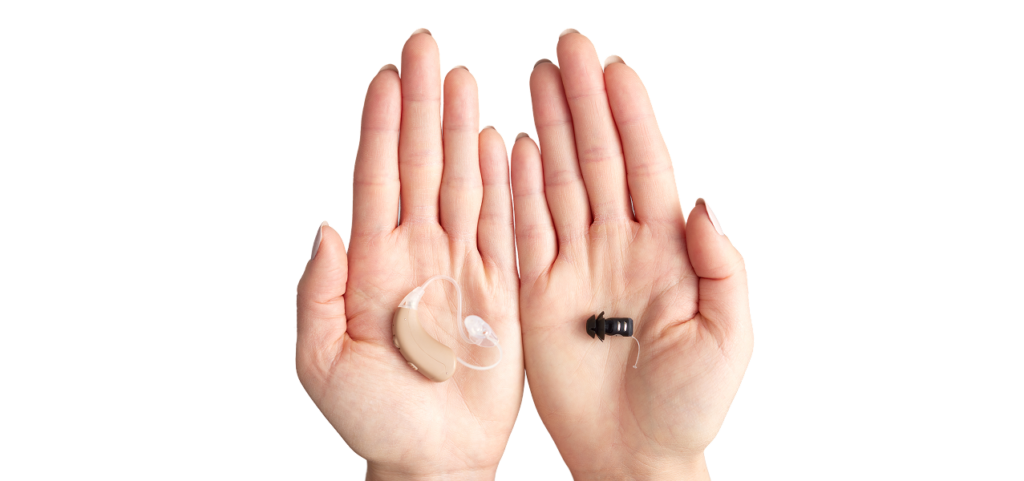
Pick a style. Behind-the-ear (BTE) and receiver-in-canal (RIC) aids are easier to handle and hold bigger batteries. In-the-canal and completely-in-canal (CIC) aids are nearly invisible but harder to adjust and have less room for features, per the NIH.
Choose rechargeable or disposable batteries. Rechargeable aids skip tiny battery changes; the brands we compared list about 15 to 24 hours per charge. Disposable batteries suit people who travel without easy charging. Audicus still offers both.
Check the trial and return window. Look for at least 45 days, ideally 100, and read what is refunded. MDHearing does not refund original shipping or accessories.
Look at support. Decide whether you want remote audiologist adjustments (Jabra Enhance, Audicus), phone and chat help (MDHearing, Ceretone) or in-person care (ZipHearing).
Decide if you need Bluetooth. Streaming calls and TV audio and app control are standard on Jabra Enhance and Audicus, but only on some budget models.
Compare warranties. Terms ranged from 1 year (MDHearing, Ceretone) to 3 years with loss and damage coverage (Jabra Enhance, ZipHearing).
Check the company is stable. Lexie and Eargo shut down app and warranty service in 2026. A long warranty only helps if the company is still around to honor it.
Does insurance or Medicare cover hearing aids
Original Medicare does not cover hearing aids or exams for fitting hearing aids, so you pay all costs. Medicare may cover a diagnostic hearing evaluation when your doctor orders it to help plan treatment.
Medicare Advantage (Part C): Some plans add hearing benefits Original Medicare does not cover. Call your plan and ask for the dollar allowance, which vendors you must use and how often the benefit renews.
Medicaid: Coverage for adults varies by state. For eligible children and young adults 21 and under, Medicaid pays for hearing loss diagnosis and treatment, including hearing aids, under the EPSDT benefit.
VA: All veterans enrolled in VA health care can get a full audiology evaluation. Specific eligibility rules apply to hearing aids, so ask your VA audiology clinic.
Federal employees (FEHB) and private insurance: Benefits differ by plan. Check your plan brochure for a hearing aid allowance, and ask whether it covers OTC aids and telehealth fittings before you buy.
HSA and FSA: Hearing aids, batteries, repairs and maintenance qualify as medical expenses under IRS Publication 502.
If your plan reimburses OTC aids, file the claim early. Jabra Enhance, for example, suggests completing its orientation soon after delivery so the claim can come back within its 100-day return window.
Red flags when buying hearing aids
“FDA registered” or “FDA certified” claims. The FDA says these phrases, and FDA logos on OTC packaging, may be misleading. Registration is not approval. Look for the words “OTC hearing aid” on the box.
“Medical grade” marketing. The phrase has no regulatory meaning for hearing aids. Judge the device by whether it is a legally marketed OTC or prescription hearing aid, its return window and its warranty.
Sound amplifiers sold as hearing aids. Personal sound amplification products (PSAPs) are for people with normal hearing who want sounds louder in places like hunting or birdwatching. They are not medical devices and are not meant to treat hearing loss.
Return policy fine print. The FDA does not require OTC sellers to offer a warranty, but packaging must state the return policy. Check whether shipping, accessories or a restocking fee come out of your refund, and whether you need a return authorization first.
Short trials. The FDA advises giving yourself enough time to test aids in different settings. A 30-day window can close before your brain adjusts.
Warranties tied to maintenance. MDHearing, for example, voids its warranty if you do not regularly change domes, tips and wax guards.
Companies in trouble. In 2026 Lexie and Eargo stopped accepting warranty claims and pulled their apps. Search the company name plus “closing” or “bankruptcy” before you buy, and pay by credit card for added dispute rights.
If an OTC hearing aid injures you or malfunctions, report it to the FDA through MedWatch or at 1-800-FDA-1088.
Free and low-cost help
Free hearing screenings online. The World Health Organization’s hearWHO app is a free digits-in-noise screener you can repeat over time. Jabra Enhance, Audicus, Ceretone and MDHearing also offer free online tests that take about 8 to 10 minutes.
Hearing Loss Association of America (HLAA). A national nonprofit with local chapters, a veterans virtual chapter and plain guides to OTC and prescription aids.
VA audiology. Enrolled veterans can get a full hearing evaluation, and eligible veterans can receive hearing aids through VA. Telehealth fittings and tinnitus care are available at many VA sites.
Medicaid for kids. Children and young adults 21 and under who qualify can get hearing aids through Medicaid’s EPSDT benefit, and states run early intervention and CHIP programs.
Medicare diagnostic testing. If your doctor orders a diagnostic hearing evaluation, Medicare may cover it even though it does not cover the aids.
Terms to know
OTC hearing aid
An FDA-regulated hearing aid adults 18 and older with perceived mild to moderate hearing loss can buy without an exam, prescription or professional fitting.
PSAP
A personal sound amplification product: an electronic amplifier for people with normal hearing, not a medical device and not meant to treat hearing loss.
Audiogram
A chart from a hearing test that shows the softest sounds you can hear at each pitch, used to program hearing aids.
RIC (receiver in canal)
A small behind-the-ear aid with the speaker placed in the ear canal on a thin wire, the style used by Audicus Omni and Ray.
BTE (behind the ear)
An aid whose case sits behind the ear and sends sound into the ear, used for mild to profound loss, per the NIH.
Tinnitus masking
Playing soft background sound through a device or hearing aid to make ringing or buzzing less noticeable.
Telecoil
A small magnetic coil in some hearing aids that picks up sound from compatible phones and induction loop systems in places like churches and airports.
Frequently asked questions
How much do hearing aids cost per pair?
Among the brands we compared, OTC hearing aids cost $99 to $2,498 per pair and prescription aids from a discount network cost about $2,498 to $4,598 per pair, as listed October 2026. Budget OTC brands like MDHearing ($197 to $597) sit at the low end. Prices that include audiologist support, such as Jabra Enhance ($1,195 to $1,995), sit in the middle.
Are OTC hearing aids any good?
They can be, for adults with perceived mild to moderate hearing loss. The FDA created the category to make hearing aids easier to get. They are not designed for severe or profound loss, because OTC aids have limited maximum output. If OTC aids do not help enough, the FDA advises seeing a hearing health care professional.
Can I buy hearing aids without a prescription?
Yes, if you are 18 or older and have perceived mild to moderate hearing loss. You can buy FDA-compliant OTC hearing aids in stores or online with no exam, prescription or fitting. If you are under 18 or have more severe loss, you need prescription hearing aids.
Do I need a hearing test before buying hearing aids?
Not for OTC aids, but it helps. A free online screener tells you whether OTC aids make sense, and an audiogram lets companies like Jabra Enhance and Audicus program aids to your exact loss. If you have red-flag symptoms like sudden loss, ear pain or one-sided hearing loss, see a doctor before buying anything.
Does Medicare cover hearing aids?
Original Medicare does not cover hearing aids or exams for fitting them, so you pay all costs. Some Medicare Advantage plans include a hearing aid benefit, so call your plan to ask about the allowance and approved vendors. Medicare may cover a diagnostic hearing evaluation your doctor orders.
How long do hearing aids last?
Audicus says its rechargeable aids and their built-in batteries are designed to last about 5 years. Actual life depends on care, moisture and earwax, which is why warranties like MDHearing’s require regular changes of domes and wax guards. Plan on replacing aids every several years as technology and your hearing change.
Are rechargeable hearing aids better than battery hearing aids?
Neither is better for everyone. Rechargeable aids save you from changing tiny batteries, and the brands we compared list about 15 to 24 hours per charge. Disposable batteries suit people who travel without reliable charging; Audicus offers both on its Omni models.
Can hearing aids help with tinnitus?
They can help some people. The NIH lists sound therapy devices, including hearing aids and combination devices that pair amplification with sound generation, among common ways to reduce tinnitus symptoms, though there is no cure. Ringing in only one ear is an FDA red flag, so see a doctor before relying on an OTC aid.
Can I use my HSA or FSA for hearing aids?
Yes. IRS Publication 502 lets you count hearing aids, batteries, repairs and maintenance as medical expenses. Jabra Enhance and Audicus both say they accept FSA and HSA cards.
What happens to my Lexie or Eargo hearing aids now?
Both companies began winding down on July 15, 2026. Their sites say your aids should keep working with on-device controls. The Lexie app was pulled October 8, the Eargo app is scheduled to shut off October 22, 2026, and new warranty claims closed September 15. Update to app version 9 and sync settings before the cutoff if you still can.
Sources (38)
Facts on this page come from company websites, government agencies and regulators, checked on the dates shown. Editorial standards
FDA: OTC Hearing Aids: What You Should Know (accessed October 11, 2026)
FDA: Hearing Aids (OTC vs prescription vs PSAP) (accessed October 11, 2026)
Medicare.gov: Hearing aids coverage (accessed October 11, 2026)
NIDCD (NIH): Hearing Aids (accessed October 11, 2026)
NIDCD (NIH): Tinnitus (accessed October 11, 2026)
IRS: Publication 502, Medical and Dental Expenses (accessed October 11, 2026)
U.S. Department of Veterans Affairs: Audiology (Houston VA) (accessed October 11, 2026)
World Health Organization: hearWHO app (accessed October 11, 2026)
Hearing Loss Association of America: Home (accessed October 11, 2026)
NIDCD (NIH): Over-the-Counter Hearing Aids (accessed October 11, 2026)
Jabra Enhance: Home (models and pricing) (accessed October 11, 2026)
Jabra Enhance: FAQ (accessed October 11, 2026)
Audicus: Omni 2 product page and lineup pricing (accessed October 11, 2026)
Audicus: Support Center (trial, warranty, battery) (accessed October 11, 2026)
Ceretone: Home (models and pricing) (accessed October 11, 2026)
Ceretone: Core One Pro product page (accessed October 11, 2026)
Ceretone: Fusion product page (warranty) (accessed October 11, 2026)
MDHearing: Home (models and pricing) (accessed October 11, 2026)
MDHearing: VOLT MAX product page (accessed October 11, 2026)
MDHearing: AIR product page (accessed October 11, 2026)
MDHearing: Warranty and Return Policy (accessed October 11, 2026)
Lexie Hearing: Important notice on wind-down, app, support and warranty (accessed October 11, 2026)
ZipHearing: Home (how it works, what is included) (accessed October 11, 2026)
ZipHearing: Phonak hearing aid prices (accessed October 11, 2026)
Yes Hearing: Home (archived June 16, 2026; live site returned 404 on October 11, 2026) (accessed October 11, 2026)
Eargo: Important notice on wind-down, app, support and warranty (accessed October 11, 2026)
Soundbright: Home (models, pricing, 45-day trial) (accessed October 11, 2026)
Soundbright: Horizon Pro product page (accessed October 11, 2026)
Soundbright: Mini product page (accessed October 11, 2026)
Soundbright: Refund Policy (accessed October 11, 2026)
audioXpress: Bose self-fitting hearing aids are now Lexie hearing aids powered by Bose (quotes Bose customer notice) (accessed October 11, 2026)
HearingLife: Home (locations, trial, warranty terms) (accessed October 11, 2026)
HearingLife: Hearing aid prices (accessed October 11, 2026)
HearingLife: AfterCare Program (accessed October 11, 2026)
LINNER: Saturn Series mini-CIC product page (accessed October 11, 2026)
LINNER: Mercury mini-RIC product page (accessed October 11, 2026)
LINNER: Clarity product page (accessed October 11, 2026)
BestGuide is free to use. Some companies on this page pay us when you visit their site or contact them through us. Compensation, along with our editorial review, may influence which companies we feature and the order they appear in. It doesn't change what our reviews say. Advertising disclosure