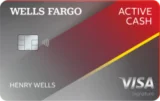
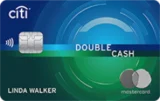
The best rewards credit card is the one that matches where you spend. For one simple card, Wells Fargo Active Cash and Citi Double Cash both pay 2% on everything with no annual fee. Heavy grocery and streaming spenders get more from Amex Blue Cash Preferred (6% at U.S. supermarkets on up to $6,000 a year, with a $95 fee after year one), and diners who travel get more from Amex Gold. Rewards pay off only if you avoid interest, so pay the balance in full each month.
This guide is for you if you already pay your card in full each month and want your everyday spending to earn more. If you carry a balance, interest will outweigh any reward, so skip to the alternatives section first.
The right card depends on where your money goes. A flat-rate card pays the same on everything and takes no effort. Category cards pay more on groceries, dining or streaming but cap or limit those rates. Points cards can be worth more for travel, at the cost of an annual fee and some homework. Fees only make sense when your extra rewards clearly beat what a no-fee 2% card would earn.
Below you will find eight cards compared on rewards, fees, welcome offers and intro APRs, plus a simple way to estimate a year of rewards and the costs that can cancel them out.
Company reviews
- Rewards rate
- 1.5%
- Annual fee
- $0
- Welcome offer
- $200
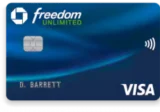
Why we picked it. It beats a basic 1.5% card when you dine out or shop at drugstores, adds a 15-month 0% intro APR, and charges no annual fee. The welcome bonus needs only $500 in spending.
More details, pros and cons
Pros
- No annual fee
- 3% on dining and drugstores on top of the 1.5% base
- 15-month intro APR on purchases and transfers
Cons
- 1.5% base rate is below the 2% flat cards
- 5% travel rate applies only through Chase Travel
- Balance transfer fee applies
Skip it if: Most of your spending falls outside dining and drugstores, where a 2% flat card earns more.
More about Chase Freedom Unlimited
The Chase Freedom Unlimited is a highly versatile card that pairs a strong flat-rate return with valuable bonus categories. It is an ideal everyday card that maximizes rewards on dining, drugstores, and general spending.
- Rewards rate
- 6%
- Annual fee
- $0
Why we picked it. No other pick pays 6% at U.S. supermarkets. A household that spends the full $6,000 a year on groceries earns $360 from that category alone, which covers the $95 fee several times over. It also includes a Disney streaming credit of up to $10 a month.
More details, pros and cons
Pros
- Highest grocery rate among our picks
- 6% on select U.S. streaming
- 3% on transit and U.S. gas
Cons
- $95 annual fee after the first year
- 6% grocery rate capped at $6,000 a year
- 2.7% foreign transaction fee
Skip it if: You spend less than about $2,400 a year at U.S. supermarkets, since below that a no-fee 2% card earns as much after Blue Cash Preferred's $95 fee.
More about Amex Blue Cash Preferred
The American Express Blue Cash Preferred stands out as a top-tier option for households. It delivers exceptional value on everyday spending, particularly for those who have significant grocery and streaming service expenses, easily offsetting its annual cost.
- Rewards rate
- 5%
- Annual fee
- $0
Welcome offer: Cashback Match: Discover matches all cash back earned in your first year
Why we picked it. Discover matches every dollar of cash back you earn in the first year, which effectively doubles the 5% categories to 10% for twelve months. A 15-month 0% intro APR and the lowest listed APR range among our no-fee picks add to its value.
More details, pros and cons
Pros
- No annual fee
- Lowest listed APR range among our picks
- Redeem cash back at any time
Cons
- 5% categories require activation each quarter and have a cap
- Only 1% outside the bonus categories
- Discover is accepted at fewer merchants abroad
Skip it if: You do not want to track and activate categories every quarter.
More about Discover it® Cash Back
Discover it Cash Back rewards proactive users with high returns in rotating quarterly categories. Its unique first-year match program effectively doubles all rewards earned, making it incredibly lucrative for new cardholders.
Show all 5 picks2 more, ranked 4 to 5

Best for dining and groceries with travel point transfers: Amex Gold
- Annual fee
- $325
Rewards rate: 4X at restaurants worldwide (up to $50,000 a year) and U.S. supermarkets (up to $25,000), 3X flights, 1X other
Why we picked it. Amex Gold earns Membership Rewards points at 4X on dining and groceries, and those points transfer to 20 airline and hotel partners. Its dining and Uber credits can offset much of the $325 fee if you already use those services.
More details, pros and cons
Credits: Up to $120 dining credit and $120 Uber Cash a year, enrollment required
Pros
- Points transfer to 20 travel partners
- Dining and Uber credits of up to $120 each a year
- No foreign transaction fees
Cons
- $325 annual fee
- Credits are issued monthly and tied to specific merchants
- Point value depends on how you redeem
Skip it if: You want simple cash back, or you will not use the monthly dining and Uber credits.
More about Amex Gold
The American Express Gold Card is a premium choice tailored for food lovers. It rewards heavy spending at restaurants and supermarkets with generous points, complemented by a suite of lifestyle and travel credits that justify its cost.
- Rewards rate
- 3%
- Annual fee
- $0
- Welcome offer
- $200
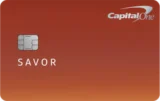
Why we picked it. Savor pays 3% across dining, entertainment, streaming and grocery stores with no annual fee, a wider 3% group than most no-fee cards offer. With no foreign transaction fee, it also works well abroad.
More details, pros and cons
Pros
- 3% on four everyday categories
- No annual fee or foreign transaction fee
- Rewards do not expire while the account is open
Cons
- Superstores like Walmart and Target do not earn the grocery rate
- Only 1% on other purchases
- 12-month intro APR is shorter than Chase's or Discover's
Skip it if: Most of your spending is outside food and entertainment.
More about Capital One Savor
The Capital One Savor card is an excellent no-annual-fee option for those who frequently dine out or seek entertainment. It provides uncapped, elevated rewards in categories that modern consumers spend on most.
Types of rewards credit cards
| Type |
How it works |
Our picks |
| Flat-rate cash back |
Same rate on everything |
Active Cash, Double Cash (2%), Quicksilver (1.5%) |
| Tiered categories |
Higher rates in fixed categories |
Freedom Unlimited, Savor, Blue Cash Preferred |
| Rotating categories |
5% in categories that change each quarter, activation required |
Discover it Cash Back |
| Transferable points |
Points move to airline and hotel partners |
Amex Gold |
How to choose a rewards credit card
- Add up your monthly spending by category from recent statements: groceries, dining, gas, streaming and everything else.
- Estimate a year of rewards for each card. Multiply each category by the card’s rate, and apply caps such as the $6,000 grocery cap on Blue Cash Preferred.
- Subtract the annual fee. A $95 or $325 card has to beat a no-fee 2% card after its fee.
- Count credits only if you use them. Monthly merchant credits are worth nothing if they go unused.
- Check your credit. Most of these cards target good to excellent credit. Several issuers offer a pre-qualification check that does not affect your score.
How to get the most from your rewards
- Pay the full statement balance every month so interest never cancels out your rewards.
- Use a category card where it earns the most and a 2% card for everything else.
- Activate rotating categories at the start of each quarter.
- Meet the welcome offer with normal spending, never by buying things you do not need.
- Enroll in monthly credits and set reminders to use them.
- Redeem at full value; cash back and statement credits are the simplest.
Fees and interest that can wipe out rewards
Variable APRs on our picks run from about 17.74% to 29.99% after any intro period, as listed October 2026. Carrying a $1,000 balance at those rates costs far more than the 2% you earn on it. Other costs to check:
- Annual fees. $0 to $325 among our picks.
- Balance transfer fees. They apply to every intro APR offer on transfers.
- Foreign transaction fees. 2.7% on Blue Cash Preferred; none on Savor, Quicksilver and Amex Gold.
You can read any card’s full agreement in the CFPB’s credit card agreement database before you apply.
Alternatives if you carry a balance
If you often carry a balance, a rewards card is the wrong tool. Consider a card with a long 0% intro APR and no rewards focus, a low-rate card from a credit union, or a balance transfer to pay down debt faster. If your debt feels unmanageable, a nonprofit credit counseling agency can review your budget and options at low or no cost. Be wary of anyone who promises to erase card debt for an upfront fee.
Terms to know
- APR
- The annual percentage rate charged as interest on balances you carry.
- Intro APR
- A temporary lower rate, often 0%, on purchases or balance transfers for a set number of months.
- Welcome offer
- A one-time bonus for meeting a spending requirement soon after opening the card.
- Rotating categories
- Bonus categories that change each quarter and usually require activation.
- Balance transfer fee
- A fee, usually a percentage of the amount moved, for transferring debt from another card.
- Foreign transaction fee
- A percentage charged on purchases processed outside the U.S.
- Transfer partner
- An airline or hotel program that accepts a card's points.