Sony’s OTC hearing aids, the CRE-E10, CRE-C10, and CRE-C20, were pulled from Sony’s U.S. website in early 2026, and WS Audiology confirmed in April that it and Sony had agreed not to renew the 2022 agreement that produced the line. For existing owners, the immediate question is practical: what happens to the warranty, the service support, and the accessories that came with the device?
The short answer is that the protections Sony purchasers were promised at the point of sale are still in force. The longer answer involves three separate layers, the manufacturer’s express warranty, the retailer’s return window, and the implied warranties that apply to every consumer product under federal and state law. Each behaves differently when a product line is discontinued.
Who actually honors a Sony hearing aid warranty now
WS Audiology (WSA) is the warranty holder, not Sony’s consumer-electronics arm. Sony and WSA structured the original 2022 partnership so that WSA, one of the world’s largest hearing aid manufacturers and the parent of Signia and Widex, handled the device technology, fitting support, and post-sale service. When HearingTracker confirmed the discontinuation in April 2026, a WSA spokesperson stated that warranty and service obligations would be honored for existing purchasers.
For owners, that means the contact path for a warranty claim runs through WSA’s hearing aid support channels and the retailer of record, not through Sony’s general electronics warranty system. If your device was purchased through Best Buy, Walmart, Amazon, or another authorized retailer, the retailer is your first stop for documenting the original purchase date; WSA is the second stop for repair or replacement.
What Sony’s standard OTC warranty covered
According to HearingTracker’s coverage of the lineup prior to discontinuation, Sony’s OTC devices shipped with a one-year warranty and a 45-day trial period, with an extended warranty available from Sony at the time of sale. The same documentation noted built-in safety features and standard hearing aid coverage for manufacturing defects.
The warranty is a written express warranty, which is the legal category covered by the federal Magnuson-Moss Warranty Act. Magnuson-Moss governs written warranties on consumer products and requires manufacturers to disclose terms clearly before purchase. Critically for Sony owners, the law does not let a manufacturer cancel an existing written warranty because the product line was discontinued. The promise made at the point of sale remains enforceable for its original duration.
Three layers of protection still apply
Federal warranty law and state consumer-protection law create three overlapping protections for any Sony hearing aid owner. Each layer covers a different gap.
| Layer | What It Covers | Who Enforces It |
|---|---|---|
| Express written warranty | Manufacturing defects within the stated warranty period (one year standard for Sony OTC) | WS Audiology (manufacturer) |
| Retailer return window | Returns within the original retailer’s return window (Sony’s published OTC trial period was 45 days) | The original authorized retailer |
| Implied warranties | Basic merchantability (the device must work for its intended purpose) under state law and the Uniform Commercial Code | State courts and state attorneys general |
*Implied warranty duration varies by state, with most states applying a four-year period for the warranty of merchantability under UCC Article 2.
For most owners, the express warranty from WSA is the layer that matters. The retailer window only applies to recent purchases. Implied warranties matter most if the device fails in a way the manufacturer disputes, in which case the state’s consumer-protection framework and the FTC’s enforcement of Magnuson-Moss provide the legal backstop.
What discontinuation does not do to your warranty
Discontinuing a product line does not, by itself, do any of the following:
- Shorten the duration of an existing written warranty.
- Eliminate the manufacturer’s obligation to repair or replace defective units within the warranty period.
- Cancel an extended warranty that was sold separately.
- Erase implied warranties under state law and the Uniform Commercial Code.
- Affect the FDA registration status of the device for the owner’s continued personal use.
The one practical issue discontinuation can create is supply. Replacement parts, charging cases, ear tips, and proprietary accessories rely on the manufacturer’s existing inventory. WSA has not publicly committed to a long-term parts supply timeline, so owners with the rechargeable CRE-C20 or CRE-E10 may want to source backup ear tips and cleaning tools while the supply chain is still active.
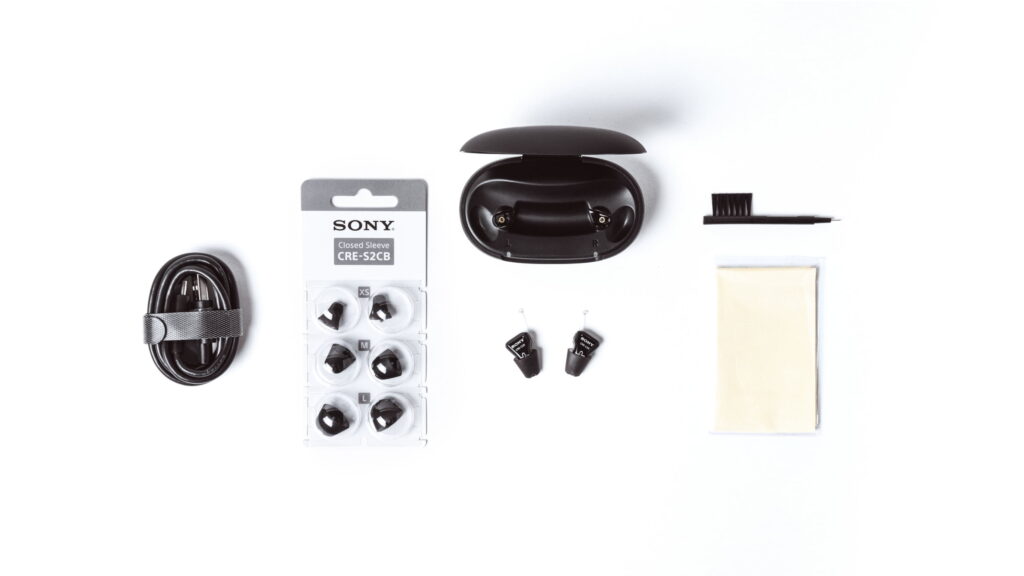
A complete Sony OTC hearing aid kit showing the charging case, replacement ear sleeves, USB cable, and cleaning accessories owners rely on for warranty service.
How to file a warranty claim on a discontinued Sony hearing aid
The process is the same one Sony purchasers followed before discontinuation, with one difference: the consumer-facing Sony hearing aid web pages no longer host the support flow. The steps are straightforward:
- Locate your original proof of purchase, including the retailer name, purchase date, and order number. The warranty period runs from the purchase date, not the manufacturing date.
- Contact the original authorized retailer first. Best Buy, Walmart, and Amazon were the largest U.S. sellers for the Sony OTC line. They can confirm purchase records and, if you are still within the retailer’s return window, may resolve the issue directly.
- If the retailer cannot help or the issue requires manufacturer repair, contact WS Audiology’s hearing aid support channels. The Sony hearing aid app and on-device support flows still route into WSA’s service system for existing customers.
- Document the issue with photos or short video, the model and serial number, and a brief description of when the problem started and what triggers it. This information is what WSA’s technical support team will request first.
- Keep written confirmation of every step. Email and chat logs are stronger documentation than phone calls, and they matter if a claim has to escalate to a regulatory or legal route.
If WSA refuses a valid warranty claim, the next escalation path is the Federal Trade Commission’s Magnuson-Moss enforcement framework and your state’s consumer-protection authorities, which the FTC documents directly. Most state attorneys general operate a consumer-protection complaint portal that can intervene with the manufacturer before litigation becomes necessary.
If the dispute escalates beyond what the FTC complaint process or your state attorney general can resolve, consulting a consumer-protection attorney is the next practical step. The Magnuson-Moss Warranty Act allows consumers to recover attorney’s fees in successful breach-of-warranty claims, which is what makes legal representation accessible in cases that would otherwise be uneconomical to pursue. You can get matched with a consumer-protection attorney through AttorneyReview to evaluate whether your situation supports a claim.
What to do if you bought a Sony hearing aid recently
If your purchase is recent enough that the retailer’s return window is still open, returning the device is usually the simplest option. Sony’s published policy on its OTC hearing aids included a 45-day trial period through authorized sellers. Some retailers offered longer windows; check the original sales receipt or the retailer’s online order history.
For purchases outside the return window but inside the one-year manufacturer warranty, the device should continue to function normally. If you are happy with the unit, no immediate action is needed. If you are not, the practical choice is between waiting out the warranty period with the existing device and selling or upgrading to a current-production OTC model. Our hearing aids buyer’s guide covers the brands currently competing for Sony’s shoppers.
Editor’s Choice
Looking for a Replacement?
If your Sony hearing aid is reaching the end of its useful life, the current OTC market offers options across every price tier. See how the leading brands compare on pricing, technology, and customer support.
Sony OTC warranty details by model
The three discontinued Sony models shipped with the same standard one-year manufacturer warranty, though physical components and accessory expectations differ between them.
| Model | Battery Type | Long-Term Parts Risk |
|---|---|---|
| Sony CRE-C10 | Disposable size 10 | Low. Size 10 batteries are an industry standard and widely available from third parties. |
| Sony CRE-C20 | Rechargeable (~28 hours) | Medium. Charging case and ear tips are Sony-specific; supply depends on WSA inventory. |
| Sony CRE-E10 | Rechargeable | Medium. Earbud-style charging case and ear tips are proprietary; backup accessories are worth securing while available. |
For a full breakdown of the three models, including pricing at the time of discontinuation and feature comparisons, see our Sony hearing aids review.
What to do next, based on where you are
If you are still inside the retailer’s 45-day trial window, return the device and shop the current OTC market with the price tier and form factor you wanted from Sony in mind. If you are inside the one-year manufacturer warranty but the device is working normally, no action is required, and your warranty rights remain enforceable through WSA. If your device has already failed or is failing now, document the problem, contact the original retailer, and escalate to WSA support if the retailer cannot resolve the claim. Owners outside both windows should evaluate whether to keep the working device or upgrade based on personal preference, not because the discontinuation creates a deadline.
Frequently asked questions
Is my Sony hearing aid warranty still valid after the discontinuation?
Yes. WS Audiology, the manufacturer of Sony’s OTC hearing aids, confirmed to HearingTracker in April 2026 that warranty and service obligations will be honored for existing purchasers. Discontinuing a product line does not cancel an existing written warranty under federal law.
How long does the Sony hearing aid warranty last?
Sony’s standard OTC hearing aid warranty was one year from the date of purchase, with an extended warranty available through Sony at the time of sale, according to HearingTracker’s coverage of the lineup. The clock runs from the purchase date, not the manufacturing date.
Who do I contact for a Sony hearing aid warranty claim now?
Start with the original authorized retailer (Best Buy, Walmart, Amazon, or wherever the device was purchased) to confirm purchase records. For repair or replacement requests, the manufacturer of record is WS Audiology, which handles service through its hearing aid support channels.
What is the Magnuson-Moss Warranty Act and why does it matter here?
The Magnuson-Moss Warranty Act is the federal law that governs written warranties on consumer products. It requires manufacturers to disclose warranty terms clearly and to honor those terms for their full stated duration. The law prevents a manufacturer from canceling a written warranty just because the product line is discontinued.
Can I still return a recently purchased Sony hearing aid?
Possibly. Sony’s published policy at the time of sale included a 45-day trial period through authorized retailers. Check the original receipt for the specific return window and contact the retailer directly, since their policy is what controls the return, not Sony’s status as a brand.
Will I still be able to get replacement parts for my Sony hearing aid?
Disposable size 10 batteries for the CRE-C10 are widely available from third-party retailers. Proprietary parts like charging cases and Sony-specific ear tips depend on WS Audiology’s existing inventory. Securing a backup set of accessories while the supply chain is still active is a reasonable precaution for CRE-C20 and CRE-E10 owners.
Does the Sony hearing aid app still work?
The Sony Hearing Control app continues to function for existing users on supported smartphone operating systems. Long-term updates depend on WSA’s ongoing software support, which has not been publicly committed to a specific end date.
Can I sell my Sony hearing aid to someone else?
You can sell the device, but the manufacturer’s warranty does not always transfer to a second owner. Sony’s terms tied warranty coverage to the original purchaser, which is standard for OTC hearing aids. A buyer purchasing secondhand would generally rely on implied warranties of merchantability rather than the express written warranty.
What if WS Audiology refuses to honor my warranty?
Document the request and the refusal in writing. The next escalation paths are the Federal Trade Commission’s Magnuson-Moss complaint process and your state’s consumer-protection authority. Most state attorneys general operate a consumer-protection complaint portal that can intervene with the manufacturer before legal action.
Should I upgrade now or wait until my warranty runs out?
If the device is working normally, there is no functional reason to upgrade before the warranty period ends. The decision becomes worth revisiting if the device fails, if accessories become hard to source, or if a current-production OTC model offers a feature you specifically wanted (Android streaming, longer battery life, smaller form factor).