

Quick Verdict: Are Debt Relief Programs Legit?
Yes, mostly. Legitimate debt relief programs exist and are regulated by the FTC. They can significantly reduce your debt load. However, the industry has many scammers.
Golden Rule: Never pay fees upfront. Legitimate companies like National Debt Relief only charge after they successfully lower your debt.
Drowning in bills is one of the most stressful experiences a person can face. When you are juggling high interest rates and minimum payments that never seem to dent the principal, it is natural to look for a lifeline. You might have seen advertisements promising to cut your balance in half or eliminate it entirely, leading you to ask the most critical question: are debt relief programs legit?
The short answer is yes, many are legitimate, but the industry is also filled with bad actors and scams. Understanding the difference between a reputable company and a predatory one is essential for your financial health. Legitimate programs can help you regain control, but they often come with trade-offs regarding your credit score and financial timeline.
In this guide, we will explore how these programs work, analyze the pros and cons, and review the best options available in the US market to help you decide with confidence.
Top Rated Legitimate Providers
How Do Debt Relief Programs Work?
To understand the legitimacy of these services, you first need to understand the mechanics behind them. Debt relief is an umbrella term that covers several strategies designed to make debt easier to manage or to reduce the total amount owed.
When people ask “how do debt relief programs work,” they are usually referring to debt settlement. In this model, you stop making payments to your creditors. Instead, you pay into a dedicated savings account managed by the debt relief company. Once enough money accrues, the company negotiates with your creditors to accept a lump-sum payment that is less than what you owe.
However, settlement is not the only path. Other forms include:
- Credit Counseling: Non-profit agencies work with you to lower interest rates and create a Debt Management Plan (DMP).
- Debt Consolidation: Taking out a new loan to pay off multiple smaller debts.
If you are confused about the nuances, you can read more in this Debt Consolidation vs Debt Settlement Guide.
Are Debt Relief Programs Legit or Scams?
The concern about legitimacy is valid. The Federal Trade Commission (FTC) strictly regulates this industry to protect consumers. A legitimate company will be transparent about fees, risks, and timelines.
So, are debt relief programs legit if they ask for money upfront? Absolutely not. Under US law, it is illegal for debt settlement companies to charge you a fee before they have settled your debt.
Here are signs of legit debt relief programs:
- They do not charge upfront fees.
- They explain the potential negative impact on your credit report.
- They are accredited by organizations like the American Association for Debt Resolution (AADR) or the International Association of Professional Debt Arbitrators (IAPDA).
Conversely, avoid companies that guarantee they can make your debt disappear for pennies on the dollar or tell you to stop communicating with your creditors without explaining the legal risks.
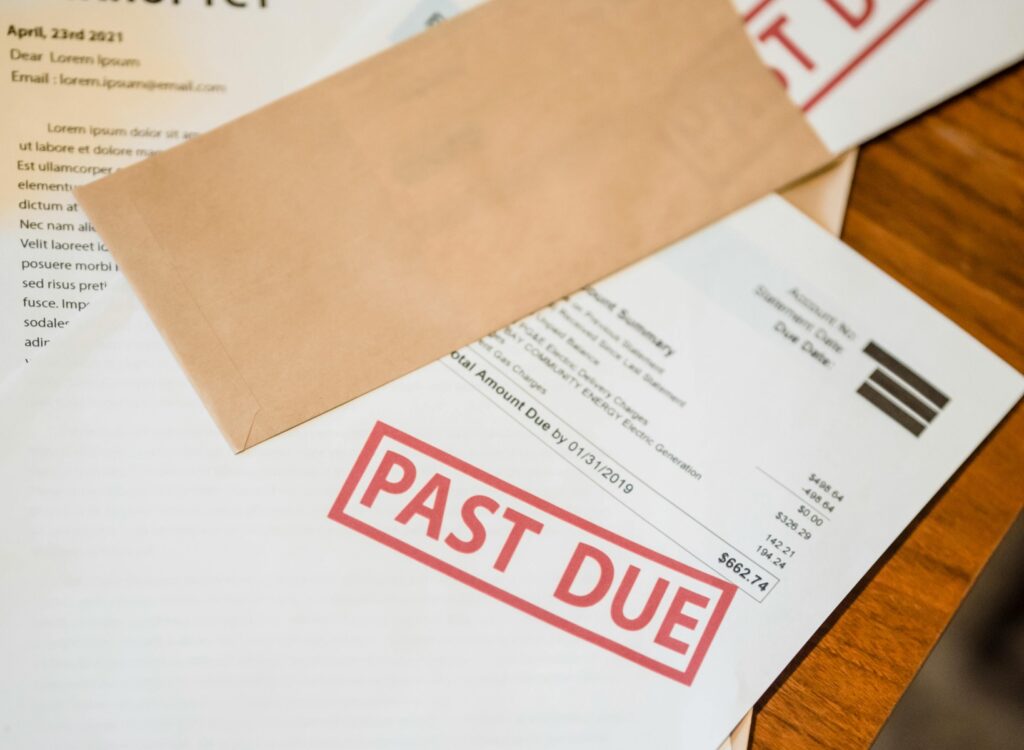
Drowning in “Past Due” notices? Before considering bankruptcy, get the real answer: are debt relief programs legit or just another risk? Image: Nicola Barts/Pexels
Pros and Cons of Debt Relief Programs
Deciding to enroll involves weighing the benefits against the risks. Here is a breakdown of the pros and cons of debt relief programs.
Pros:
- Savings: You could pay significantly less than your total balance.
- Simplicity: You make one monthly deposit instead of paying multiple creditors.
- Speed: It is often faster than making minimum payments for decades.
Cons:
- Credit Impact: “Do debt relief programs hurt your credit?” Yes. Since you stop paying creditors to force a negotiation, your score will drop, often significantly.
- Fees: Companies typically charge 15% to 25% of the enrolled debt.
- Tax Consequences: The IRS may count forgiven debt as taxable income.
- Legal Action: Creditors may sue you while you are in the program.
Top Rated Debt Relief Companies
If you have determined that the answer to “are debt relief programs legit?” is yes for your specific situation, the next step is choosing a partner. Based on track records and customer reviews, here are some industry leaders.
Debt Settlement Specialists
For those struggling with massive unsecured debt, settlement is a popular route.
National Debt Relief
One of the most recognized names in the industry. They have a strong track record of negotiating significantly lower balances.
» Read National Debt Relief Review
Freedom Debt Relief
A major player that has settled billions in debt for clients. They offer a user-friendly dashboard to track your progress.
» Read Freedom Debt Relief Review
Century Debt Relief
Known for personalized service and transparency.
» Read Century Debt Relief Review
JG Wentworth
Famous for their structured settlements, they also offer robust debt relief services.
» Read JG Wentworth Review
Debt Consolidation and Management
If you prefer not to damage your credit as severely as settlement does, consolidation or management might be better.
Americor
They offer both debt consolidation loans and debt resolution options.
» Read Americor Review
Cambridge Credit Counseling
Excellent for those seeking non-profit counseling and education.
» Read Cambridge Review
Understanding Debt Consolidation
Sometimes, you do not need forgiveness; you just need better terms. Debt consolidation involves combining multiple debts into a single monthly payment, ideally with a lower interest rate.
You can achieve this through best debt consolidation loans or balance transfer cards. This strategy is distinct because loan consolidation generally does not hurt your credit score as much as settlement, provided you make payments on time.
If you are curious about the mechanics, check out this How Does Debt Consolidation Work Guide.
Medical, Student, and Credit Card Debt
Different types of debt require different approaches.
Credit Card Debt Relief Programs
This is the most common type of unsecured debt handled by relief companies. Credit card debt relief programs work well because credit card companies know that if you declare bankruptcy, they might get nothing. Therefore, they are often willing to negotiate.
Medical Debt Relief Programs
Medical debt relief programs are increasingly relevant. Unlike credit cards, medical debt is often interest-free for a period, and new laws in the US have changed how medical debt appears on credit reports. Always negotiate directly with the hospital’s billing department before hiring a third party.
Student Loans
Debt relief companies generally cannot help much with student loans, especially federal ones. Federal loans have their own forgiveness programs (like PSLF). Be very wary of private companies claiming they can erase federal student loan debt; these are often scams.
Is It a Good Idea to Get a Debt Relief Company?
Many readers ask, “Is it a good idea to get a debt relief company?” and “Are debt relief programs worth it?”
The answer depends on your hardship. If you are barely making minimum payments and see bankruptcy as your only other option, then yes, these programs are worth it. They serve as a middle ground between paying in full and declaring Chapter 7 or 13 bankruptcy.
However, “what is the downside of using a debt relief program?” The downside is the hit to your creditworthiness. You may find it hard to buy a house or car for a few years.
If you are comfortable handling negotiations yourself, you can save the fees. It requires a strong stomach, but it is possible. Learn how with this guide on How to Negotiate Credit Card Debt Settlement Yourself.
Strategies: How to Pay Off Debt Fast
If you are asking “are debt relief programs legit” because you just want to know how to pay off debt quickly, consider these DIY methods first.
The Snowball vs. Avalanche Method
To start getting out of debt, you need a plan.
- Snowball: Pay the smallest debt first to build momentum.
- Avalanche: Pay the highest interest rate first to save money.
How to Pay $30,000 Debt in One Year?
This is a common “People Also Ask” query. Paying $30,000 in a year requires paying $2,500 monthly toward the principal. For most Americans, this requires drastic lifestyle changes, such as getting a second job or selling assets, rather than just budgeting. A debt relief attorney might be consulted if the debt amount is this high and you are facing lawsuits.
Final Verdict: Does Debt Forgiveness Really Work?
Does debt forgiveness really work? Yes, it does. Thousands of Americans resolve their debts every month through these programs. The catch is that “forgiveness” is a negotiation, not magic.
When researching these programs, remember that the industry is regulated, but you must be vigilant. Look for established companies like National Debt Relief or Freedom Debt Relief to ensure you are in safe hands.
Conclusion
Navigating financial distress is exhausting, and asking “are debt relief programs legit” is the first step toward reclaiming your freedom. While these programs are not without consequences regarding your credit score, they offer a legitimate lifeline for those drowning in unsecured debt.
Whether you choose consolidation, settlement, or a DIY approach, the most important action is to start today. Do not let fear paralyze you. Evaluate your options, consult with professionals, and choose the path that aligns with your long-term financial goals.
 Americor
 Cambridge Credit Counseling
 Century Support Services
 Debt Relief Advocates
 Freedom Debt Relief
 National Debt Relief