

Key Takeaway: Economic Sanctions Books
For a comprehensive and highly relevant case study, How Sanctions Work by Ali Vaez and co-authors is our top pick. It provides a detailed look at the impact of economic warfare on Iran and offers crucial insights for anyone seeking to understand this powerful foreign policy tool in 2026.
Economic sanctions have become a central tool of modern statecraft, shaping global politics, international trade, and the lives of millions. With the topic gaining significant mainstream attention recently, many are seeking to understand how sanctions truly work, their intended consequences, and their often-unforeseen impacts. But where do you start?
The sheer volume of literature can be overwhelming, ranging from dense academic texts to politically charged narratives. Finding a book that is both informative and accessible is a challenge. You need a clear, unbiased resource to grasp the complexities of economic warfare without getting lost in jargon or partisan rhetoric.
This guide cuts through the noise. We have reviewed and compared the most essential books on economic sanctions to help you make an informed choice. Whether you are a student, a professional in international affairs, or simply a curious citizen, we will help you find the perfect read to demystify this critical subject.
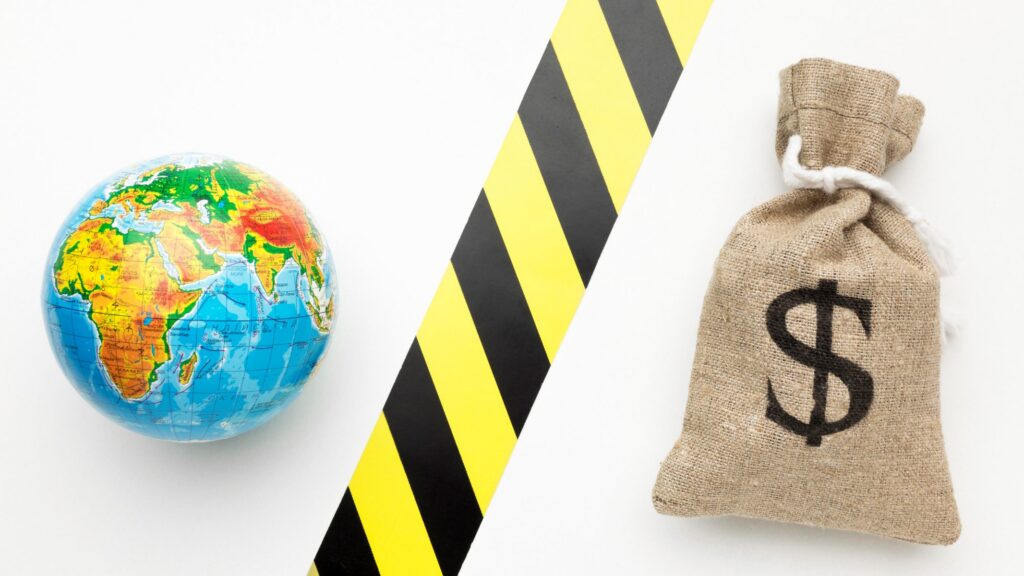
Understanding how economic sanctions block global financial flows is a central theme explored in our top recommended books. Image: Freepik
Our Top Pick: How Sanctions Work: Iran and the Impact of Economic Warfare
For readers who want a masterful blend of deep research and compelling narrative, our top recommendation is How Sanctions Work: Iran and the Impact of Economic Warfare by Narges Bajoghli, Vali Nasr, Djavad Salehi-Isfahani, and Ali Vaez. This book stands out for its laser focus on one of the most significant and long-running sanctions regimes in modern history: the case of Iran.
Instead of speaking in broad theoretical terms, the authors dive deep into the real-world application of economic pressure. They meticulously document the historical context of US-Iran relations and illustrate how sanctions evolved from a targeted tool to a form of all-out economic warfare. The authors provide an insider’s perspective on the political miscalculations on both sides that led to escalating conflict.
| Pros | Cons |
|---|---|
| Detailed Case Study: By focusing on Iran, the book offers a concrete and understandable example of how sanctions function in practice, making complex concepts tangible. | Specific Focus: Readers looking for a broad, global survey of all sanctions regimes might find the tight focus on Iran limiting. |
| Balanced Perspective: Avoids simplistic stances and presents a nuanced analysis of successes, failures, and humanitarian consequences. | Modern Context: Heavily focuses on recent decades, which may leave readers wanting more deep historical background. |
| Authoritative: Written by leading experts with extensive experience in diplomacy and Middle East studies. |
Bottom Line: If you want to understand not just the theory but the reality of economic sanctions, this is the essential starting point. It debunks common myths and provides a sober assessment of a tool that is too often misunderstood.
Other Essential Books on Economic Sanctions You Should Read
While How Sanctions Work is our top pick, the field is rich with other foundational texts that offer different perspectives. Here are a few more excellent choices to round out your reading list.
1. Best for Historical Analysis: The Art of Sanctions: A View from the Field by Richard Nephew
Nephew, a former lead sanctions expert for the U.S. negotiating team with Iran, provides a policymaker’s perspective. The Art of Sanctions explains the strategic thinking behind designing sanctions regimes. It focuses on the dual goals of inflicting pain and creating diplomatic leverage. This book is perfect for those who want to understand the “why” and “how” behind sanctions policy from an insider’s point of view.
2. Best for Beginners: Sanctions: What Everyone Needs to Know by Bruce W. Jentleson
If you are brand new to the topic, this is the book for you. Part of Oxford University Press’s highly accessible series, Sanctions: What Everyone Needs to Know covers the fundamentals: why sanctions are used so frequently, their various forms (from arms embargoes to financial restrictions), and the key factors affecting their success. It is a quick, easy-to-digest primer that provides a solid foundation for further reading.
3. Best for a Critical Perspective: The Economic Weapon: The Rise of Sanctions as a Tool of Modern War by Nicholas Mulder
Mulder’s book takes a historical deep-dive, tracing the origins of economic sanctions back to the First World War. His core argument in The Economic Weapon is that sanctions were conceived not as an alternative to war, but as a devastating new form of warfare. It is a challenging and thought-provoking read that forces you to reconsider the nature of economic coercion. This is a must-read for those interested in the intellectual history and ethical implications of sanctions.
Comparing the Best Books on Sanctions: Find Your Perfect Read
To help you decide, we have broken down the key features of our recommended books. Consider what aspect of the topic interests you most (a specific case, the policy mechanics, or the broad history).
| Book Title | Core Argument | Publication Year | Best For |
|---|---|---|---|
| How Sanctions Work | Examines the real-world impact and political dynamics of sanctions through the comprehensive case study of Iran. | 2024 | Readers wanting a detailed, modern case study. |
| The Art of Sanctions | Explains the strategic design and implementation of sanctions from a U.S. policymaker’s perspective. | 2017 | Those interested in policy and strategy. |
| Sanctions: What Everyone Needs to Know | Provides a concise, foundational overview of why sanctions are used and what makes them successful. | 2022 | Absolute beginners seeking a quick primer. |
| The Economic Weapon | Argues that sanctions originated as a powerful and destructive tool of war, not a peaceful alternative. | 2022 | Readers interested in history and critical theory. |
Expand Your Geopolitical Library
Understanding sanctions is just one piece of the puzzle. Explore highly-rated books that shed light on global power dynamics and foreign policy.
Key Factors to Consider When Choosing a Book on Economic Sanctions
Your ideal book depends on your goals. According to BestGuide’s research, readers should consider four key factors before buying:
- Author’s Perspective and Expertise: Is the author a historian, a policymaker, a journalist, or an academic? Richard Nephew’s perspective as a government insider is vastly different from Nicholas Mulder’s as a historian. Check the author’s biography to understand their potential biases and areas of expertise.
- Scope (Broad Survey vs. Deep Dive): Do you want a global overview of how sanctions have been used throughout history, or do you prefer to understand one case in exhaustive detail? A broad survey is great for context, while a deep dive like Vaez’s book on Iran provides more practical, nuanced insights.
- Target Audience: Is the book written for a general audience or for specialists? Academic presses often publish rigorous, data-heavy research that may be dense for laypeople. Books like those in the “What Everyone Needs to Know” series are explicitly designed for newcomers.
- Publication Date: While foundational texts remain relevant, the landscape of sanctions is constantly evolving. A book published recently will cover developments in financial sanctions and cyber warfare that an older text might miss. Balance classic works with more current analyses for a complete picture.
Understanding the Impact: Why These Books Matter Today
Reading about economic sanctions is more than an academic exercise. It is about understanding one of the most powerful and frequently used tools in international relations today. These books are crucial because they help us move beyond the headlines and simplistic narratives.
They challenge common myths, such as the idea that sanctions are a bloodless alternative to war. As Vaez and Mulder powerfully demonstrate, sanctions can have devastating humanitarian costs, crippling entire economies and harming the most vulnerable populations. They also reveal the complexities of effectiveness. A sanctions regime might fail to change a government’s behavior but succeed in other ways, like degrading its military capacity or preventing proliferation.
By engaging with this literature, you gain the critical thinking skills to evaluate news reports, political speeches, and policy debates about sanctions with a more informed and nuanced perspective.
Beyond the Pages: Further Resources to Grasp Economic Warfare
While books provide an excellent foundation, the world of sanctions is fast-moving. To stay current, consider supplementing your reading with reports and analyses from reputable non-partisan think tanks. Organizations like the Council on Foreign Relations (CFR), the Carnegie Endowment for International Peace, and the International Crisis Group regularly publish high-quality, up-to-date research on sanctions policy and its global impact.
For those in academic or professional fields, scholarly journals such as International Security or the Journal of Conflict Resolution often feature peer-reviewed studies on the effectiveness and consequences of economic sanctions.
Bottom Line
Navigating the complex world of economic sanctions requires a knowledgeable guide. The books on this list offer a range of perspectives, from the high-level strategy of policymakers to the on-the-ground impact on ordinary people. They provide the context and analysis necessary to understand this defining feature of 21st-century geopolitics.
For most readers, we confidently recommend How Sanctions Work: Iran and the Impact of Economic Warfare as the best place to start. Its combination of rigorous research, a compelling narrative, and a focus on a critically important modern case study makes it an invaluable resource. By understanding the intricate case of Iran, you will be equipped to analyze and comprehend sanctions wherever they are applied in the world.
Frequently Asked Questions
What is the best book on economic sanctions for a beginner?
For a beginner, the best starting point is “Sanctions: What Everyone Needs to Know” by Bruce W. Jentleson. It is concise, clear, and covers all the fundamental concepts without overwhelming the reader, providing a solid base for understanding more complex works.
What is the main argument of “How Sanctions Work” by Ali Vaez?
The main argument of “How Sanctions Work” is that the U.S. sanctions regime against Iran, while intended to curb its nuclear program, morphed into a form of total economic warfare. The authors argue it has had devastating humanitarian consequences and was shaped by political miscalculations on both sides.
Do economic sanctions actually work?
The effectiveness of economic sanctions is highly debated. As books like “The Art of Sanctions” explain, success depends on the goal. They rarely lead to immediate regime change but can be effective at slowing military programs, compelling negotiations, or signaling international resolve. Their success is often partial and context-dependent.
 ADP Payroll
 Deel
Deel Gusto
Gusto OnPay
OnPay Patriot Software