

Key Takeaway: Audicus vs. Eargo
Choose Audicus if you prioritize lifetime professional audiology support and a balance of clinical precision with lower long-term costs. Choose Eargo if you want the “Invisible-in-Ear” (CIC) aesthetic and a zero-footprint design for a high-performance professional lifestyle.
Choosing the right hearing aid used to mean months of appointments and thousands of dollars in hidden fees. Today, the Over-the-Counter (OTC) market has changed everything. But with market saturation at an all-time high, two titans have emerged as the clear leaders: Audicus and Eargo.
You’ve likely felt the frustration of straining to hear in a crowded room or the hesitation of wearing a bulky, visible device. You want a solution that works without the traditional “medical look.” The good news is that you no longer have to compromise between hearing quality and personal style.
In this guide, we break down the “Battle for Invisible Hearing Tech.” We explore how Audicus dominates through service-backed care and why Eargo remains the design pioneer for high-performance professionals. By the end, you’ll know exactly which device deserves your investment.
What Are OTC Hearing Aids and Why Do They Matter?
Before diving into the Audicus vs. Eargo debate, it is essential to understand the category. OTC hearing aids are devices you can buy directly without a prescription, a medical exam, or a mandatory fitting in a physical clinic.
This category was established to make hearing health more accessible, offering three core benefits:
- Lower Costs: Prices are significantly lower than traditional prescription models found in clinics.
- Convenience: You can take a hearing test online and have the devices shipped directly to your door.
- Advanced Tech: Features like Bluetooth streaming and AI noise reduction are now industry standards for these brands.
Audicus: The Service Leader for Clinical Care

Many Audicus reviews highlight the discreet design. As shown here, the Receiver-in-Canal (RIC) style sits comfortably behind the ear, blending seamlessly for a nearly invisible look
Audicus has separated itself from the pack by focusing on “Setup Friction”, the moment most users give up on their devices. They don’t just sell hardware; they provide a lifetime remote audiology partnership.
The Audicus Advantage
- Lifetime Support: Access to professional audiologists for adjustments and troubleshooting via remote telematics.
- Lower ROI Cost: Audicus provides clinical precision at a 50% lower cost compared to traditional local clinics.
- Model Variety: Options range from the virtually invisible Mini to the powerful Spirit equipped with Bluetooth.
If you are looking for a comprehensive list of the industry’s top players, check out our guide on the best hearing aids companies to see how Audicus stacks up against the broader market.
Eargo: The Design Pioneer for Maximum Discretion
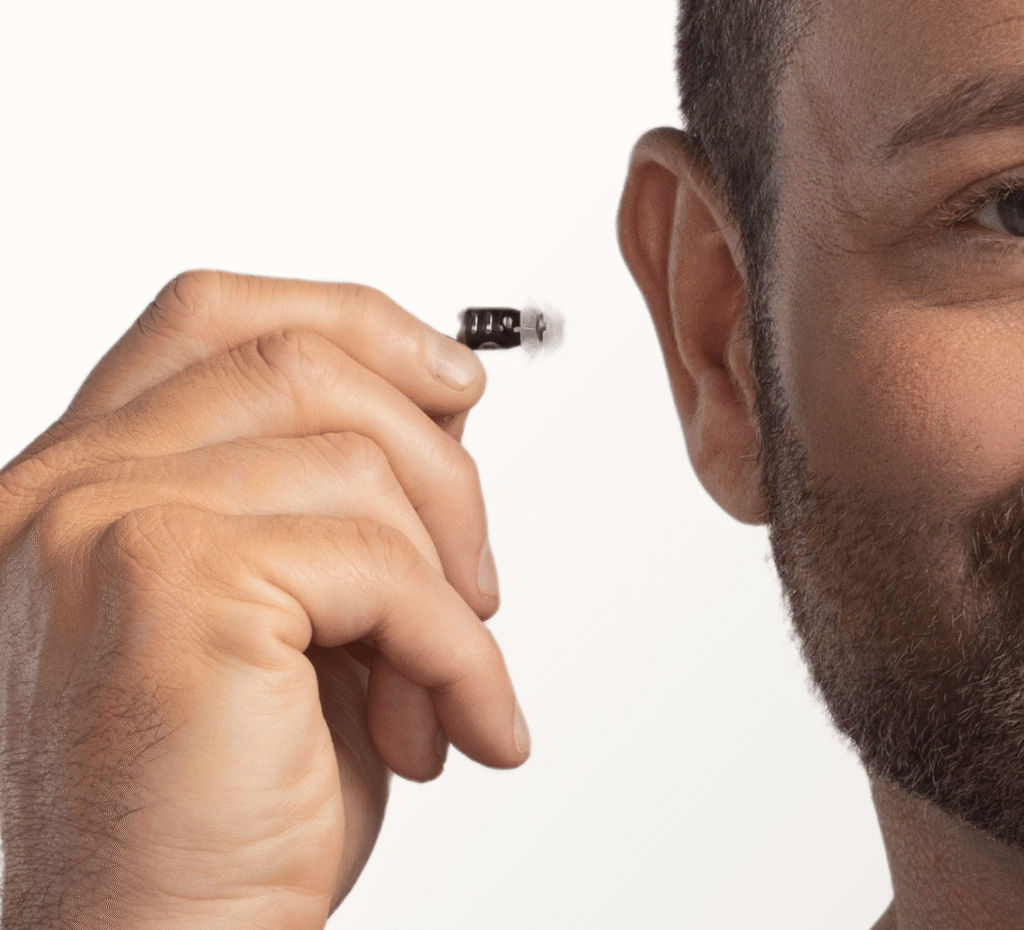
Eargo hearing aids are designed to be virtually invisible. This close-up shows the tiny device being inserted directly into the ear canal for a discreet fit
If your primary concern is “I don’t want anyone to see it,” Eargo is the likely winner. They have mastered the “Invisible-in-Ear” (CIC) profile, creating devices that sit entirely inside the ear canal.
The Eargo Aesthetic Standard
- Zero-Footprint: Ideal for high-performance professionals who are constantly on video calls or in the public eye.
- Innovative Charging: Sleek, portable cases that feel more like high-end consumer tech than medical equipment.
- High-Quality Experience: Despite their size, they deliver a masterclass in audio engineering and product positioning.
What is the Difference Between OTC and Prescription Hearing Aids?
A common question for consumers is whether these “direct-to-consumer” brands are actually “any good.” The answer depends on your level of hearing loss and your need for customization.
- Severity: OTC aids (Audicus/Eargo) are designed for mild-to-moderate hearing loss. Severe or profound loss still requires a prescription device.
- Professional Fitting: Prescription aids are physically molded to your ear in a clinic. Audicus and Eargo use software and various tip sizes to achieve a high-quality fit remotely.
- Price Gap: Prescription aids can cost $5,000+ per pair, while Audicus and Eargo offer premium tech at a fraction of that price.
Which Factor Drives Your Investment?
The barrier to entry for hearing health has never been lower, but the decision-making framework is more complex than ever. To choose between these two leaders, ask yourself what matters most to your daily life:
Choose Audicus if:
- You want the peace of mind that comes with lifetime professional support.
- You prefer having a dedicated audiology team to help with remote adjustments.
- You want clinical precision without the traditional clinic price tag.
Choose Eargo if:
- You prioritize cutting-edge invisibility above all else.
- You want a “set it and forget it” device with a zero-footprint design.
- You value high-end industrial design and modern charging solutions.
Conclusion: The Winner is the Consumer
Whether you choose Audicus for service-backed care or Eargo for cutting-edge invisibility, the result is the same: better hearing and a higher quality of life. Both brands have solved the major hurdles of the OTC market: cost, access, and technology.
Don’t let hearing loss hold back your social or professional life. Invest in a solution that fits your specific needs and regain your confidence in every conversation.
 Audicus
 Eargo
Eargo Jabra Enhance
 Lexie
Lexie ZipHearing