

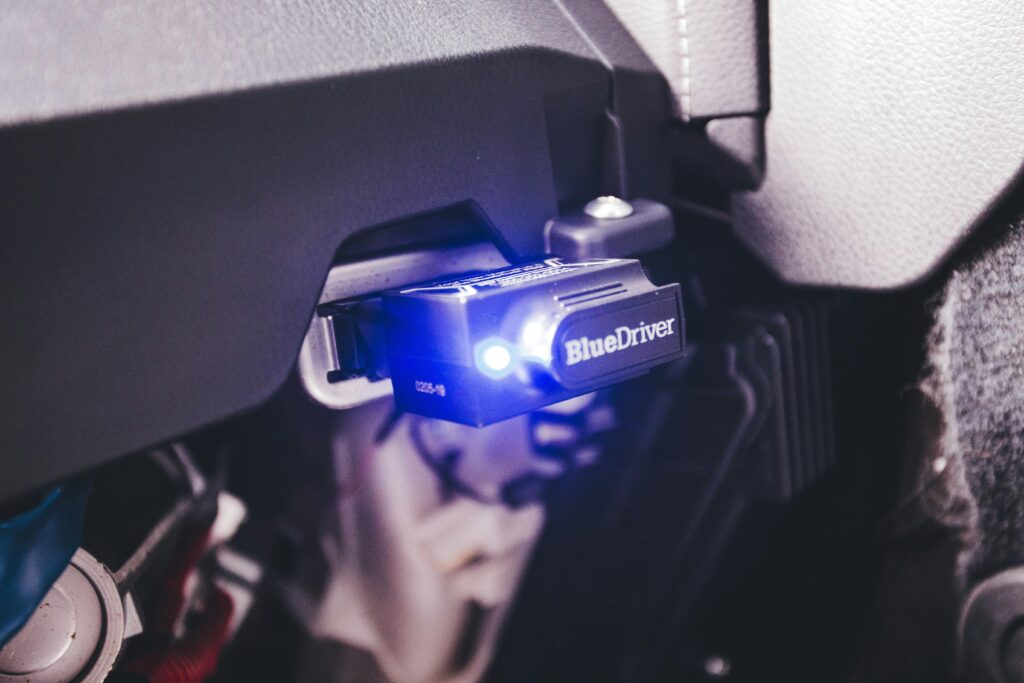
Diagnostic tool plugged into a vehicle’s OBD port beneath the dashboard. Image: Erik Mclean/Pexels
If you drive a car made after 1996, there is a good chance your vehicle has an OBD port tucked somewhere beneath the dashboard. Short for On Board Diagnostics, the OBD port allows mechanics, fleet managers, and even everyday drivers to access real time vehicle insights. It has become a key part of modern car ownership, especially as more people rely on technology for maintenance, safety, insurance savings, and fleet management.
Many drivers only learn about the OBD port when a check engine light turns on. Others discover it while researching GPS tracking, fuel monitoring, or how to improve business fleet efficiency. Either way, understanding what the OBD port is, where it is located, and how it works can help you make smarter and more confident vehicle decisions.
This guide breaks everything down in a simple, practical way. You will learn what the OBD port does, how OBD II systems evolved in the United States, whether you can use it to track a vehicle, security concerns like OBD port locks, pros and cons of using it for telematics, and how fleet tracking companies such as Verizon Connect and Samsara rely on it. By the end, you will know exactly how to find the OBD port in your car and what to do with it.
What is the OBD Port?
The OBD port is a standardized diagnostic interface built into most U.S. vehicles. It allows external devices to communicate with the car’s onboard computer, read trouble codes, monitor performance, and collect operational data. The current standard, known as the OBD II port or OBD 2 port, became mandatory in the United States starting in 1996.
An OBD port in a car connects to various vehicle systems, including engine performance, emissions, fuel efficiency, and sensor activity. According to the National Highway Traffic Safety Administration (NHTSA), OBD II standards were created to improve emissions control, vehicle safety, and consumer transparency. Today, the same system supports telematics, insurance monitoring programs, and advanced fleet tracking.
Where is the OBD Port Located?
The most common placement for the OBD port location is under the steering wheel, just below the dashboard. Some vehicles place it near the center console, by the fuse box, or slightly above the pedals. It is usually exposed and does not require tools to access.
If you are asking where the OBD port is, you can typically find it within reach of the driver’s seat without removing panels. Check your owner’s manual if you still cannot locate it, since car models vary slightly. Many mechanics also refer to it as the car OBD port or OBD II diagnostic connector.
How the OBD Port Works
The OBD port allows technicians, plug in scanners, or telematics devices to read digital information that the vehicle continuously collects. It connects to the car’s Electronic Control Unit, commonly referred to as the ECU.
Key types of data transmitted
- Engine temperature
- Fuel levels
- Speed and RPM
- Diagnostic trouble codes
- Emissions performance
- Vehicle identification and mileage
Communication protocol
OBD II ports follow a universal 16 pin connector design so most scanners and tracking devices work across brands. Whether you drive a Ford, Toyota, Honda, Chevrolet, or Nissan, the port functions the same way.
Can I Track a Car Using the OBD Port?
Yes. Many vehicle tracking and fleet management systems plug into the OBD port to monitor location, driver behavior, fuel usage, and maintenance needs. This is one reason the OBD port has become popular among business fleets and parents with teen drivers.
If you want to explore OBD based tracking solutions, you can compare leading companies through BestGuide’s updated recommendations at Best Fleet & Vehicle Tracking Companies.
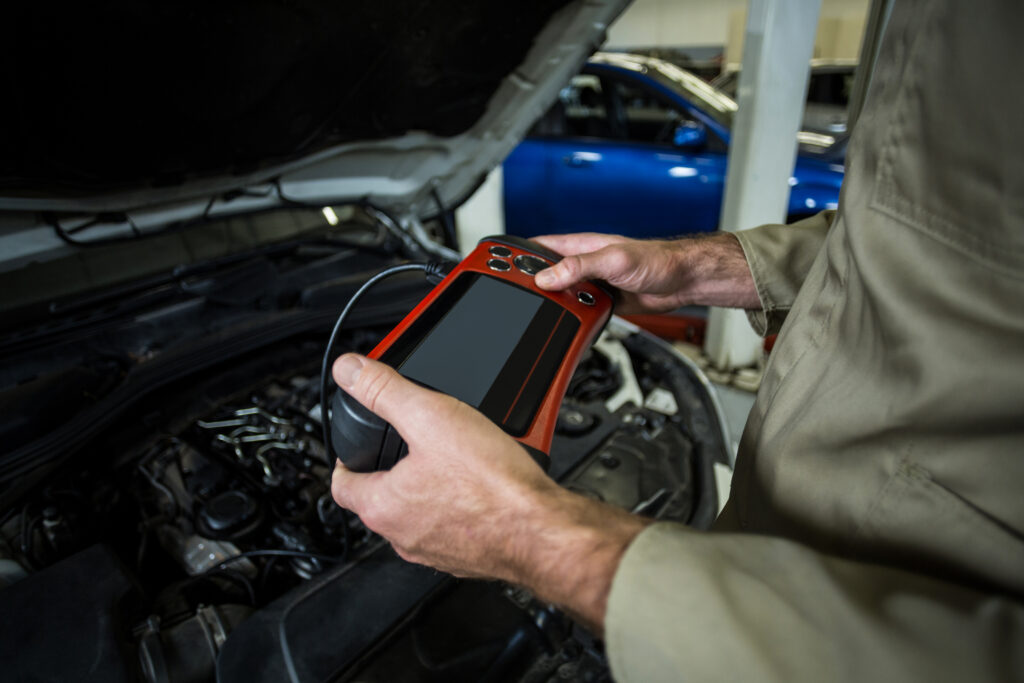
A mechanic holds a handheld diagnostic scanner connected to a car’s engine, running a system check through the vehicle’s OBD port. Image: peoplecreations/Freepik
Benefits of Using the OBD Port
Pros
- Easy installation without professional help
- Real time vehicle data and alerts
- Helps prevent breakdowns and costly repairs
- Useful for fleets that manage multiple vehicles
- Works with most modern cars in the U.S.
Cons
- Can be accidentally unplugged by drivers
- May collect personal driving data
- Not all vehicles support the same advanced features
- Device access could pose security risks without protection
Security and Privacy: Do You Need an OBD Port Lock?
Some drivers and businesses use an obd port lock to prevent unauthorized access. This device covers the connector so no one can plug in scanners or tracking tools without permission. Although vehicle hacking through the OBD port is rare, it has gained more attention as cars become more connected.
Always research reputable products, avoid cheap or untested imports, and speak with a mechanic if you are unsure whether your vehicle needs extra protection.
Different OBD Port Types
Before 1996, vehicles used various diagnostic systems with no national standard. These older models are sometimes called OBD I. Today, the OBD II port dominates the U.S. market, which is why most modern tools are labeled OBD II compatible. If your car was manufactured after 1996, you almost certainly have an OBD II port.
People Also Ask: Common OBD Port Questions
What is the OBD port used for?
The OBD port is used for diagnostics, emissions testing, performance monitoring, and telematics based vehicle tracking.
Where is my car’s OBD port?
It is usually under the steering wheel or beneath the dashboard near the driver’s seat.
What is the OBD II port?
The OBD II port is the modern standardized connector used in most U.S. vehicles manufactured since 1996.
Can I track a vehicle using the OBD port?
Many fleet tracking systems use the OBD port to monitor driving patterns, GPS location, and maintenance needs.
What is an OBD port in car maintenance?
It allows mechanics to scan for issues, read check engine light codes, and analyze system performance quickly and efficiently.
Best Companies Using OBD Port Tracking
If you want a plug in tracking solution, the following U.S. providers offer trusted OBD based systems:
They offer features like route optimization, fuel reporting, maintenance alerts, safety scoring, and real time GPS visibility. Business owners can compare plans, pricing, and features at BestGuide’s Fleet Tracking Buyer’s Guide.
Legal Considerations in the United States
There are currently no federal laws restricting individual access to the OBD port. However, data collected through fleet tracking or telematics may be subject to privacy agreements and employer disclosure laws. Always review contracts and state specific guidelines, especially if tracking employees or shared vehicles.
Conclusion
The OBD port may be small, but it plays a huge role in how modern vehicles operate. It helps diagnose problems early, supports emissions standards, improves driver safety, and enables powerful fleet tracking systems. Whether you are a commuter, parent, small business owner, or fleet manager, understanding the OBD port can help you protect your investment and stay informed.
If you want a simple way to start using the OBD port for tracking, compare trusted providers at BestGuide. The right system can save time, fuel, and repair costs while giving you more visibility into how your vehicle performs every day.
 Azuga
Azuga Motive
 Samsara
 Verizon Connect