

Note: This guide covers residential solar financing for homeowners. If you are a business owner looking for commercial solar financing, the product landscape is different and not covered here.
⚡ Key Takeaway
The 30% federal residential solar tax credit (Section 25D) expired December 31, 2025, under the One Big Beautiful Bill Act. Homeowners installing solar in 2026 receive no federal tax credit on purchased or loan-financed systems. Solar leases and PPAs are the only path to federal incentives in 2026, because the third-party owner claims the commercial credit (Section 48E) through the end of 2027. For homeowners who want to own their system without depending on a credit that no longer exists, a personal loan without dealer fees, like those from top-rated personal loan lenders, is one of the most transparent and predictable financing options available. The right choice depends on whether you prioritize ownership, monthly payment, or access to remaining state incentives.
Solar financing in 2026 requires a different calculation than it did a year ago. The One Big Beautiful Bill Act, signed July 4, 2025, terminated the 30% Residential Clean Energy Credit (Section 25D) for all systems placed in service after December 31, 2025, nearly a decade ahead of its original 2034 expiration under the Inflation Reduction Act. For a typical $30,000 system, that represents $9,000 in federal tax savings that simply no longer exists for new installations.
That does not mean solar has stopped making financial sense. It means the math is different, the right financing product depends more on your credit profile than on tax planning, and some loan structures that were designed around the now-expired credit need to be evaluated with fresh eyes. This guide is part of BestGuide’s home improvement loan coverage and addresses every financing option available to homeowners in the post-tax-credit era.
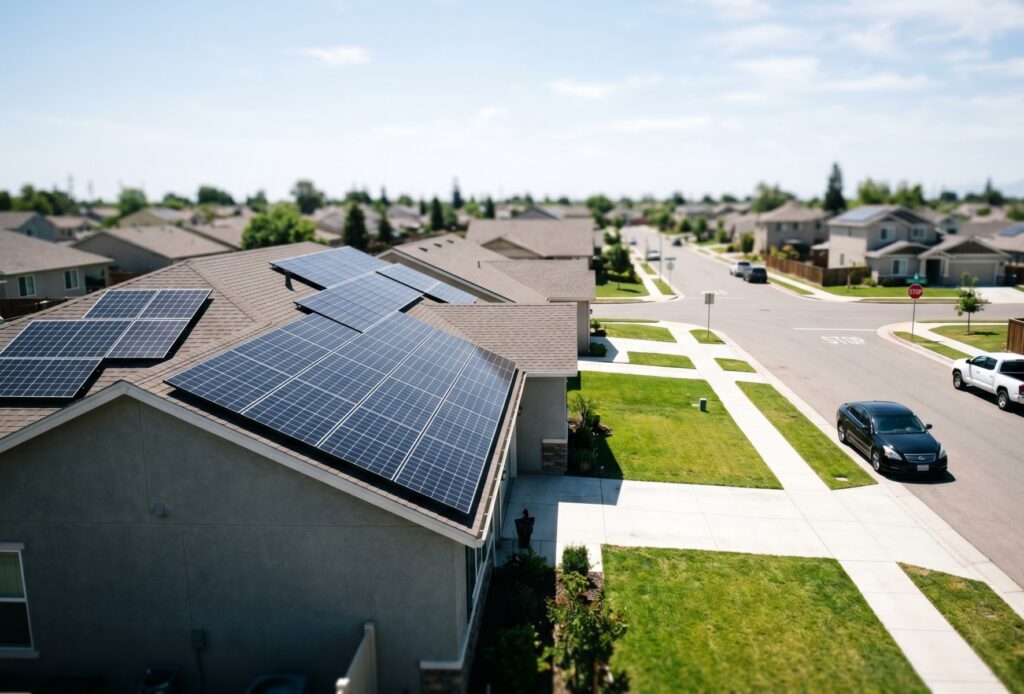
The average residential solar installation costs approximately $30,000 in 2026. With the federal 30% tax credit now expired, choosing the right financing product matters more than ever, especially the difference between a fee-free personal loan and a solar-specific loan with a dealer markup of 20% to 30%.
How Much Do Solar Panels Cost?
According to EnergySage, the average cost of a residential solar installation in the U.S. is approximately $30,000 before any incentives. The range is wide depending on system size, battery storage inclusion, roof complexity, and regional labor costs.
| System Size | Typical Cost Range | Best For |
|---|---|---|
| Small (4–6 kW) | $12,000–$18,000 | Smaller homes or partial energy offset |
| Mid-range (6–10 kW) | $18,000–$30,000 | Average-sized homes, full or near-full offset |
| Large (10–15 kW+) | $30,000–$45,000 | Larger homes or EV charging addition |
| Solar + battery storage | $35,000–$60,000+ | Energy independence, backup power, time-of-use optimization |
The quoted system price often does not include everything. Budget for potential additional costs that are frequently part of the financeable scope: roof structural reinforcement if needed, an electrical panel upgrade (typically $1,500 to $3,500), interconnection fees, and permitting (typically $200 to $1,000 depending on jurisdiction).
What Happened to the Solar Tax Credit?
This is the most important section of this page in 2026, and the one that most existing solar financing content has not yet addressed accurately.
The One Big Beautiful Bill Act (Public Law 119-21), signed July 4, 2025, repealed Section 25D of the Internal Revenue Code for expenditures made after December 31, 2025. Under IRS guidance (confirmed in the IRS FAQ for OBBBA modifications published in 2025), an expenditure is treated as made when the original installation of the system is completed. A system must have had its installation completed by December 31, 2025 to qualify for the credit, the standard the IRS applies (not utility permission to operate).
What this means in plain numbers:
- A $30,000 system installed in 2025 generated a $9,000 federal tax credit. That same system installed in 2026 generates $0 in federal credit.
- Payback periods increase. A system with a 7-year payback under the 2025 credit may take 10 to 12 years without it, depending on local electricity rates and state incentives.
- Solar-specific loan products that were structured assuming the borrower would use the $9,000 credit to make a large principal payment in year one must be re-evaluated. Without that lump sum, the monthly payment trajectory of those products changes significantly.
What still exists:
- Section 48E commercial ITC (30%): Still available for third-party owned residential solar systems (leases and PPAs) through December 31, 2027, for systems where construction begins by July 4, 2026. The leasing company, as the system owner, claims the credit and passes savings to the homeowner through lower monthly payments.
- State tax credits: New York offers a 25% state income tax credit (up to $5,000). Other states maintain their own credit programs. Check your state’s energy office for current availability.
- Utility rebates: Many utilities offer cash rebates for solar installation. These vary widely by utility and state.
- Property tax exemptions: Most states exempt the added home value from solar from property tax assessments. This is a passive ongoing savings, not a one-time incentive.
- Carryforward credits from 2025: Homeowners who installed solar before December 31, 2025 but had unused Section 25D credit (because the credit exceeded their tax liability) can carry forward that unused credit to future tax years indefinitely. The OBBBA did not affect carryforward rules.
5 Solar Financing Options Compared
| Option | Best For | Dealer Fee? | Federal Credit Available? | You Own the System? |
|---|---|---|---|---|
| Personal loan | Good credit, ownership, no fees | No | No (ownership) | Yes |
| Solar-specific loan | Low rate seekers; caution on dealer fees | Often 20%–30% | No (ownership) | Yes |
| Solar lease / PPA | Zero down, no maintenance, credit access | N/A | Yes (via Section 48E through 2027) | No |
| HELOC / home equity | $30K+, equity available, lowest rate | No | No (ownership) | Yes |
| Cash purchase | Lowest total cost, no interest | No | No (ownership) | Yes |
Personal Loan
A personal loan is the most transparent financing option for solar ownership in 2026. It requires no home equity, no appraisal, carries a fixed rate, and has no dealer fee embedded in the product. For good-to-excellent credit borrowers, the best personal loans cover solar projects from around $5,000 to $100,000 with zero fees, fixed rates, and same-day funding, and the most competitive rates for excellent credit start in the 6–7% range. Loan proceeds can cover the full project scope: panels, inverter, battery storage, installation labor, electrical panel upgrades, and permitting fees. Compare top-rated personal loan lenders to find the best fit.
Critically, a personal loan does not depend on the now-expired federal tax credit to work. The rate is fixed, the payment is predictable, and there is no structure that assumes a large lump-sum paydown in year one. For borrowers who want ownership without the complexity of solar-specific loan structures, it is one of the cleanest options available in 2026.
Solar-Specific Loan with Dealer Fee
Solar-specific loans from dedicated solar lenders often advertise low advertised rates of 1.99% to 3.99% APR. What many homeowners do not realize until they read the contract closely: these products typically carry a dealer fee of 20% to 30% of the financed amount, paid by the installer to the lender and passed back to the homeowner through a higher effective loan balance.
Before the Section 25D credit expired, these loans were often structured for borrowers to use their $9,000 tax credit as a year-one lump-sum payment to bring the balance down to a manageable level. Without the credit, the full dealer-inflated balance must be repaid at the advertised rate. The low rate is real, but the higher effective principal changes the total cost calculation significantly. See the comparison in the next section for the numbers.
Solar Lease and PPA
In 2026, solar leases and power purchase agreements have become more competitive relative to ownership than at any point since the Inflation Reduction Act was passed. Here is why: the Section 48E commercial investment tax credit (30%) remains available through December 31, 2027 for third-party owned residential solar systems where construction begins by July 4, 2026. The leasing company, as the legal system owner, claims that credit and passes the savings to the homeowner through lower monthly payments.
According to SolarPermitSolutions, a majority of projected residential solar installations in 2026 are expected to be third-party owned, a direct response to the expiration of Section 25D.
The tradeoffs with lease and PPA are real: you do not own the system, which can complicate home sales (the lease transfers to the new buyer or must be bought out), you cannot claim state tax credits in most states, and you do not build equity in the installation. For homeowners who prioritize the lowest possible monthly cost and do not want ownership responsibility, lease and PPA are now the only path to federal incentives in 2026.
HELOC and Home Equity Loan
Home equity products offer the lowest interest rates for solar financing because your home secures the debt. For systems of $30,000 or more, particularly when the project combines solar with battery storage or other home improvements like a kitchen remodel, a HELOC may offer a lower monthly payment than a personal loan and potentially a tax deduction on the interest if the project qualifies as a capital improvement. The tradeoffs: closing costs of $2,000 to $5,000, a two-to-six-week approval timeline, and your home on the line as collateral.
Cash Purchase
The lowest total cost option. No interest, no fees, and the fastest payback period. The opportunity cost question is whether the capital deployed in solar generates a better return than its next-best alternative use. In high-electricity-rate states, the internal rate of return on a cash solar purchase remains competitive with many investment alternatives even without the federal tax credit.
Personal Loan vs. Solar-Specific Loan: The Hidden Cost of Dealer Fees
This is the comparison no solar installer’s financing partner will show you. The advertised rate on a solar-specific loan is real, but it is not the only number that determines your total cost. The dealer fee is the other number.
Here is how the comparison plays out on three common system sizes, using a typical 25% dealer fee on the solar-specific loan and a 7.99% APR personal loan (no fee):
| System Cost | Product | Dealer Fee | Effective Loan Amount | Advertised APR |
|---|---|---|---|---|
| $20,000 | Solar loan (25% dealer fee) | $5,000 | $25,000 | 1.99% |
| $20,000 | Personal loan (no dealer fee) | $0 | $20,000 | 7.99% |
| $30,000 | Solar loan (25% dealer fee) | $7,500 | $37,500 | 1.99% |
| $30,000 | Personal loan (no dealer fee) | $0 | $30,000 | 7.99% |
| $45,000 | Solar loan (25% dealer fee) | $11,250 | $56,250 | 1.99% |
| $45,000 | Personal loan (no dealer fee) | $0 | $45,000 | 7.99% |
The lower advertised rate does not automatically mean a lower total cost. On a $30,000 system, the 1.99% solar loan with a 25% dealer fee starts you at $37,500 in effective debt. The 7.99% personal loan starts at $30,000. The crossover point where the solar loan’s lower rate overcomes the $7,500 principal disadvantage depends on the loan term, but on standard 15- to 20-year terms, the personal loan often produces a lower total repayment for good-credit borrowers.
The key question to ask any solar installer offering financing: “What is the dealer fee on this loan product?” If the answer is unavailable or unclear, treat that as a red flag and request written disclosure of the full financed amount before signing. This same deferred-interest and dealer-fee dynamic applies to other home improvement financing categories, as we cover in our hot tub financing guide.
Recommended
Own Your Solar System, No Dealer Fees
A fee-free personal loan starts you at the actual system cost, with a fixed rate and a structure that does not depend on the now-expired federal tax credit.
Does Solar Still Make Financial Sense Without the Federal Tax Credit?
In most markets, yes, but the answer depends more on local electricity rates than it did when the credit cushioned the math. According to SolarPermitSolutions, a $30,000 system in a high-rate market that would have had a 7-year payback with the 2025 credit now requires 10 to 12 years without it. The underlying economics of producing electricity for less than the utility charges have not changed, but the break-even timeline is longer.
The honest framework by market type:
- High-rate states (California, New York, Hawaii, Massachusetts, Connecticut): Solar still makes strong financial sense. Electricity rates of $0.25 to $0.45 per kWh generate substantial monthly savings that compound over a 25-year panel lifespan. Payback periods of 8 to 12 years remain reasonable for a 25-year asset.
- Moderate-rate states: The analysis requires more careful calculation. Use a local solar calculator that factors in your specific utility rate, net metering policy, and sun hours before committing.
- Low-rate states: Payback periods lengthen considerably. Lease and PPA arrangements, which pass through the Section 48E commercial credit savings, may offer a better financial profile than ownership in these markets through 2027.
- New York specifically: The state’s 25% solar tax credit (up to $5,000) remains in effect and partially offsets the loss of the federal credit. A $30,000 system in New York would generate $5,000 in state credit plus any applicable utility rebates.
Before committing to any system or financing, calculate your specific payback using your actual utility rate and the state incentives available in your market. The national averages are a starting point; local conditions determine the actual return.
Is a Personal Loan Right for Your Solar Project?
When a Personal Loan Makes Sense
- Good-to-excellent credit, generally 670 or higher, with the most competitive rates reserved for excellent-credit borrowers
- Project budget of $5,000 to $100,000, covering the full range of residential solar systems including battery storage additions
- You want to own the system, which is required to access state tax credits and property tax exemptions where available
- You want a product that does not depend on the expired federal tax credit: fixed rate, predictable payment, no year-one lump-sum structure
- You want zero dealer fees: the best personal loans charge no origination fee, no prepayment penalty, and no administrative charges, unlike many solar-specific loans
- You want same-day or next-day funding: fast funding lets you lock in your installer’s pricing or start date
- You prefer not to use home equity as collateral: fully unsecured loan with no lien on your property
When a Personal Loan May Not Be the Best Fit
- Project above $100,000: premium solar plus battery storage systems may exceed most personal loan maximums. A HELOC or home equity loan is the appropriate path above that threshold.
- You want zero down with no ownership concern: a solar lease or PPA may offer a lower monthly commitment and federal credit access through the Section 48E pathway, without any upfront payment.
- You have significant home equity and want the lowest possible rate: a HELOC at 7% to 9% with potential tax deductibility may produce a lower total cost over a 15-to-20-year term, though at the cost of putting your home on the line and waiting 2 to 6 weeks for funding.
- Credit score below 670: the best personal loan rates target good-to-excellent credit, though some lenders serve a broader credit range at higher rates.
Compare Options
Find a Fee-Free Solar Loan
Compare rates, funding speed, and credit requirements across BestGuide’s top-rated personal loan lenders before you accept an installer’s in-house financing.
How to Qualify for a Solar Loan
For a personal loan:
- Credit score: Good-to-excellent credit, generally 670 or higher, with the most competitive rates reserved for excellent-credit borrowers.
- Income verification: Required. Lenders review income and employment stability.
- Debt-to-income ratio: Generally below 43%.
- Credit history depth: Multiple account types managed over several years with strong on-time payment record.
Practical tip: Get your loan approval before meeting with solar installers. This eliminates any pressure to accept the installer’s in-house financing, which often carries a dealer fee. Walking into a solar quote with confirmed financing in hand means you can negotiate on the system price rather than the monthly payment structure.
Frequently Asked Questions
Can I still get the 30% solar tax credit in 2026?
No, not for homeowner-purchased or loan-financed systems. The 30% Residential Clean Energy Credit (Section 25D) was terminated by the One Big Beautiful Bill Act for all systems placed in service after December 31, 2025. Homeowners who installed solar before the cutoff can still claim the credit on their 2025 tax return and carry forward any unused credit to future years. The only path to a federal incentive in 2026 is through a solar lease or PPA, where the third-party system owner claims the commercial Section 48E credit (30%) and passes savings to the homeowner through lower monthly payments.
What is a solar loan dealer fee and how does it affect my cost?
A dealer fee is a charge, typically 20% to 30% of the loan amount, that the solar loan lender charges the installer and that the installer passes back to the borrower through a higher effective loan balance. On a $30,000 system with a 25% dealer fee, the actual loan amount you are repaying is $37,500, even though your system cost $30,000. The advertised interest rate applies to this higher balance. A personal loan without a dealer fee starts you at the actual system cost with no markup. For borrowers with good credit, the zero-fee structure often produces a lower total repayment even at a higher advertised rate.
Is it better to lease or buy solar panels in 2026?
It depends on your priorities. Leasing offers zero down, no maintenance responsibility, and access to the Section 48E federal commercial credit (30%) through 2027, which is now the only federal incentive available for residential solar. Buying (with cash or a loan) means you own the system, can access state tax credits, add value to your home, and avoid a long-term contract. For good-credit borrowers in high-rate states with strong state incentives, buying with a fee-free personal loan remains competitive. For borrowers who prioritize the lowest possible monthly cost or who are in low-rate states where ownership ROI is marginal, leasing may offer a better financial profile through 2027.
Can I use a personal loan for solar panels?
Yes. Personal loans can fund solar projects from around $5,000 to $100,000, covering panels, inverter, battery storage, installation labor, electrical panel upgrades, and permitting. Because they are unsecured with no dealer fee, they start you at the actual system cost, and the fixed rate does not depend on the now-expired federal tax credit. Compare the best personal loan lenders for current rates and terms.
How fast can I get funded for a solar loan?
Many personal loan lenders offer same-day or next-day funding, often within one to three business days. HELOC and home equity products require two to six weeks for appraisal and underwriting. If your installer has a start date or pricing deadline, a personal loan is almost always the fastest path to confirmed funding.
Can I finance solar panels without home equity?
Yes. Personal loans are fully unsecured, with no lien on your property. The best personal loans cover solar projects from around $5,000 to $100,000 without any home equity requirement, collateral, or appraisal. This is the primary advantage for homeowners who are earlier in their mortgage, have limited equity, or prefer not to put their home at risk for a solar installation.
How much do solar panels cost in 2026?
The average residential solar installation costs approximately $30,000 according to EnergySage, with a range from about $12,000 for small 4-to-6 kW systems to $60,000 or more for large systems with battery storage. Cost varies significantly by system size, roof type, local labor market, and whether battery storage is included. Permitting, electrical panel upgrades, and interconnection fees are often additional and typically financeable.
Does solar still make financial sense without the federal tax credit?
In most high-rate electricity markets, yes. The underlying benefit of producing electricity for less than the utility charges has not changed, but the payback period is longer without the 30% federal credit. A system with a 7-year payback in 2025 may take 10 to 12 years in 2026 depending on local electricity rates and available state incentives. In high-rate states like California, New York, Hawaii, and Massachusetts, solar remains a strong long-term investment. In low-rate states, the financial case requires more careful analysis. Always calculate payback using your specific utility rate before deciding.
Related Home Improvement Financing Guides
Solar is one piece of BestGuide’s complete home improvement loans coverage. If you are weighing more than one project, these guides compare the best financing option for each:
 Achieve Personal Loans
 LendingTree
 Upstart