

⚡ The Quick Answer
On January 1, 2026, the American Medical Association replaced the six legacy hearing aid billing codes (92590–92595) with 12 new CPT codes that better reflect modern audiology services. For consumers, the biggest potential impact is greater cost transparency and expanded insurance reimbursement. Medicare still does not cover hearing aids. How much you actually pay depends on your coverage type, the hearing aid tier you choose, and whether your insurer has adopted the new codes. Here’s how to navigate it.
If you’ve been shopping for hearing aids, you’ve likely run into one frustrating reality: the price is rarely clear, coverage is inconsistent, and the billing system seems designed to confuse. In January 2026, that system changed in a meaningful way.
The American Medical Association, working with ASHA and the American Academy of Audiology, replaced the six billing codes that had governed hearing aid professional services since 1993 with 12 new CPT codes built for today’s digital, Bluetooth-enabled devices. We reviewed the final CMS rule, cross-referenced current price data from over 1,700 U.S. hearing aid buyers, and spoke with audiologist guidance from multiple professional associations to give you an accurate picture of what this means for your costs.
In this guide, you’ll find a breakdown of the new codes, what hearing aids actually cost in 2026, what Medicare and private insurance cover, and which brands offer the best value depending on your situation.
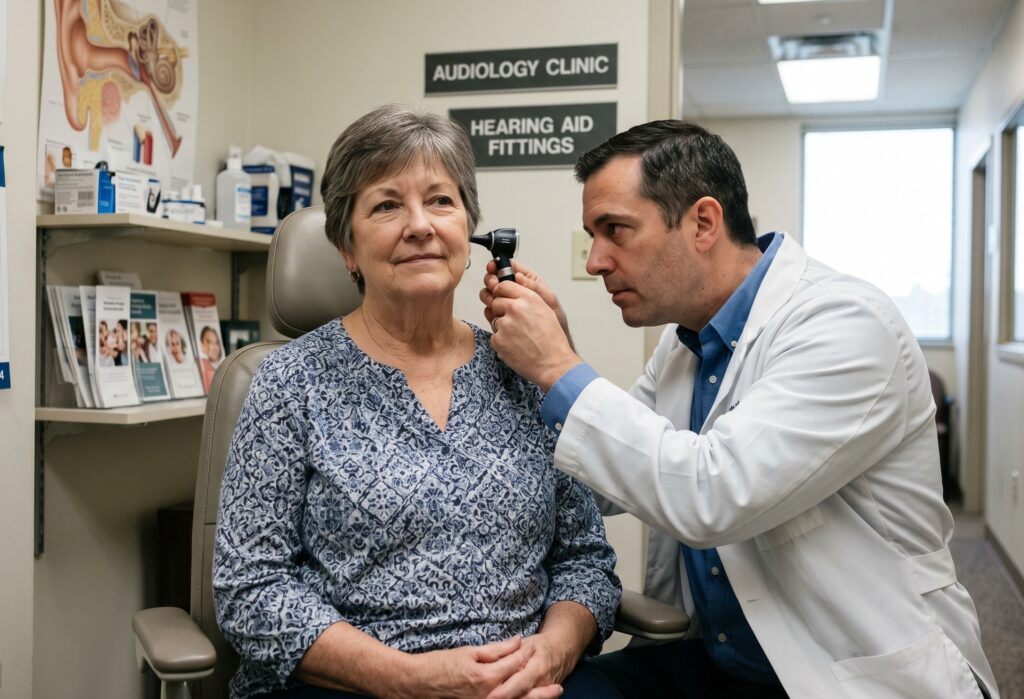
A professional hearing evaluation is the first step toward knowing which option fits your needs. For moderate to severe hearing loss, a clinic fitting with real-ear measurement delivers customization that no OTC device can replicate.
Hearing Aid Cost by Type: A Side-by-Side Comparison
Before diving into the billing changes, here’s the current cost landscape across purchase channels:
| Purchase Type | Price Range (Per Pair) | Best For | Includes Pro Services? |
|---|---|---|---|
| OTC / Online | $200 – $2,000 | Mild to moderate hearing loss | Varies by brand |
| Warehouse Club (e.g., Costco) | $1,399 – $2,999 | Budget-conscious, near a location | Yes (exam + fitting included) |
| Prescription (Clinic) | $2,500 – $8,000+ | Moderate to severe loss, full care | Yes (bundled into price) |
| Telehealth / Hybrid | $900 – $3,000 | Tech-comfortable users, convenience | Remote support included |
What Changed: The 12 New Audiology Billing Codes
The legacy billing codes for hearing aid services (CPT 92590–92595) were created in 1993, when analog hearing aids were the standard and audiological services looked nothing like they do today. The American Speech-Language-Hearing Association (ASHA) and the American Academy of Audiology (AAA) spent several years working with the AMA to modernize this framework.
Effective January 1, 2026, the AMA replaced those six codes with 12 new CPT codes covering the full scope of modern hearing care:
- Candidacy evaluation (CPT 92628, 92629): time-based codes for evaluating whether a patient is a hearing aid candidate, including cognitive and communication assessment
- Device selection (CPT 92630, 92631): codes for the professional process of choosing the right device based on a patient’s specific hearing profile
- Hearing aid fitting (CPT 92632–92635): time-based fitting codes, including add-on codes for extended sessions
- Follow-up and reprogramming (CPT 92636, 92637): post-fitting adjustments now have their own distinct billing category
- Verification and electroacoustic analysis (CPT 92638–92642): codes for real-ear measurement and device performance testing
A key structural shift: many of the new codes are time-based, meaning audiologists bill based on total minutes spent with the patient. This more accurately reflects the actual complexity of fitting a modern digital device to someone with specific hearing loss, cognitive needs, or multiple conditions.
The ASHA stated that the new codes are “reflective of today’s audiology service delivery models,” noting that hearing device technology has shifted from analog to sophisticated digital processing over the past three decades, a change the legacy codes never accounted for.
What the New Codes Mean for What You Pay
Here’s the honest answer: the new CPT codes don’t directly lower or raise the price of hearing aids. What they change is how professional services are billed, and that has downstream effects on your insurance reimbursement and cost transparency.
More Transparent Pricing
Under the old bundled model, the cost of the hearing aid device and the professional services (exam, fitting, follow-ups) were typically lumped into a single price. The new codes encourage “unbundling”: separating device cost from service fees. This means you can see exactly what you’re paying for the audiologist’s time versus the hardware itself.
According to ASHA, greater code specificity “adds transparency to the process” and gives consumers the ability to “decide which audiology services they’d like to pursue based upon their individual needs.”
Potential for Better Insurance Reimbursement
Previously, audiologists often billed follow-up visits using catch-all codes like 92700 (unlisted procedure) because no specific code existed for post-fitting adjustments. The new codes change that. Providers now have distinct billing entries for candidacy evaluation, fitting, reprogramming, and verification, each of which a commercial insurer could choose to reimburse separately.
Hunter Gerhart, AuD, director of audiology at Livingston Hearing Aids Centers, said he is “hopeful that with the addition of these codes that some payers will get on board with reimbursing them so that patients can have a more seamless experience.” That said, insurance adoption will be uneven in 2026. Some carriers have been slow to update their systems to recognize the new codes, which may lead to claim denials in the short term.
No Change for Medicare Beneficiaries Yet
Despite the new codes, CMS confirmed in the 2026 Medicare Physician Fee Schedule Final Rule that the new CPT codes remain non-payable under traditional Medicare. The legal basis is §1862(a)(7) of the Social Security Act, which has excluded hearing aids from Medicare coverage since the program launched in 1965. The new codes have no assigned Relative Value Units under Medicare. That means your bill won’t change if Original Medicare is your only insurance.
Editor’s Choice
Compare Top Hearing Aid Brands
See our ranked, reviewed list of hearing aid companies including price ranges, trial periods, and which brands work best for different types of hearing loss.
Does Medicare Cover Hearing Aids?
This is the most searched question in hearing aid cost research, and the answer requires a clear breakdown by plan type.
Original Medicare (Parts A and B)
No. Original Medicare does not cover hearing aids or exams for fitting hearing aids. This exclusion has been in place since Medicare launched in 1965, and it remains unchanged in 2026 despite legislative efforts like the Medicare Hearing Aid Coverage Act (H.R. 500), which has been introduced in Congress but has not been signed into law. Under Original Medicare, you pay 100% of hearing aid costs out of pocket.
Medicare Part B does cover diagnostic hearing and balance exams, but only when ordered by a physician to determine whether medical treatment is needed. That’s different from the hearing test you get when shopping for hearing aids.
Medicare Advantage (Part C)
This is where coverage becomes available. According to the Kaiser Family Foundation, approximately 97% of Medicare Advantage plans in 2026 offered some form of hearing benefit not available through Original Medicare. What that benefit looks like varies significantly:
- Annual hearing exams covered at $0 copay (many plans)
- Hearing aid allowances of $500 to $2,500+ per ear toward the cost of devices
- Discounted pricing through plan-contracted networks like NationsHearing or TruHearing
- Frequency limits; many plans cover new devices only once every one to three years
The KFF also found that about one-third of Medicare Advantage plans cap hearing aid benefits with a dollar limit, and the average allowance across those plans is roughly $960 per pair, a meaningful discount, but still far below the average cost of prescription hearing aids.
Medicaid
Medicaid hearing aid coverage varies by state. Some states mandate coverage for adults; others limit it to children or specific clinical criteria. If you’re dual-eligible for both Medicare and Medicaid, your state Medicaid program may cover costs that Medicare doesn’t. Check the Hearing Loss Association of America’s state-by-state guide for current rules in your state.
Medigap / Medicare Supplement Plans
Medigap plans do not cover hearing aids or related services. These plans are designed to cover Medicare’s out-of-pocket costs (deductibles, coinsurance), not to expand benefits into areas Medicare itself excludes.
Private Insurance and Hearing Aid Coverage
Coverage through employer-sponsored, marketplace, or individual insurance plans is inconsistent but improving. The new 2026 billing codes may accelerate reimbursement from commercial payers who were previously uncertain how to process professional audiology services.
When evaluating your private plan, ask these specific questions:
- Does the plan have a hearing aid benefit, or only diagnostic coverage?
- Is there a per-ear or per-pair dollar allowance? What is it?
- Does the plan require using a preferred provider network (like HearUSA or TruHearing)?
- How often can you use the benefit annually, or once every two to three years?
- Are the new CPT codes (92628–92642) already loaded into the plan’s billing system?
That last question matters in 2026. The American Academy of Audiology warned that some payers may not have updated their systems in time, which could cause temporary claim denials as providers and insurers work through the transition.
How Much Do Hearing Aids Actually Cost in 2026?
Based on a 2025 HearingTracker survey of 1,733 U.S. hearing aid buyers, the overall average cost for a pair of hearing aids across all purchase channels was $2,694. That number, however, reflects the shift toward lower-cost OTC and warehouse options. If you’re buying prescription hearing aids from a traditional clinic, the average is closer to $4,727 per pair.
Cost by Technology Tier
- Entry-level prescription: $2,000–$3,000 per pair
- Mid-range prescription: $3,000–$5,000 per pair
- Premium prescription: $5,000–$8,000+ per pair (average for top-tier: ~$5,225)
- OTC / online brands: $200–$2,000 per pair
- Warehouse club (Costco-style): $1,399–$2,999 per pair
According to Caroline Dadowski, AuD, and assistant professor of audiology at Nova Southeastern University, “The average cost for a pair of hearing aids is usually between $2,500 and $3,000 per pair, but spending $8,000 or more is not uncommon.” Premium clinic pricing often reaches $6,500 or higher when device cost and bundled care are combined.
What’s Included in Prescription Hearing Aid Pricing
When you buy a prescription hearing aid, the quoted price typically includes the hearing evaluation, the initial fitting session, real-ear measurement verification, multiple follow-up adjustments, and in some cases, warranties and loss coverage. The new billing codes make it possible to unbundle these services, meaning some clinics may start offering lower device-only pricing with separately billed services.
Top Hearing Aid Brands by Budget and Need
The right hearing aid depends on your degree of hearing loss, your budget, and how much professional support you want. Below are honest assessments of leading brands across price tiers.
SoundBright: Best for Online Prescription Care
Best for: Adults who want prescription-quality support without a traditional clinic price tag.
SoundBright offers a telehealth-forward model with licensed audiologists available remotely. The company pairs its devices with professional fitting support through an app, which positions it well for consumers who want more than OTC but less than a full clinic experience. Transparent pricing is a key differentiator in a market where hidden costs remain common.
Pros: Remote audiologist access included, competitive pricing, app-based adjustments. Cons: Not ideal for severe or profound hearing loss that requires hands-on fitting.
Audicus: Best for Mid-Range Telehealth
Best for: Cost-conscious buyers who want professional support with mid-range technology.
Audicus is one of the more established direct-to-consumer hearing aid brands, with a range of devices starting well below traditional clinic pricing. Audicus devices support Bluetooth streaming and app-based programming, with remote audiology support included. The company has been recognized for its transparent pricing model and meaningful trial periods.
Pros: Affordable price points, solid Bluetooth features, professional remote support. Cons: Device selection is narrower than traditional clinic inventories.
MDHearing: Best Budget Option With Support
Best for: Seniors on fixed incomes looking for a verified, affordable starting point.
MDHearing offers hearing aids starting at $297 per pair, making it one of the most accessible options in the market. Devices are FDA-registered and come with audiologist-staffed support. The tradeoff is the absence of Bluetooth streaming and a more limited feature set than premium brands.
Pros: Lowest verified price point among supported brands, FDA-registered, U.S.-based audiologist support. Cons: No Bluetooth, not suitable for severe hearing loss.
Jabra Enhance: Best Overall OTC Value
Best for: Tech-comfortable adults with mild to moderate loss who want brand credibility.
Jabra Enhance hearing aids are consistently ranked among the best OTC options. Priced between $1,195 and $1,995 per pair, they offer strong sound quality for mild to moderate loss and come with a 100-day trial and three-year support commitment. Jabra Enhance devices are manufactured by GN Hearing, one of the five major global hearing aid manufacturers that collectively account for over 90% of global prescription hearing aid volume.
Pros: Strong sound quality, 100-day trial, 3-year support, Bluetooth. Cons: No support for severe or profound hearing loss.
Ceretone: Best for First-Time Buyers on a Budget
Best for: First-time hearing aid users who want a low-risk entry point with solid reviews.
Ceretone targets the value end of the OTC market with devices that have earned positive user feedback for comfort and ease of use. For buyers who are uncertain whether hearing aids will work for their lifestyle, Ceretone offers a lower financial commitment with reasonable product quality.
Pros: Affordable, easy setup, good user reviews for comfort. Cons: Limited advanced features, basic app functionality.
How We Evaluated These Options
Our assessment of hearing aid brands and costs draws from multiple data sources: the CMS 2026 Medicare Physician Fee Schedule Final Rule, ASHA and AAA technical guidance on the new CPT codes, a 2025 HearingTracker survey of 1,733 U.S. hearing aid buyers, and audiologist commentary published in peer-reviewed and professional trade sources.
Ways to Reduce Your Out-of-Pocket Costs
Even without Medicare coverage, there are several legitimate strategies to reduce what you pay for hearing aids:
- HSA / FSA: Hearing aids and related services qualify as eligible medical expenses under both Health Savings Accounts and Flexible Spending Accounts, which can provide 20–37% savings depending on your tax bracket.
- VA Benefits: Veterans may qualify for full hearing aid coverage through the U.S. Department of Veterans Affairs, including the device and all associated services.
- Medicare Advantage plans: If you’re on Medicare, switching to a Medicare Advantage plan with hearing benefits could provide $500–$2,500+ per ear in allowances. The annual open enrollment period runs October 15 through December 7.
- Manufacturer payment plans: Many OTC and telehealth brands offer 0% financing or installment options through healthcare financing partners.
- State assistance programs: Several states offer hearing aid assistance through vocational rehabilitation programs, Lions Clubs, or state-funded hearing programs, particularly for lower-income adults.
Final Verdict
The 2026 audiology billing code update is the most significant change to hearing care billing in over 30 years. For consumers, the direct impact is modest in the short term, but the long-term potential for better insurance reimbursement, greater pricing transparency, and fairer compensation for audiologists is real. The bigger factors that affect your bill today remain your insurance type, hearing loss severity, and purchase channel.
Here’s how to match your situation to the right option:
- Mild to moderate loss, tech-comfortable: Jabra Enhance offers the best combination of quality and value in the OTC market.
- Budget-first, first-time buyer: MDHearing at $297/pair is the most accessible supported option with professional backup.
- Want professional care, not a clinic: SoundBright or Audicus provide telehealth audiologist access at below-clinic pricing.
- On Medicare: Compare Medicare Advantage plans during open enrollment; 97% of plans now include some hearing benefit. Our full hearing aid comparison includes coverage-compatible options.
- Severe or profound hearing loss: A prescription clinic fitting with real-ear measurement is the appropriate standard of care. Expect to pay $4,000–$8,000, and use HSA/FSA to offset costs.
Ready to compare your options? See our full, reviewed ranking of top hearing aid companies including verified pricing, trial periods, and honest assessments of each brand.
Frequently Asked Questions
Does Medicare cover hearing aids?
No. Original Medicare (Parts A and B) does not cover hearing aids or exams for fitting them. This exclusion has been in place since Medicare launched in 1965 and remains unchanged in 2026 despite pending legislation. Medicare Part B does cover diagnostic hearing exams ordered by a physician for medical purposes, but not routine hearing evaluations for hearing aid selection. If you need hearing aid coverage through Medicare, Medicare Advantage (Part C) plans are the primary route. Approximately 97% of plans now include some hearing benefit.
What insurance covers hearing aids for seniors?
Medicare Advantage plans are the most accessible coverage source for seniors, with most plans offering hearing allowances of $500 to $2,500+ per ear. Some employer retiree plans and individual market plans also include hearing benefits, though coverage rules and dollar limits vary widely. Veterans may qualify for full VA coverage. Medicaid hearing aid benefits vary by state. Medigap plans do not cover hearing aids.
How much should I expect to pay for a hearing aid?
Hearing aids range from $200 to $8,000+ per pair depending on the purchase channel and technology level. According to a 2025 HearingTracker survey of 1,733 U.S. buyers, the overall average across all channels was $2,694 per pair. OTC hearing aids typically cost $200–$2,000 per pair; prescription hearing aids from a traditional clinic average $4,727 per pair. Premium clinic-fit devices with bundled care can reach $6,500 or more.
Will the new 2026 audiology billing codes lower hearing aid prices?
Not directly. The 12 new CPT codes (replacing 92590–92595, effective January 1, 2026) change how professional services are billed and categorized. They do not set device prices. The potential benefit is greater cost transparency through unbundling, and improved insurance reimbursement as commercial payers adopt the new codes. For Medicare beneficiaries, the new codes remain non-payable under Original Medicare.
 Audicus
.png) Ceretone Hearing Aids
Ceretone Hearing Aids Jabra Enhance