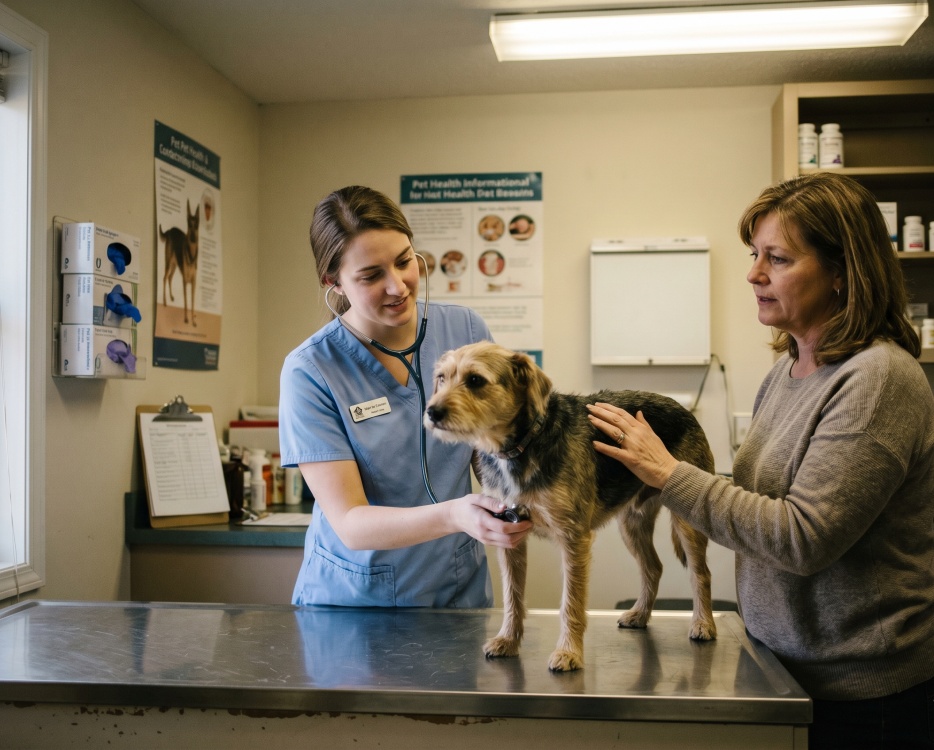
With veterinary service prices continuing to outpace overall inflation, pet insurance has become a critical tool for managing unexpected vet bills. The right plan can help you afford necessary care by reimbursing a significant portion of your expenses after you meet a deductible.
As a pet owner, you want to provide the best care for your animal companion. But with the cost of veterinary services climbing roughly 67% since 2014, an unexpected accident or illness can become a major financial challenge. According to the American Veterinary Medical Association (AVMA), recent data shows the average cost of a routine vet visit around $214 for dogs and $138 for cats, while emergency care can easily exceed $1,000.
This is where pet health insurance comes in. It functions as a financial safety net, helping to offset the high costs of diagnostics, treatments, and surgeries. While it doesn’t cover everything, understanding how to evaluate your options can protect both your pet’s health and your budget. This guide breaks down how to compare plans and choose a provider that fits your needs.
The Rising Cost of Vet Care
Recent data shows that the price of veterinary care is increasing faster than most other consumer goods. Industry analyses of Bureau of Labor Statistics (BLS) data cited veterinary service inflation of approximately 5% in 2025, well above the overall U.S. Consumer Price Index increase of 2.4% reported in the February 2026 BLS release. This trend reflects advancements in veterinary medicine, which now offer more sophisticated (and expensive) treatment options, from MRIs to complex surgeries.
For pet owners, this means that even a single emergency visit for something like a broken bone or swallowing a foreign object can result in vet bills ranging from $1,000 to over $10,000. These figures underscore the growing need for a financial plan to handle your pet’s health care.
What Is Pet Insurance?
Pet insurance is a health care policy for your pet that helps pay for veterinary expenses. You pay a monthly premium to an insurance company. In return, the company agrees to reimburse you for a percentage of your pet’s eligible vet bills. It is designed primarily to cover unforeseen events, such as accidents and illnesses, rather than routine care.
According to the North American Pet Health Insurance Association (NAPHIA), more than 7 million pets in the United States were insured by the end of 2024, a 12.2% increase from approximately 6.25 million the year before. Total pet insurance premium volume in North America also reached more than $5 billion in 2024, up 20.8% year over year, indicating that more owners are turning to insurance to manage rising costs.
Types of Pet Insurance Plans
When you shop for pet insurance, you will encounter three main types of coverage. Choosing the right one depends on your budget and how much risk you are willing to assume.
- Accident and Illness Plans: This is the most popular type of pet health insurance. It covers injuries (like broken bones or cuts) and sicknesses (like cancer, infections, or digestive issues).
- Accident-Only Plans: These plans are less expensive but only cover costs related to accidents. They will not reimburse you for any illness-related treatments.
- Wellness Plans: Often sold as an add-on, wellness plans cover routine care like vaccinations, flea and tick prevention, and annual checkups. They are for predictable costs, not emergencies.
How Pet Insurance Works
Unlike human health insurance, you typically pay your veterinarian directly for services. Afterward, you submit a claim to your pet insurance provider for reimbursement. The process follows a few simple steps:
- You take your pet to the vet for a covered accident or illness.
- You pay the vet bill in full at the time of service.
- You submit the invoice and any required documents to your insurance company.
- The insurer reviews your claim and sends you a reimbursement based on your policy’s terms, including your deductible and reimbursement rate.
Understanding Your Deductible
A pet insurance deductible is the amount of money you must pay out of pocket for vet bills before your insurance company starts to reimburse you. Most plans have an annual deductible, often ranging from $100 to $1,000.
When choosing a plan, consider how the deductible affects your premium. A higher deductible usually results in a lower monthly payment, but you will be responsible for more of the initial cost. A lower deductible means a higher premium, but your coverage will begin sooner.
Choosing a Reimbursement Rate
The reimbursement rate is the percentage of the vet bill that your insurance provider will pay back to you after your deductible has been met. Common reimbursement rates are 70%, 80%, or 90%. Some plans offer 100% reimbursement.
A higher reimbursement rate means you get more money back, but it also leads to a higher monthly premium. For example, with a $1,000 vet bill and a 90% reimbursement rate, you would get $900 back (after the deductible). With a 70% rate, you would get $700 back. This is a key factor in balancing your monthly budget with potential out-of-pocket costs.
Key Limitations to Know
Pet insurance is a valuable tool, but it is not without limitations. Two of the most important to understand are pre-existing conditions and waiting periods.
Pre-existing conditions are illnesses or injuries your pet had before your policy’s start date. No pet insurance plan covers them. This is a significant exclusion and the primary reason we recommend insuring pets when they are young and healthy.
Waiting periods are a set amount of time after you enroll before coverage begins. These prevent people from signing up only after a pet gets sick. They typically range from 1-14 days for accidents and 14-30 days for illnesses. You are responsible for any vet bills incurred during this time.
How to Compare Pet Insurance Providers
When you’re ready to choose a provider, focus on comparing policies on an apples-to-apples basis. Look beyond just the monthly premium to understand the true value of the coverage. We recommend you create a checklist to evaluate each plan.
| Factor to Compare | What to Look For |
|---|---|
| Monthly Premium | The amount you pay each month for coverage. |
| Deductible | The amount you pay before reimbursement starts (e.g., $250, $500). |
| Reimbursement Rate | The percentage of the bill the insurer pays (e.g., 70%, 80%, 90%). |
| Annual Limit | The maximum amount the insurer will pay per year (e.g., $5,000, $10,000, or unlimited). |
| Waiting Periods | How long you must wait for accident and illness coverage to begin. |
| Exclusions | What is not covered, such as pre-existing conditions, cosmetic procedures, or specific hereditary issues. |
By comparing these core features, you can find a balance between affordable premiums and sufficient coverage for unexpected vet bills.
The Bottom Line
With veterinary costs on the rise, pet insurance offers a way to manage financial risk and ensure you can afford care for your pet. While it requires a monthly premium, it can prevent a difficult choice between your finances and your pet’s health during an emergency.
- Industry analyses cited veterinary service inflation of approximately 5% in 2025, against an overall CPI of 2.4% per the February 2026 BLS release.
- Pet insurance helps cover unexpected vet bills for accidents and illnesses.
- When comparing plans, look at the deductible, reimbursement rate, and annual limit, not just the premium.
- All policies have waiting periods before coverage begins.
- A key limitation of every plan is that pre-existing conditions are not covered.
- Insuring your pet while it is young can help avoid exclusions for conditions that develop later.
Frequently Asked Questions
Is pet insurance worth it?
For many pet owners, it is worth it for the peace of mind. It can make expensive, life-saving treatments affordable. Whether it’s financially worth it depends on your pet’s health, your risk tolerance, and the policy you choose. It protects against large, unexpected vet bills that could otherwise be a financial burden.
What does pet insurance cover?
Most standard accident and illness plans cover diagnostics (like X-rays and blood tests), procedures (like surgery), and treatments for injuries and diseases such as cancer, infections, and broken bones. They do not cover pre-existing conditions. Optional wellness plans cover routine care like vaccines and checkups.
How does pet insurance work?
Typically, you pay your veterinarian for services first and then submit a claim to the insurance company for reimbursement. The insurer then pays you back a percentage of the covered costs, based on your plan’s deductible, reimbursement rate, and annual limit.
How much does a vet visit cost?
According to AVMA data, the average routine vet visit costs around $214 for dogs and $138 for cats. Emergency visits or specialized treatments can cost thousands of dollars, depending on the condition and the care required.
What are pet insurance waiting periods?
A waiting period is the time between when you sign up for a policy and when coverage begins. There are separate waiting periods for accidents (usually 1-14 days) and illnesses (usually 14-30 days). Any health issue that arises during this time is not covered.
What is a pet insurance deductible?
A deductible is the amount you must pay out of pocket before your insurance plan starts to reimburse you. For example, if you have a $500 annual deductible, you are responsible for the first $500 of covered vet bills each year.
Related BestGuide reviews: