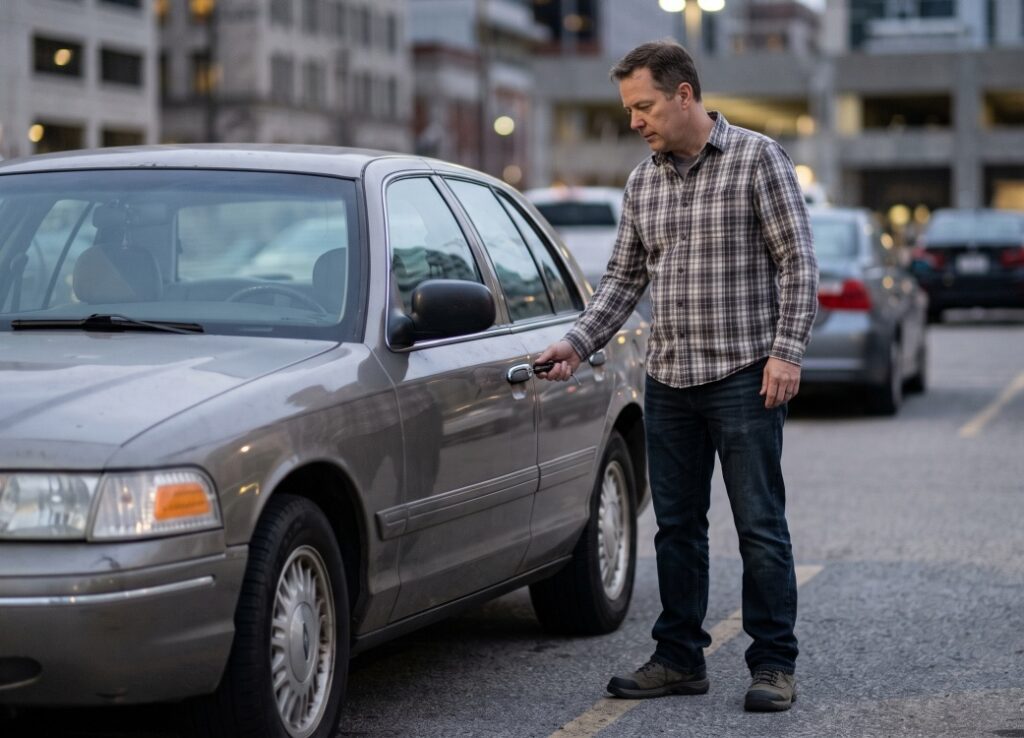
July is traditionally the peak month for vehicle theft, according to the National Insurance Crime Bureau (NICB), and while national numbers are improving, the stakes remain high for car owners. Your auto insurance premium can climb after a theft claim, and some neighborhoods carry higher risk. Understanding how anti-theft technology and policy choices influence your rate helps you find coverage that balances protection with affordability.
Vehicle Theft Trends from 2025
The National Insurance Crime Bureau (NICB) reports that vehicle thefts fell to 659,880 reported incidents in 2025, a 23% decline from 2024 and the lowest level in decades. Still, a vehicle was stolen every 48 seconds, according to the NICB. California led the nation with 136,988 thefts, accounting for over 20% of the total. Washington State recorded the largest percentage improvement, with thefts down 39% year over year.
Which Cars Are Targeted Most Often
The Hyundai Elantra topped the NICB’s most-stolen list in 2025 with 21,732 thefts nationwide. Pickup trucks, while not always topping total theft counts, carry the highest whole vehicle theft claim frequency (0.91 per 1,000 insured vehicle years) and the highest average loss payment of $66,984 for 2022-2024 models, according to Highway Loss Data Institute (HLDI) data. If you drive a frequently targeted model, your auto insurance premium may reflect that elevated risk.
Catalytic Converter Theft: A Separate Trend to Watch
Beyond whole vehicle theft, catalytic converter theft remains a distinct risk with its own trend line. NICB claims data shows the crime surged from 16,660 claims in 2020 to 64,701 in 2022, then declined sharply. Roughly 14,000 catalytic converters were reported stolen in 2024, a 68% decrease from 2023, according to Consumer Reports citing NICB data. Nearly two-thirds of 2024 thefts occurred in California, and 10 states accounted for 73% of all catalytic converter thefts between 2022 and 2024.
The economics behind the crime remain volatile. Catalytic converters contain platinum, palladium, and rhodium, all of which trade at high prices per ounce, and hybrid vehicle converters carry higher concentrations of these metals. Thieves can remove a converter in under three minutes with a battery-powered saw and sell it to unregulated recyclers for $50 to $250, or up to $800 for a hybrid unit. Replacement cost to the vehicle owner ranges from about $2,177 to $2,506 for a typical car, according to RepairPal data cited by Consumer Reports, and can exceed $3,300 for vehicles like the Toyota Prius that have multiple converters.
Comprehensive auto insurance covers catalytic converter theft (minus your deductible), but liability-only policies do not. Between 2021 and 2024, 31 states passed laws requiring documentation for scrap metal sales of used catalytic converters, which helped drive the recent decline. Prevention options include catalytic converter shields or cages, VIN etching on the converter (which makes stolen units harder to sell), and parking in well-lit or garaged spaces.
Anti-Theft Devices That Help Lower Your Risk
Installing visible deterrents like steering wheel locks and car alarm systems can discourage thieves. Vehicle immobilizers prevent the engine from starting without the correct key, and GPS car trackers improve recovery chances. The NICB recommends using anti-theft technology, including an immobilizer, alarm, and tracking device. Many auto insurance companies offer discounts of 5% to 15% for qualifying anti-theft systems. Check with your insurer before buying, because not every device guarantees a discount and older alarm systems often go unrecognized.
How Vehicle Theft Affects Your Auto Insurance Premium
Comprehensive coverage is the part of your auto insurance that pays for a stolen vehicle, minus your deductible. A theft claim can push your premium higher at renewal, especially if you live in a high-theft area or drive a model with frequent theft claims. HLDI data shows pickups generate the largest theft claim payouts, which insurers factor into rate calculations. Choosing a car with a lower theft profile can help keep costs down even before you add security devices.
How to Choose Auto Insurance That Covers Theft
When comparing auto insurance providers, look beyond the premium. Verify that comprehensive coverage includes both whole vehicle theft and parts theft (including catalytic converters) with no exclusions that affect your situation. Consider the deductible you are comfortable with; a higher deductible lowers your premium but means you pay more out of pocket if your car is stolen. If you lease or finance, gap insurance can cover the difference between your car’s actual cash value and the loan balance. Some insurers offer agreed value policies for classic or high-value vehicles, which can prevent depreciation disputes. Comprehensive coverage typically pays replacement cost minus depreciation, so ask about valuation methods before you buy.
| Coverage Type | What It Does |
|---|---|
| Comprehensive | Pays for theft of the entire vehicle and parts theft (including catalytic converters), minus your deductible |
| Gap Insurance | Covers the shortfall between your loan balance and the payout if the car is totaled or stolen and not recovered |
| Agreed Value | Pays a preset amount for a classic or specialty vehicle, avoiding depreciation arguments |
Steps to Take If Your Car Is Stolen
Immediately contact local law enforcement and file a report with your vehicle identification number (VIN), license plate, and a description. Next, call your auto insurance provider to open a claim. If you have a GPS car tracker, share location data with authorities; the NICB notes that vehicles with tracking systems are recovered faster. Keep a copy of the police report for your insurer. If your car is recovered, have it inspected before driving again.
Regional Theft Patterns and Insurance Planning
Where you park directly influences your premium. California’s 136,988 thefts in 2025 far exceed other states, while Washington’s 39% decline shows progress. If you are moving, compare quotes in your new ZIP code; a vehicle that is a frequent target in one region often carries less risk elsewhere.
Bottom Line
- The theft decline is encouraging, but 659,880 vehicles were stolen in 2025, one every 48 seconds.
- Catalytic converter theft has dropped 68% since 2023 to about 14,000 claims in 2024, but replacement costs of $2,177 to $3,300+ still hit hard when it happens.
- Comprehensive auto insurance is the coverage that pays for a stolen car and catalytic converter theft; add gap insurance if you have a loan.
- Layered anti-theft protection (immobilizer, alarm, GPS tracker) can deter theft and earn a discount of 5% to 15% on your premium.
- Car models matter: the Hyundai Elantra is the most stolen; pickups have the highest theft claim payout at $66,984 for recent models.
- Shop around: not every insurer discounts anti-theft devices, so compare quotes to find the best value.
Frequently Asked Questions
Does comprehensive auto insurance cover theft?
Yes. Comprehensive coverage pays for a stolen vehicle minus your deductible. It covers theft of the entire car, catalytic converter theft, and damage from theft or vandalism. If you have a loan or lease, consider gap insurance to cover any shortfall between the claim payout and what you owe.
How can I lower my auto insurance premium by preventing theft?
Install approved anti-theft devices such as vehicle immobilizers, GPS car trackers, and alarm systems. Many insurers offer discounts that can reduce your premium by 5% to 15%. Compare quotes from multiple providers and ask about anti-theft discounts and claims-free history.
What are the most effective anti-theft devices for cars?
The NICB recommends a layered approach: an immobilizer that prevents hot-wiring, a visible car alarm to deter thieves, and a GPS tracker that aids recovery. Steering wheel locks add another visible barrier. Devices recognized by insurers typically carry the best discount potential.
Which car models are most frequently stolen in the US?
In 2025, the Hyundai Elantra was the most stolen vehicle with 21,732 reported thefts, according to the NICB. Pickup trucks, however, had the highest whole vehicle theft claim frequency and the highest average loss payment for recent models, according to the Highway Loss Data Institute.
What steps should I take if my car is stolen?
Immediately call local police and file a report with your VIN and license plate. Contact your auto insurance provider to start a claim. If you have a GPS tracker, share location data with authorities.
Where are car thefts most common in the US?
California reported the most vehicle thefts in 2025, with 136,988 incidents, over 20% of the national total. However, theft rates vary by region, and Washington State showed a 39% decrease in thefts compared to 2024.
Is catalytic converter theft still a concern in 2026?
Catalytic converter theft has dropped substantially from its 2022 peak of 64,701 claims to approximately 14,000 claims in 2024, a 68% decrease per NICB data. However, replacement costs remain $2,177 to $3,300 or more per vehicle, so the financial impact when it happens is significant. Comprehensive coverage covers this loss, but liability-only policies do not.
Related BestGuide reviews: