The 2026 FIFA World Cup put a crypto exchange in front of billions of viewers. On June 9, 2026, FIFA named Kraken its Official Crypto Exchange Supporter, the first designation of its kind in the tournament’s history, according to FIFA’s official announcement. The tournament’s expanded format, with 48 teams and a new Round of 32 that ran June 28 to July 3, 2026, created more sponsor inventory and more moments for fan token trading.
For US viewers, this is more than a sports story. It is a signal of how deeply crypto platforms are embedding themselves in mainstream events. A crypto exchange is a marketplace where you buy, sell, and hold digital assets like Bitcoin or fan tokens. Sponsorships and trading volume do not equal safety or returns, so this guide walks through what happened, which technologies are involved, and how to think critically before opening an account or buying a token tied to a national team.
Kraken’s FIFA Sponsorship Is a First for Crypto Exchanges
Kraken holds a category-exclusive deal with FIFA itself, not with a team, venue, or broadcaster, and no other exchange can carry the crypto-exchange designation for this tournament. FIFA’s announcement frames the partnership around fan engagement: activations, education, and onboarding aimed at turning World Cup viewers into registered users. It is a reputational milestone for an industry still living down the 2022 collapse of FTX.
For a US reader, that visibility can normalize the idea of opening an account. A sponsorship tells you nothing about fee structures, custody practices, or whether the exchange is even available in your state. Before acting on the branding, confirm the exchange is registered as a money services business with the Financial Crimes Enforcement Network (FinCEN), the Treasury bureau that oversees money-transmitter compliance, and read its fee schedule and terms on its own site.
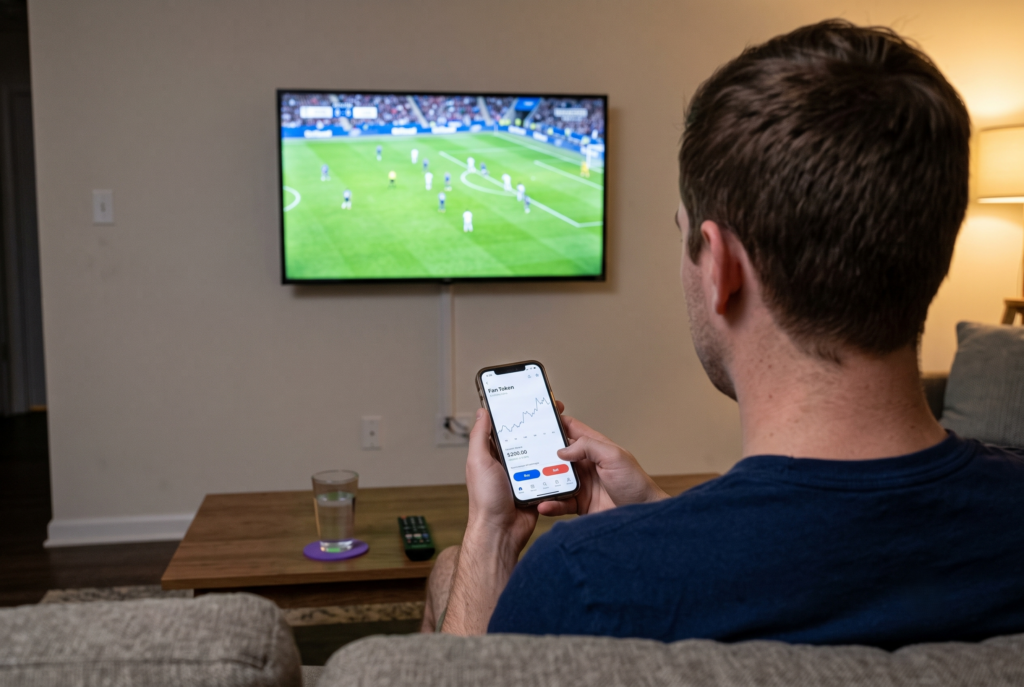
Fan token prices swing with on-field results, so many viewers track them on a crypto exchange app while the match plays. Evaluate fees, custody, and state licensing before you trade.
How World Cup Fan Tokens Work: Chiliz and Socios
A fan token is a blockchain-based digital asset that gives holders access to minor team polls, exclusive content, or rewards. In the World Cup context, most national-team fan tokens are issued through Socios.com, a platform built on the Chiliz blockchain, an infrastructure layer dedicated to sports and entertainment tokens. Chiliz has powered much of the fan-token activity around the tournament.
These tokens are not securities, and they do not represent ownership in a team or any share of its revenue. They are utility tokens whose price is driven by sentiment, on-field results, and speculation rather than any underlying cash flow. Understanding that distinction is the single most important step before treating a fan token like an investment.
Fan Token Volatility During the Knockout Stage
Fan tokens are highly volatile, and the knockout rounds amplify the swings. Chiliz’s CHZ token and individual national-team tokens tend to spike on wins and advancement, then sell off sharply when a team is eliminated. The direction can reverse within a single match.
Volatility works both ways, and liquidity for smaller national-team tokens is often thin. That combination makes it difficult to exit a position without moving the price against yourself. Treat these tokens as high-risk speculative assets, and never commit more than you can afford to lose completely.
Crypto Prediction Markets and World Cup Outcomes
A prediction market is a platform where users trade shares tied to a real-world outcome, so the share price reflects the market’s implied probability of that outcome. Blockchain-based prediction markets drew heavy activity around the World Cup, with participants treating match results as tradeable events. If the outcome happens, winning shares settle at a fixed value, and losing shares expire worthless.
The regulatory picture in the US is unsettled. The Commodity Futures Trading Commission (CFTC), the federal regulator for derivatives and event contracts, has raised concerns about certain event-based products, and not all platforms accept US users. Before using a prediction market, verify that the platform complies with US rules and clearly discloses its counterparty risk.
Avalanche and World Cup Digital Collectibles
Digital collectibles built on the Avalanche blockchain also saw elevated activity, with Avalanche positioned as an infrastructure layer for sports and entertainment apps. These collectibles range from limited-edition digital stickers to interactive match memorabilia, usually minted as non-fungible tokens (NFTs), unique blockchain records of ownership for a specific digital item.
Unlike fan tokens, collectibles typically carry no governance rights, and their value rests on scarcity and cultural relevance. If you are considering one, evaluate the issuer, the blockchain’s transaction costs, and whether the item can actually be resold on a secondary market that US users can access.
How to Evaluate a Crypto Exchange
Choosing a crypto exchange takes more than recognizing a logo on a pitch-side board. Look for clear disclosures on whether customer assets are held 1:1, what proof-of-reserves or insurance mechanisms exist, and whether the platform is licensed in your state. Many exchanges that list fan tokens are not registered with the Securities and Exchange Commission (SEC) as national securities exchanges, and crypto held on any exchange is not covered by FDIC insurance or SIPC protection.
Fees vary widely. Some exchanges charge a spread on top of the market price, others use a maker-taker model, and a platform that advertises zero commissions may still bury its cost in the price. Read the full fee schedule and run a small test trade before committing more. For a detailed breakdown of one major US platform, our Coinbase review covers its fee structure, custody model, and supported assets.
Key Risks and Limitations
Trading fan tokens during a high-visibility event carries risks that are easy to overlook in the excitement of the tournament.
- Extreme volatility: Tokens can lose most of their value in hours on a single match result or a wave of social-media sentiment.
- Thin liquidity: Smaller national-team tokens have shallow order books, so large trades move the price against you.
- No consumer protections: Funds on an exchange are not FDIC insured, and there is no backstop against platform insolvency or operational failure.
- Tax obligations: The IRS treats digital assets as property, so selling a token for a gain generally triggers a taxable event you must report.
- Regulatory uncertainty: How fan tokens and prediction-market contracts are classified could change, affecting their tradability or legality in the US.
None of this means you must avoid the space entirely. It means sizing positions carefully and never relying on token sales for essential financial goals. If you want lower-stakes exposure to crypto through an established brokerage, our Public review and eToro review compare two platforms that offer crypto alongside traditional assets.
The Broader 2026 World Cup Crypto Impact
The tournament’s crypto impact runs beyond trading. It is normalizing the presence of crypto exchanges in mainstream sports, which can accelerate adoption, while also drawing regulators who are watching how these platforms market to a broad audience. The Federal Trade Commission (FTC) has warned repeatedly about crypto scams that spike around major events, which makes consumer education essential.
The right posture for a US reader is to separate the spectacle of sponsorship from the fundamentals of platform evaluation. A crypto exchange’s presence at the World Cup does not lower the risk of the assets it lists.
Who Should Engage, and How
If you are a soccer fan who wants a small stake in the tournament and can treat the money as entertainment you might lose entirely, a modest fan-token position on a licensed, transparent exchange is a defensible choice. If you are looking for an investment, fan tokens are the wrong tool, because they carry no ownership and no cash flow. Either way, confirm the exchange is available in your state, read its fee schedule, run a small test trade first, and set aside records for taxes since every sale at a gain is reportable. Start with the platform’s licensing and custody disclosures, not its World Cup logo.
Frequently Asked Questions
Who is the official crypto exchange of the 2026 World Cup?
Kraken became FIFA’s first Official Crypto Exchange Supporter on June 9, 2026, a category-exclusive deal with FIFA itself. The designation is a marketing partnership and does not imply any endorsement of the safety, fees, or suitability of trading crypto.
How do I choose a crypto exchange for World Cup fan token trading?
Check whether the exchange is licensed in your state and whether it discloses fees, custody practices, and proof of reserves. Confirm it lists the specific fan tokens you want and has enough volume to avoid excessive slippage. Do not decide based on a sponsorship or promotional offer alone.
What fees should I watch for when buying fan tokens?
Review the full fee schedule, including trading fees, withdrawal fees, and any spread markup. Some platforms embed the cost in the price instead of showing a separate commission. Compare the total cost of a small test trade across two or three exchanges before committing more.
What are fan tokens and how do they work?
Fan tokens are blockchain-based utility tokens issued by teams or organizations, often through Socios.com on the Chiliz blockchain. They grant access to minor polls or exclusive content. Their price is driven by market demand and team performance, not by ownership equity or revenue sharing.
What are the risks of trading World Cup fan tokens?
The main risks are extreme price volatility, thin liquidity for smaller tokens, no FDIC or SIPC protection, tax reporting obligations, and regulatory uncertainty. Tokens can lose most of their value quickly, especially after a team is eliminated.
How do crypto prediction markets work for match outcomes?
They let users buy and sell shares tied to a specific match outcome, and the share price reflects the market’s implied probability. If the outcome occurs, winning shares settle at a set value. US access is limited, and the CFTC has raised concerns about certain event contracts.
Are gains from fan tokens taxable?
Yes. The IRS treats digital assets as property, so selling a fan token for more than you paid generally creates a taxable capital gain that you are responsible for reporting. Keep records of your purchase price, sale price, and dates.