

⚡ The Quick Answer
Effingham County’s Project Zero would eliminate the county government’s share of property taxes on qualifying homestead properties by 2028, funded by a new 1% sales tax (LHOST) and a locally funded grant authorized by state law (LHIAG). County officials project an average 42% cut to county tax bills, but the plan is not law yet: it needs voter approval starting in November 2026. It does not touch school taxes, so this is one piece of a broader tax relief picture, not a full property-tax repeal.
If you own a home in Effingham County, Georgia, your property tax bill has likely climbed over the past few years. Rising assessments and growing demand for local services have pressured household budgets and pushed tax relief to the top of many homeowners’ concerns. In July 2026, county officials unveiled Project Zero, a multi-year plan to eliminate the county government’s portion of property taxes on homesteaded properties. The proposal leans on two Georgia mechanisms, the Local Homestead Option Sales Tax (LHOST) and the Local Homeowner’s Incentive Adjustment Grant (LHIAG), and it offers a concrete look at how local governments are rethinking the property tax burden.
What Is Effingham County’s Project Zero?
Project Zero is Effingham County’s plan to eliminate the county government’s share of property taxes on qualifying homestead properties by 2028. It would not affect school district taxes or taxes on commercial and non-homestead residential properties. To replace the lost revenue, the county intends to use two state-authorized tools: a 1% Local Homestead Option Sales Tax (LHOST) and a Local Homeowner’s Incentive Adjustment Grant (LHIAG). Both components require voter approval through separate referendums, with the first vote expected in November 2026, as detailed on the county’s Project Zero page.
How the Local Homestead Option Sales Tax (LHOST) Works
LHOST is a countywide 1% sales tax dedicated to property tax relief for homesteaded properties. According to county estimates reported by the Effingham Herald, the tax would generate about $17 million a year, with most of the revenue coming from business and industrial activity. The structure is designed to shift part of the tax burden away from homeowners and onto everyday commercial transactions.
- A 1% sales tax added to most purchases in Effingham County.
- Projected to raise about $17 million per year, most of it from business and industrial activity.
- Revenue funds a homestead exemption that lowers qualifying homestead property tax bills.
The Local Homeowner’s Incentive Adjustment Grant (LHIAG)
LHIAG is a locally funded grant program, authorized by Georgia law, that supplements local homestead exemptions. It is not state money. Under the enabling legislation, the county sets up its own grant fund and can add to it only when it has excess revenue from the prior fiscal year, then applies that money as a dollar-for-dollar credit against qualifying homestead bills. Effingham County plans to use LHIAG to push county property taxes for homesteaded owners toward zero, on top of the LHOST-funded exemption. One caveat worth knowing: the state authorization behind LHIAG is still moving through the legislature and depends on a related constitutional amendment, so this piece is not yet settled law.
How Much Could Homeowners Save?
County officials estimate that homeowners with qualifying homestead exemptions would see an average reduction of 42% on their county property tax bills. As a concrete example, a $325,000 homesteaded home with a 2026 county tax bill of an estimated $3,639 would see that bill drop to $2,111, a savings of $1,528. These figures cover the county portion only and do not include school or other district taxes, which you would still owe in full.
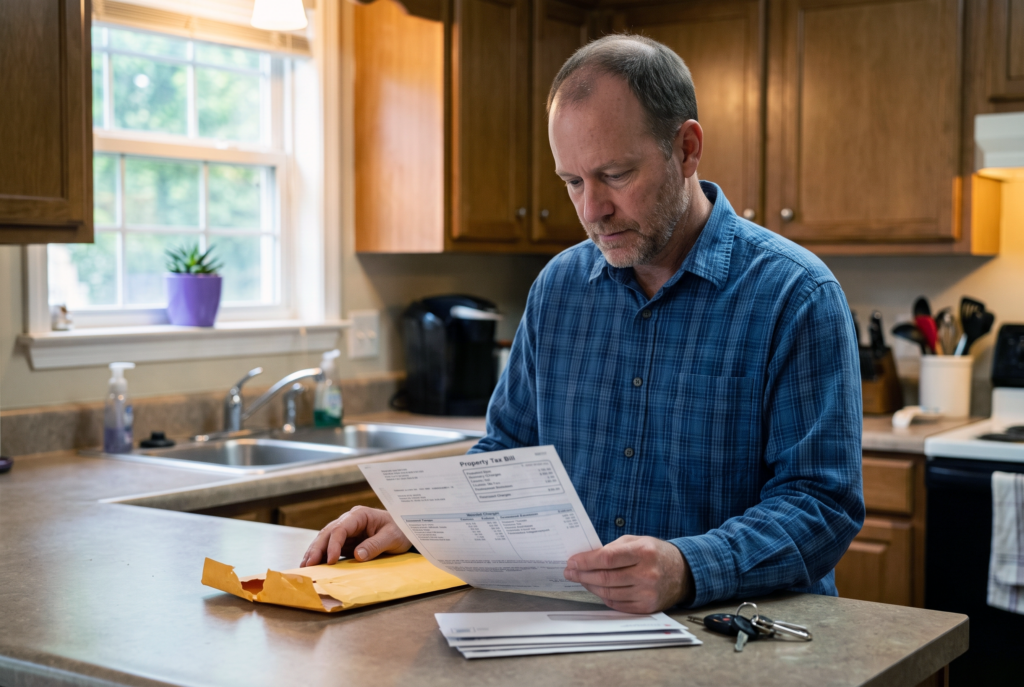
For homesteaded owners, Effingham County’s Project Zero could cut the county share of a property tax bill like this one by an average of 42% by 2028.
What Project Zero Does Not Cover
Project Zero does not eliminate all property taxes, and that distinction matters for your budget. The plan targets only the county government’s share of property taxes on qualifying homestead properties. School district taxes, which often make up the largest slice of a Georgia property tax bill, stay the same. Commercial properties, rental homes, and second homes do not qualify for the exemption, so investors and landlords see no change.
When Will Voters Decide?
The path to implementation runs through the ballot box. The LHIAG referendum is expected on the November 2026 general election ballot. If it passes, the county would then hold a separate referendum to enact the 1% LHOST. County leaders aim to have the full plan in place by 2028, but the timeline depends on voter support at each step, so residents should watch for official ballot language and attend public information sessions to weigh the trade-offs.
Broader Georgia Tax Relief in 2026
Project Zero is part of a wider wave of tax relief in Georgia. In March 2026, Governor Brian Kemp signed HB 1000, authorizing a fourth one-time special income tax rebate of up to $500 for couples filing jointly, and HB 1199, which suspended the state motor fuel tax for 60 days. You can read the details in the Governor’s office announcement. These state measures put immediate cash back in residents’ hands but do nothing to lower property tax bills, which is the gap local initiatives like Project Zero are trying to close.
What This Means for Choosing a Tax Relief Strategy
Project Zero shows that meaningful tax relief can come from government programs at no cost to you. If your problem is federal tax debt or property tax delinquency, though, you may need private help, and that is where diligence matters most. No firm can promise the IRS will accept an offer in compromise or reduce your debt, so treat any such claim as a warning sign. Look for providers that employ licensed tax professionals such as CPAs, enrolled agents, or tax attorneys, and read a detailed writeup like our Priority Tax Relief review to see what clear fee disclosure looks like. The Federal Trade Commission warns consumers to be wary of firms that claim they can settle tax debt for “pennies on the dollar” without a real assessment, and our Anthem Tax Services review covers the kind of upfront process detail worth demanding. Before paying for outside help, check whether you qualify for local homestead exemptions, state rebates, or IRS installment plans that can ease the burden for free.
The Bottom Line on Project Zero
Here is how to read Project Zero if you own a home in Effingham County. If you hold a qualifying homestead exemption, the plan could cut your county bill by roughly 42% by 2028, but only if voters approve both referendums and the state authorization behind LHIAG holds. Treat it as a probable future benefit rather than a current one, and keep budgeting for school taxes, which the plan does not touch. If your more urgent issue is existing IRS or back-tax debt instead of property taxes, that is a separate problem, and the right first step is to compare providers on disclosed fees and documented outcomes, as our Tax Relief Advocates review lays out, before paying anyone.
Frequently Asked Questions
How do I choose a reputable tax relief company if I owe federal taxes?
Start by confirming that the firm employs licensed tax professionals, such as enrolled agents, CPAs, or tax attorneys. Ask for a clear fee structure and avoid companies that require large upfront payments before evaluating your situation. Check for complaints with the Better Business Bureau and your state attorney general’s office. No company can promise the IRS will accept an offer in compromise or reduce your debt.
How does Project Zero in Effingham County work?
Project Zero proposes eliminating the county government’s portion of property taxes on qualifying homestead properties by 2028. It would be funded through a 1% Local Homestead Option Sales Tax (LHOST) and a Local Homeowner’s Incentive Adjustment Grant (LHIAG). Both components require voter approval.
What is the Local Homestead Option Sales Tax (LHOST)?
LHOST is a 1% countywide sales tax that Georgia law allows local governments to use for property tax relief. In Effingham County, it is projected to generate about $17 million a year, with most revenue coming from business and industrial transactions. The funds go toward reducing qualifying homestead property tax bills.
What is the Local Homeowner’s Incentive Adjustment Grant (LHIAG)?
LHIAG is a locally funded grant program, authorized by Georgia law, that supplements local homestead exemptions using the county’s own prior-year surplus. Effingham County plans to use it to further reduce county property taxes for qualifying homeowners. It requires voter approval, with a referendum expected in November 2026.
Will Project Zero eliminate all property taxes in Effingham County?
No. Project Zero only targets the county government’s share of property taxes on qualifying homestead properties. School district taxes and taxes on commercial or non-homestead residential properties remain unchanged.
When will Effingham County voters decide on Project Zero?
The first referendum, related to the LHIAG grant, is expected on the November 2026 ballot. If approved, a separate referendum would be needed to enact the 1% LHOST sales tax.
 1099 Tax Problems
 Alleviate Tax
 Five Star Tax Resolution
 Priority Tax Relief
 Tax Relief Advocates