The Quick Answer
The best credit cards for groceries and gas earn elevated cash back in the two categories most American households spend on every week. Among the cards we reviewed, the American Express Blue Cash Preferred leads on groceries with 6% back at U.S. supermarkets on up to $6,000 a year, while flexible-category cards like the Bank of America Customized Cash Rewards and the U.S. Bank Cash+ let you steer a bonus rate toward gas. The right card depends on how your spending splits between the grocery aisle and the pump.
Groceries and gas are two of the largest recurring line items in a typical household budget, which makes them the highest-leverage categories for a rewards card. A card that pays an elevated rate on both can return real money over a year of ordinary spending.
The catch is that very few cards pay a top rate on both groceries and gas at the same time. Most lead on one and offer a middling rate on the other, or cap the bonus at an annual spending limit. Picking well means knowing which category you spend more on and reading the caps before you apply.
Why “supermarket” is not the same as “groceries”
This distinction trips up more cardholders than any other. Issuers define a U.S. supermarket as a store whose primary business is selling groceries. That definition usually excludes warehouse clubs like Costco, big-box stores like Walmart and Target, and specialty grocers, because those merchants are coded under a different category.
So a card advertising 6% at U.S. supermarkets may earn only the base rate at a warehouse club. Before you assume your grocery spending qualifies, check where you actually shop against the card’s supermarket definition in its terms.
Best for groceries: American Express Blue Cash Preferred
For pure grocery rewards, the American Express Blue Cash Preferred is the strongest card we reviewed. It earns 6% cash back at U.S. supermarkets on up to $6,000 per year, then 1% after that cap. It also earns 3% at U.S. gas stations, which makes it a rare card that covers both categories well.
The trade-off is the annual fee. The card charges a $0 intro annual fee for the first year, then $95. At $6,000 of supermarket spending, the 6% rate returns $360, so a household that spends roughly $500 a month on groceries clears the fee several times over. A light grocery shopper may not. Our Amex Blue Cash Preferred review runs the break-even math in detail.
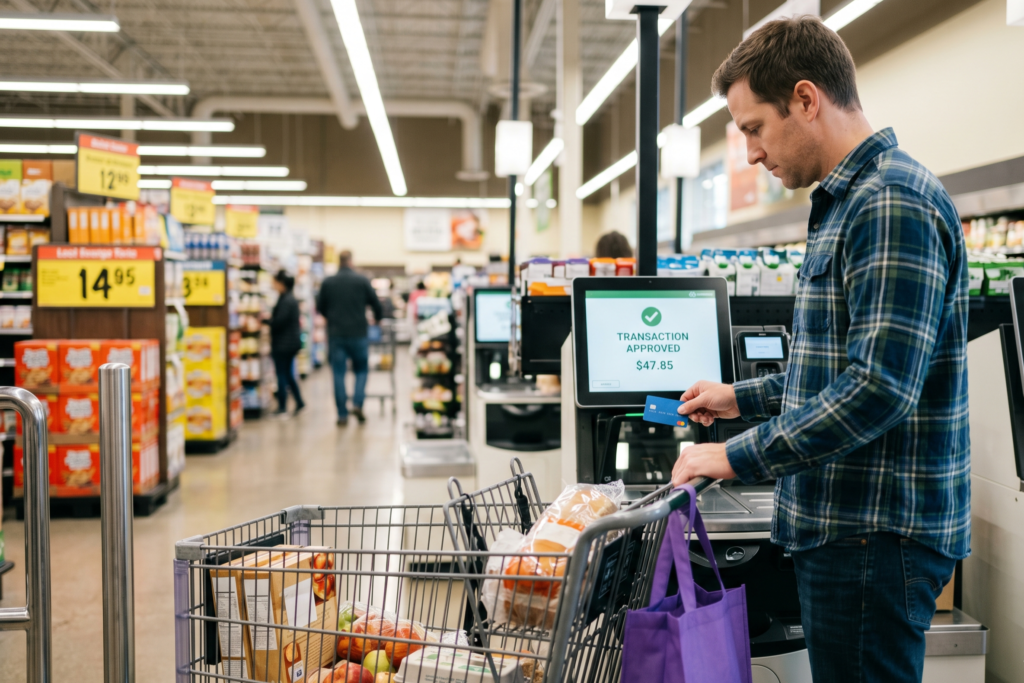
Everyday supermarket purchases are exactly where a strong grocery rewards rate turns ordinary spending into cash back.
Best for steering toward gas: flexible-category cards
If gas is your larger expense, a flexible-category card lets you direct the bonus rate where you spend most. These cards earn an elevated rate on a category you choose or on your top spending category automatically.
The Bank of America Customized Cash Rewards lets you pick a 3% category from a list that includes gas, with 2% at grocery stores and wholesale clubs, up to a combined quarterly cap. The full structure is in our Bank of America Customized Cash Rewards review. The U.S. Bank Cash+ takes a similar approach, letting you select bonus categories each quarter, covered in our U.S. Bank Cash+ review. Both carry no annual fee, which lowers the bar for coming out ahead.
Compare Options
Find the right everyday spending card
Our buyer’s guide scores grocery and gas cards on earn rates, caps, and fees so you can match a card to your weekly spending.
How the top grocery and gas cards compare
The right card depends on which category dominates your budget and whether you will hit the bonus caps. This table shows the structural differences.
| Card | Grocery rate | Gas rate | Annual fee |
|---|---|---|---|
| Amex Blue Cash Preferred | 6% at U.S. supermarkets, up to $6,000/yr | 3% at U.S. gas stations | $0 intro first year, then $95 |
| BofA Customized Cash Rewards | 2% at grocery stores and clubs | 3% if you choose gas as your category | $0 |
| U.S. Bank Cash+ | Base rate unless selected | Elevated if chosen as a bonus category | $0 |
*Rates and caps reflect each issuer’s published terms and can change. Confirm current details on the issuer’s official page before applying.
When a grocery card’s annual fee pays off
The Blue Cash Preferred’s 6% rate is the highest grocery rate we found, but it comes with a $95 fee after year one. The break-even is straightforward. At 6%, you need about $1,583 of annual supermarket spending just to earn back the $95 fee, after which everything is profit up to the $6,000 cap.
Compare that to a no annual fee card earning 2% on groceries. The Blue Cash Preferred pulls ahead once your supermarket spending clears that break-even point, which most regular grocery shoppers pass easily. If your grocery spending is light, a no fee 2% card like the flexible-category options keeps more in your pocket. The best no annual fee credit cards are the better starting point for lighter spenders.
Watch the caps, not just the headline rate
Almost every elevated grocery or gas rate comes with a spending cap. The Blue Cash Preferred caps its 6% supermarket rate at $6,000 per year. Flexible-category cards typically cap the bonus rate at a combined quarterly limit across all bonus categories.
This matters because a high rate on a low cap can be worth less than a moderate rate with no cap. Estimate your annual grocery and gas spending first, then check whether a card’s cap lets you actually earn the headline rate on all of it.
How to choose your grocery and gas card
Start by splitting your monthly spending between the two categories. If groceries dominate and you spend heavily at traditional supermarkets, the Blue Cash Preferred’s 6% rate is hard to beat even after the fee. If gas is your larger expense, a flexible-category card that lets you set gas as the bonus category often wins, with no fee to clear.
Then confirm three things: whether your stores count as supermarkets under the card’s definition, where the bonus caps sit, and the regular APR. The full framework is in our step-by-step guide to choosing a credit card.
The bottom line on grocery and gas cards
For heavy grocery shoppers, the American Express Blue Cash Preferred returns the most at 6% up to $6,000 a year, and its fee is easy to clear at typical family spending. For drivers whose gas spending outweighs groceries, a no annual fee flexible-category card like the Bank of America Customized Cash Rewards or the U.S. Bank Cash+ lets you point the bonus rate at the pump without paying to hold the card. Map your spending to the categories, check the caps, and pay in full each month so interest never erodes the rewards.
Frequently asked questions
What is the best credit card for groceries?
Among the cards we reviewed, the American Express Blue Cash Preferred leads on groceries with 6% cash back at U.S. supermarkets on up to $6,000 per year, then 1%. It is best for households whose grocery spending is high enough to clear the $95 annual fee that applies after the first year.
Can one card earn well on both groceries and gas?
A few can. The Blue Cash Preferred earns 6% at U.S. supermarkets and 3% at U.S. gas stations, covering both. Most other cards lead on one category and pay a base rate on the other, so the best single-card choice depends on which category you spend more on.
Do grocery cards earn bonus rewards at Costco or Walmart?
Usually not. Most issuers define a U.S. supermarket as a store whose primary business is groceries, which typically excludes warehouse clubs and big-box retailers like Costco, Walmart, and Target. Those purchases generally earn the card’s base rate instead of the supermarket bonus.
Is there a no annual fee card for groceries and gas?
Yes. Flexible-category cards like the Bank of America Customized Cash Rewards and the U.S. Bank Cash+ carry no annual fee and let you earn an elevated rate on gas or a solid rate on groceries. The rates are lower than a premium grocery card, but you avoid the yearly fee.
Why does my grocery card stop earning the high rate?
Because of the annual or quarterly spending cap. The Blue Cash Preferred earns 6% only on the first $6,000 of supermarket spending each year, then drops to 1%. Flexible-category cards cap the bonus at a quarterly limit. Once you pass the cap, you earn the base rate.
Do gas rewards keep up when fuel prices rise?
A percentage-based rate scales with the price you pay, so a 3% gas rate returns more in dollars when prices are higher. That makes a gas bonus category more valuable during periods of rising fuel costs, though the percentage itself does not change.