The Question That Matters More Than You Think
You have been with the same carrier for years, and your renewal arrives with an unexpected jump. Before you accept the number, consider a subtle shift in underwriting that can catch couples off guard. Some carriers are increasingly relying on household composition data, and a single clarification about whether you are married, have a domestic partner, or share the home with an unrelated adult can factor into how they classify liability and personal property exposure.
The extent of this practice varies. Not every insurer treats a change in marital status or adult occupancy the same way, and state regulations affect what carriers can use in rating decisions. Where these factors do influence the premium, the change can range from a modest addition to a materially larger swing in high-risk ZIP codes where reinsurance and climate exposure already elevate base rates.
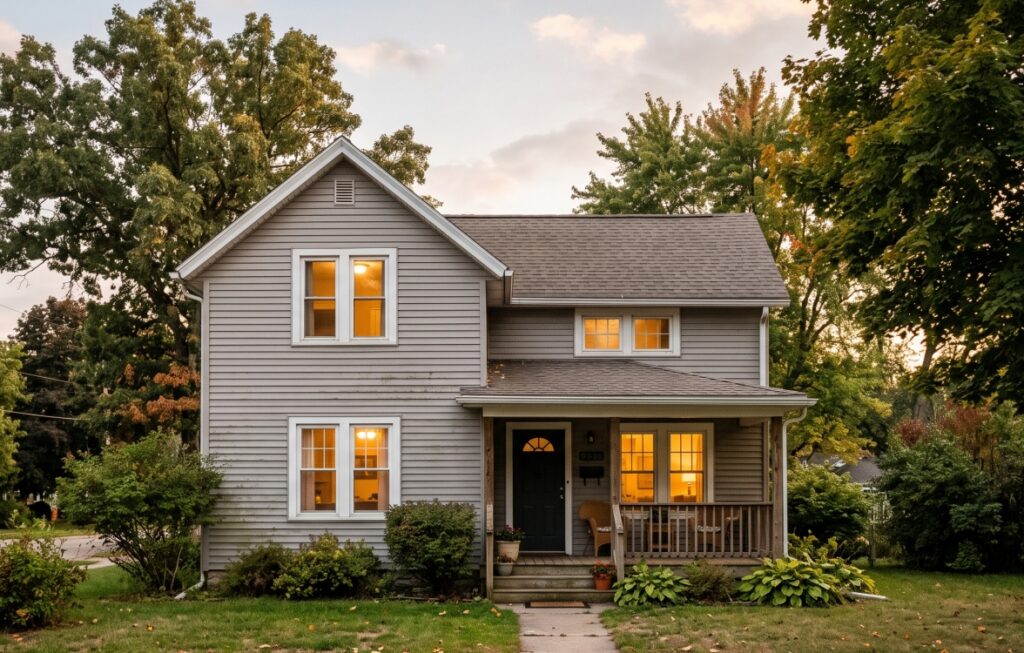
Some home insurers are more closely scrutinizing occupancy and relationship status, so it pays to compare quotes carefully and understand which factors drive your rate.
Why Simple Disclosure Affects Risk Models
Insurers do not just protect your dwelling structure. A standard home insurance contract also covers personal liability, meaning the carrier is on the hook if a guest gets injured or a resident causes accidental damage to a neighbor’s property. When you add another adult to the policy, the statistical likelihood of a liability claim can shift, along with expectations about contents coverage.
The pricing formula factors in the credit history, prior claims, and insurance score of all named insureds where state law permits. According to the Consumer Federation of America (CFA), the average annual US home insurance premium reached approximately $3,303 in 2024, a 24% increase from 2021. If a partner has a lower credit-based insurance score or a past lapse in coverage, blending their profile with yours can push a joint policy above the range each of you might see individually.
The Sustained Rise in Home Insurance Rates
Even without a change in your relationship status, home insurance costs in 2026 continue to climb faster than most household budgets can absorb. Industry-wide home insurance premiums have risen roughly 40 to 50 percent since 2019, depending on state and coverage tier. A 2024 US Treasury report on the homeowners insurance market found that average premiums per policy increased 8.7 percent faster than the rate of inflation from 2018 to 2022, capturing costs that general consumer price indexes only partially reflect.
The Reinsurance Effect in 2026
One of the quiet drivers behind individual premium re-ratings is the global reinsurance market. Reinsurance protects your carrier from insolvency after a catastrophic storm or fire; it is essentially insurance for insurers. Reinsurance costs rose sharply in 2023 following a wave of natural catastrophe losses and remain elevated compared to pre-pandemic levels. According to S&P Global’s analysis of January 2026 renewals, reinsurance prices have begun to moderate from their peak, but primary insurers have continued to pass through the elevated costs that were baked into recent rating actions.
When a company’s reinsurance treaty renews at a higher rate, the underwriting department adjusts the book of business to compensate. Even if you have not filed a claim, lived in the same house for a decade, and kept a spotless credit history, you can still absorb a portion of that reinsurance burden. In 2026, a household with two named insureds might see a slightly sharper upward adjustment than a single counterpart because the dual-adult profile often gets mapped to higher contents and liability assumptions.
Climate Losses and a Persistent Labor Shortage
Natural disasters are no longer confined to coastal hurricane alleys or California wildland-urban interfaces. According to the 2024 US Treasury report, the number of weather and climate disasters causing more than $1 billion in damage increased more than fivefold from 2018 through 2022, compared with the 1980s, after adjusting for inflation. Consumers living in the 20% of ZIP codes with the highest expected annual losses to buildings from climate-related perils paid premiums that were 82% higher than those in the 20% of ZIP codes with the lowest climate risk over 2018 to 2022.
When a dwelling claim hits, the cost to rebuild has surged far beyond simple lumber price movements. Associated Builders and Contractors estimates the US construction industry needs to attract 349,000 additional workers in 2026 to meet demand, and the resulting labor scarcity drives up wages on structural repairs. The US Treasury report documented that the cost of employing workers building single-family residential homes jumped 37% between 2018 and 2022. A policy with two adults occupying the home can result in higher estimated contents and liability limits, so the same percentage rate hike produces a larger absolute dollar increase for couples than for a single policyholder.
What Homeowners Are Saying
Homeowners have noticed the increases. According to a Pew Research Center survey of 3,524 US adults conducted March 16 to 22, 2026, about 71% of homeowners said the cost of their homeowners insurance had increased over the past few years, with 42% saying costs had gone up “a lot.” Respondents pointed to a mix of causes, including their perception that insurers are pursuing higher margins, alongside the more concrete economic pressures of rising rebuild costs and climate-related claims. The tension between required carrier solvency and consumer sticker shock defines the current landscape for home insurance rates.
Credit Scores and Joint Policy Loading
In most states, credit-based insurance scores remain a legally permissible rating factor. When you add a partner to your policy, the carrier typically pulls a fresh consumer report. If one partner’s score falls into a lower actuarial bucket, the blended rate can be higher than each person’s individual quote would suggest.
This dynamic is one area where an occupancy question converts directly into dollars for some households. Couples who assume they must list both partners on the same policy should compare the cost of two separate policies versus a single joint one. State regulations vary, but a split approach sometimes yields a lower combined premium even when accounting for multi-policy discounts on auto bundling.
Why Claims-Free Couples Still Pay More
It is a common misconception that filing a claim is the only trigger for a home insurance premium increase. While a water damage or theft claim does typically create a surcharge, today’s broader insurance environment prices in ZIP code concentration and replacement-cost escalation regardless of personal claims history.
For couples who recently merged households, the carrier may reassess the dwelling value and personal property limit because two people often own more combined electronics, furniture, and apparel. An increase in Coverage C (personal property) by $30,000, paired with a modest liability limit lift, can add materially to the invoice. In 2026, the calculation is often automatic even if you never filed a paperwork change, because insurers rely on data aggregators and property records that signal occupancy density.
| Rating Factor | How It Affects Couples |
|---|---|
| Credit-based insurance score | Blended score can raise or lower joint premium relative to individual quotes |
| Personal property limit | Two adults typically increase contents coverage needs |
| Liability exposure | More visitors and household activity can raise the risk profile |
| Reinsurance pass-through | Percentage increase on a larger base amount hits joint policies harder |
| Construction cost inflation | Higher replacement cost on larger perceived occupancy |
How to Compare and Lower Home Insurance Costs
Start by asking your current carrier for a written explanation of any occupancy-related rating adjustments. You have a right under the Fair Credit Reporting Act to understand if a consumer report influenced your risk tier. If one partner’s score is dragging up the rate, ask the insurer whether it is possible to quote the policy in the name of the higher-score partner only, if state law and mortgage terms permit.
Get a minimum of four quotes from different types of carriers. Captive agents sell one brand exclusively, while independent brokers can shop several non-affiliated underwriters simultaneously. For 2026, online comparison platforms let you see a normalized view of home insurance rates across standard and surplus lines markets. No single strategy erases the cost trend, but stacking discounts for smart-home sensors, roof age, and claims-free tenure can offset climate and reinsurance pressure.
Even the most thorough quoting exercise cannot fully insulate a consumer from mid-term rate hikes driven by statewide climate risk reassessments. A policy bought in January 2026 can still be re-priced at renewal if the carrier re-maps flood and fire zones.
The Bottom Line
- In 2026, a routine clarification about who lives with you can, for some carriers, reclassify how they weigh your risk profile through its effect on liability and personal property limits.
- Home insurance premiums have risen roughly 40 to 50 percent since 2019, and premiums grew 8.7 percent faster than the rate of inflation from 2018 to 2022 according to the 2024 US Treasury report.
- Reinsurance costs rose sharply in 2023 and remain elevated, and although prices moderated at January 2026 renewals according to S&P Global, primary insurers have continued to pass through the elevated levels baked into recent rating actions.
- Associated Builders and Contractors estimates the US construction industry needs to attract 349,000 additional workers in 2026, directly inflating reconstruction estimates and, by extension, dwelling coverage costs.
- According to the Consumer Federation of America, average annual US home insurance premiums reached about $3,303 in 2024, a 24% increase from 2021.
- Comparing quotes annually, evaluating split versus joint coverage, and pressing for a detailed rate component disclosure remain the most practical defenses against overpaying.
Frequently Asked Questions
Does adding my partner to my policy always raise my home insurance?
Not always. If your partner has a strong credit-based insurance score and a claims-free record, a joint policy can sometimes lower the combined rate. However, in some cases the expanded personal property and liability exposure increases the total premium, so it is worth requesting side-by-side quotes for joint versus separate policies.
What factors cause home insurance rates to increase in 2026?
Key drivers include elevated reinsurance costs, climate-related disaster losses, persistent construction labor shortages, and rising replacement cost valuations. Changes in your household composition or credit profile can also be repriced at renewal.
Does filing a claim always raise my home insurance premium?
A single small claim does not guarantee a surcharge, but many carriers use tiered rating that triggers a premium adjustment after specific dollar thresholds or within a designated lookback period. Even without a claim, your neighborhood’s aggregated loss history can influence your rate.
Can my credit score affect my home insurance rates?
Yes, where permitted by state law. Insurers use credit-based insurance scores to help predict the likelihood of a claim. A lower score can raise your annual cost by a measurable margin compared to a higher scoring counterpart with an otherwise identical dwelling profile.
What is reinsurance and how does it impact home insurance costs?
Reinsurance is coverage that insurance carriers purchase to protect themselves from large-scale losses. Reinsurance prices rose sharply in 2023 after a wave of natural catastrophe losses and remain elevated, although S&P Global reported that January 2026 renewals began to moderate. Primary insurers pass a share of those costs to consumers in the form of higher direct premiums on homeowners policies.
Related BestGuide reviews: