

⚡ The Quick Answer
High-protein dog food is any complete diet that delivers protein well above the AAFCO minimums of 18% crude protein (dry matter) for adult maintenance and 22.5% for growth. Most fresh and raw formulas land between 30% and 45% on a dry matter basis. Dogs that benefit most are active and working dogs, puppies, pregnant or nursing dogs, and seniors fighting muscle loss. For healthy dogs, extra protein does not damage the kidneys. Among the brands we reviewed, We Feed Raw, Raised Right, and Maev deliver high protein from named animal sources while meeting AAFCO standards.
Protein is the single nutrient most owners ask about, and the one most surrounded by myths. The useful question is not whether more protein is better in the abstract. It is how much protein your dog actually needs for its life stage and activity level, where that protein comes from, and whether the food still meets complete-and-balanced standards.
This guide sets the benchmark first, then walks through who needs elevated protein, which brands deliver it cleanly, and the narrow situations where a vet may want protein managed rather than maximized.
What counts as high-protein dog food
There is no legal definition of “high protein” on a pet food label. The honest reference point is the regulatory floor. The Association of American Feed Control Officials (AAFCO), the body that sets U.S. pet food nutrient standards, requires a minimum of 18% crude protein on a dry matter basis for adult maintenance and 22.5% for growth and reproduction.
“Crude protein” is a measure of total protein calculated from nitrogen content. It tells you the quantity, not the quality, of the protein. A food can hit a high crude protein number from animal muscle meat or from cheaper plant concentrates, and the label percentage alone will not tell you which.
“Dry matter basis” matters because moisture distorts the comparison. A fresh or raw food that is 70% water will show a low protein number on the package even when its actual protein density is high. To compare a fresh diet against kibble fairly, you have to remove the water from both. We cover that conversion, and how fresh diets differ from kibble overall, in our complete guide to fresh dog food.
In practice, a diet reading roughly 30% or more crude protein on a dry matter basis sits comfortably in high-protein territory. Many fresh and raw formulas reach 40% to 45%.
How much protein a dog needs by life stage and activity
The right target is a range, not a single number, and it moves with age and workload. The figures below are dry matter minimums and typical functional targets, drawn from AAFCO profiles and the Merck Veterinary Manual.
| Dog profile | AAFCO minimum (DM) | Typical functional target (DM) | Why |
|---|---|---|---|
| Adult maintenance | 18% | 25% to 30% | Maintains lean muscle and tissue repair |
| Puppies, growth | 22.5% | 28% to 32% | Builds muscle and tissue during development |
| Active and working dogs | 18% (above floor recommended) | 30% to 40%+ | Supports endurance, recovery, and higher energy demand |
| Pregnant or nursing | 22.5% | 28% to 34% | Meets the elevated demand of gestation and lactation |
| Seniors (healthy) | 18% | 28% to 32% | Counters age-related muscle loss; needs high-quality protein |
*AAFCO values are minimums on a dry matter basis. Functional targets are typical ranges for the profile, not requirements. Confirm any change with your veterinarian.
Two points carry most of the weight here. First, older dogs do not need less protein by default. As dogs age, their ability to use dietary protein declines, so healthy seniors often do better on more high-quality protein, not less. We go deeper on that in our guide to the best senior dog food.
Second, protein quality drives results as much as quantity. A protein source that supplies all the essential amino acids your dog cannot make on its own is a high-quality protein. Named animal proteins such as beef, chicken, turkey, and lamb generally deliver that profile better than plant concentrates added only to lift the crude protein number.
Best high-protein dog food options, compared
The brands below all build their protein from named animal sources and carry an AAFCO complete-and-balanced statement, which is the baseline we require before a food earns a place in this comparison. The percentages reflect each brand’s stated formulation approach.
| Brand | Format | Protein approach | Protein source | AAFCO |
|---|---|---|---|---|
| We Feed Raw | Frozen and freeze-dried raw | Around 85% animal protein in freeze-dried recipes | Beef, chicken, turkey, lamb, duck, venison | All life stages |
| Raised Right | Lightly cooked, refrigerated | High protein, under 2% carbohydrate | Human-grade single and limited proteins | Compliant |
| Maev | Flash-frozen raw cubes | High protein, single animal protein per recipe | USDA beef or chicken | All life stages, incl. large-breed growth |
Best for raw feeders who want maximum protein density: We Feed Raw builds its meals around a high share of animal protein, and its freeze-dried recipes feature roughly 85% animal protein paired with whole fruits and vegetables. The frozen line covers six proteins and is AAFCO compliant for all life stages, which makes it flexible across puppies and adults. Custom plans and storage logistics are covered in our We Feed Raw review.
Best for low-carb, high-protein lightly cooked meals: Raised Right keeps carbohydrates under 2% while leaning on human-grade animal protein, which appeals to owners who want elevated protein without a fully raw routine. Its limited-ingredient construction also helps dogs that react to longer ingredient lists. Pricing and plan details are in our Raised Right review.
Best for convenience without dropping protein: Maev delivers flash-frozen raw cubes with a single USDA animal protein per recipe, formulated by board-certified veterinary nutritionists to meet AAFCO standards for all life stages, including large-breed growth. The cubes need no thawing, which lowers the friction of feeding raw. We break down formulas and cost in our Maev review.
If your dog reacts to multiple ingredients, the protein source matters as much as the protein level. A single named protein is easier to isolate, which is why high-protein raw and lightly cooked diets often overlap with allergy-friendly feeding. We connect those dots in our guide to human-grade dog food, where ingredient traceability is the central issue.
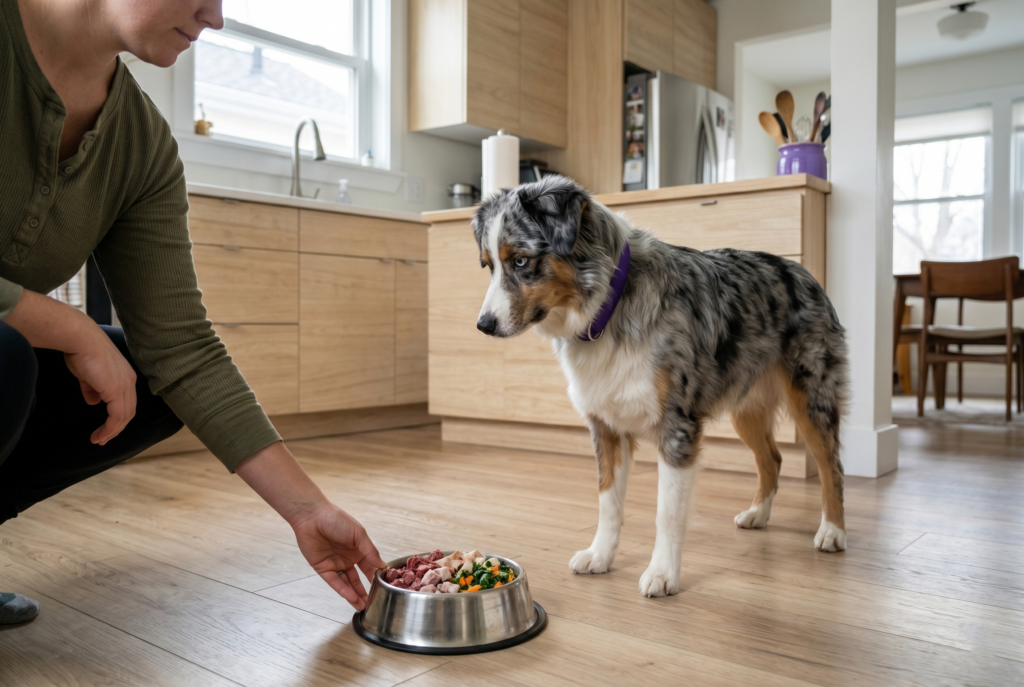
A bowl of high-protein dog food built around named animal proteins and fresh vegetables, served in a home kitchen.
Compare Options
Find the high-protein formula that fits your dog
See how the top high-protein brands stack up on protein source, safety testing, and price per day.
Why the protein source matters more than the number
A high crude protein percentage is only as good as the ingredients behind it. Dogs need ten essential amino acids they cannot synthesize, including arginine, lysine, and methionine. A food that hits a big protein number with incomplete plant proteins can still leave gaps in that amino acid profile.
This is why we weight named animal proteins listed first on the label, and why we treat raw and lightly cooked diets, which start from muscle meat, as a strong fit for high-protein feeding. Raw feeding carries its own handling and safety considerations, which we cover in detail in our guide to the best raw dog food.
The label tool that settles most questions is the nutritional adequacy statement. It tells you whether the food is complete and balanced, and for which life stage. A food labeled for “all life stages” meets the higher growth thresholds, which is useful for multi-dog households and puppies.
When high protein can be the wrong call
For healthy dogs, the long-standing fear that high protein damages the kidneys is not supported by the evidence. Multiple veterinary reviews trace that belief to old rodent studies that do not translate to dogs, and AAFCO and the National Research Council dropped earlier protein-restriction endorsements. A healthy dog excretes the byproducts of protein metabolism without harm.
The real cautions are specific and clinical, not general. They include:
- Dogs with diagnosed advanced kidney disease, where a veterinarian may manage protein and phosphorus together as part of a prescribed renal diet, particularly in later stages.
- Dogs with certain liver conditions, where protein type and quantity are adjusted under veterinary supervision.
- Large-breed puppies, where the concern is controlled, balanced growth rather than protein itself. Calcium and overall calorie balance matter more than the protein percentage.
- Dogs prone to weight gain, where calorie-dense high-protein diets need portion control to avoid overfeeding.
The throughline is that high protein is a tool matched to a need, not a universal upgrade. If your dog has a diagnosed kidney, liver, or metabolic condition, the protein decision belongs with your veterinarian, who can weigh protein quality, phosphorus, and the stage of the condition together.
How to choose: a quick decision frame
Start with your dog’s profile. If you have an active adult, a puppy, a pregnant or nursing dog, or a healthy senior losing muscle, a diet in the 28% to 40% dry matter protein range from named animal sources is a reasonable target, and the three brands above are strong starting points. If your dog is sedentary and prone to weight gain, prioritize portion control alongside protein quality rather than chasing the highest number.
If your dog has any diagnosed organ or metabolic condition, treat protein as a clinical variable and set the target with your veterinarian before switching. For everyone else, the practical move is to read the guaranteed analysis for crude protein, confirm the food is complete and balanced for your dog’s life stage, and check that the first ingredients are named animal proteins. From there, the choice comes down to format, budget, and how much prep you want, which is exactly what our complete guide to the best dog food is built to help you sort.
Frequently asked questions
What percentage of protein is considered high in dog food?
There is no legal threshold, but a diet reading roughly 30% or more crude protein on a dry matter basis is generally considered high protein. For reference, AAFCO requires a minimum of 18% for adult maintenance and 22.5% for growth on a dry matter basis. Many fresh and raw diets reach 40% to 45%.
Is high-protein dog food bad for a dog’s kidneys?
For healthy dogs, no. Veterinary research has not found that high protein causes kidney damage in dogs with normal kidney function, and older protein-restriction recommendations were based on rodent studies that do not apply to dogs. Protein is managed only in dogs with diagnosed advanced kidney disease, and that decision should be made with a veterinarian.
Do puppies need high-protein food?
Puppies need more protein than adults, with an AAFCO minimum of 22.5% on a dry matter basis versus 18% for adults. For large-breed puppies, the priority is controlled, balanced growth, so calcium levels and total calories matter alongside protein. A food labeled complete and balanced for growth or all life stages meets these thresholds.
Is high protein good for senior dogs?
For healthy seniors, often yes. Older dogs lose the ability to use dietary protein efficiently, so adequate high-quality protein helps preserve lean muscle. Protein is restricted only when a vet diagnoses a condition that calls for it, such as advanced kidney disease.
How do I compare protein in fresh food versus kibble?
Convert both to a dry matter basis. Fresh and raw foods contain far more moisture than kibble, so their on-package protein numbers look lower even when the actual protein density is higher. Removing the water from both lets you compare them fairly.
 Dr. Marty Pets
 Evermore Pet Food
 Just Food for Dogs
 Maev
Maev Ollie
Ollie Open Farm
 PetPlate
 Raised Right
 Raw Paws Pet Food
 The Honest Kitchen
 The Pets Table
 We Feed Raw