

⚡ The Quick Answer
The best senior dog food is a complete, AAFCO-compliant diet with adequate high-quality protein (often 28 to 30% on a dry matter basis), controlled calories, and meaningful levels of EPA and DHA omega-3 fatty acids for joint support. There is no legal definition of “senior” dog food, so the label alone guarantees nothing. Among the fresh and human-grade brands we reviewed, Just Food for Dogs, Ollie, and The Honest Kitchen stand out for transparent nutrient data and formulas that fit an aging dog’s needs. Always confirm the right diet with your veterinarian, especially if your dog has kidney, heart, or joint conditions.
Your dog is slowing down. The walks are shorter, the stairs take longer, and the food that worked for years suddenly feels like a question mark. The instinct is to grab a bag labeled “senior” and assume the formula has been adjusted for age. That assumption is where most owners go wrong.
Here is the finding that shapes everything below. Neither the Association of American Feed Control Officials (AAFCO), the body that sets U.S. pet food nutrient standards, nor the National Research Council has established a nutrient profile for the senior life stage. A 2025 analysis of adult and senior diets confirms that food marketed for seniors is formulated to meet adult maintenance or all-life-stages requirements, and the specific nutrient profile is left entirely to the manufacturer. That means two bags both labeled “senior” can differ widely in protein, fat, and joint nutrients.
So the work for you is not finding a bag that says “senior.” It is reading the nutrient panel and matching it to what aging dogs actually need. This guide walks through that, then points to three diets with the transparency to let you check.
What actually changes in an aging dog’s nutrition
Three shifts matter most as a dog ages: muscle preservation, calorie control, and joint support. Each points to a specific number on the label.
Older dogs lose muscle mass through a process called sarcopenia, the age-related decline in lean tissue. They also become less efficient at using dietary protein. The European Pet Food Industry Federation (FEDIAF) guidance recommends increasing dietary protein in senior diets, when not medically contraindicated, to support lean body mass. This is the opposite of the old advice to cut protein for older dogs, which applied mainly to specific kidney cases under veterinary supervision.
At the same time, many senior dogs need fewer calories because they move less. If you cut calories without raising protein concentration, total protein intake can fall below what the dog needs. That is the trap in low-quality senior formulas: they reduce energy density and protein at the same time.
Joints are the third axis. Osteoarthritis is common in aging dogs, and for dogs over eight, prevalence in specific joints can exceed 50%. The nutrient with the strongest research support here is omega-3, not the glucosamine most owners reach for first.
The three ingredients that carry the most evidence
When you compare senior diets, weigh them on three nutrients with real data behind them rather than marketing claims.
- High-quality protein. AAFCO’s adult maintenance minimum is 18% protein on a dry matter basis, per the Merck Veterinary Manual. That is a floor, not a target. Veterinary nutrition research points toward roughly 28 to 30% dry matter protein for healthy seniors to offset muscle loss, drawn from animal sources with high biological value.
- EPA and DHA omega-3 fatty acids. These long-chain fatty acids reduce inflammatory signaling in joint tissue. A randomized, double-blind, placebo-controlled trial found that daily EPA and DHA improved the clinical signs of osteoarthritis in dogs. The Journal of the American Veterinary Medical Association reviews omega-3s as a beneficial part of osteoarthritis management.
- Glucosamine and chondroitin. These appear in nearly every senior formula, but the evidence is weaker than the marketing suggests. Veterinary reviews note that standalone glucosamine supplements have not consistently outperformed placebo in rigorous trials. Treat them as a reasonable addition, not the reason to pick a food.
The honest takeaway: prioritize protein quality and EPA/DHA content. Glucosamine is a nice-to-have, not a deciding factor. Any brand that leads its senior pitch with glucosamine while staying vague on protein and omega-3 numbers is selling the weakest part of the science.
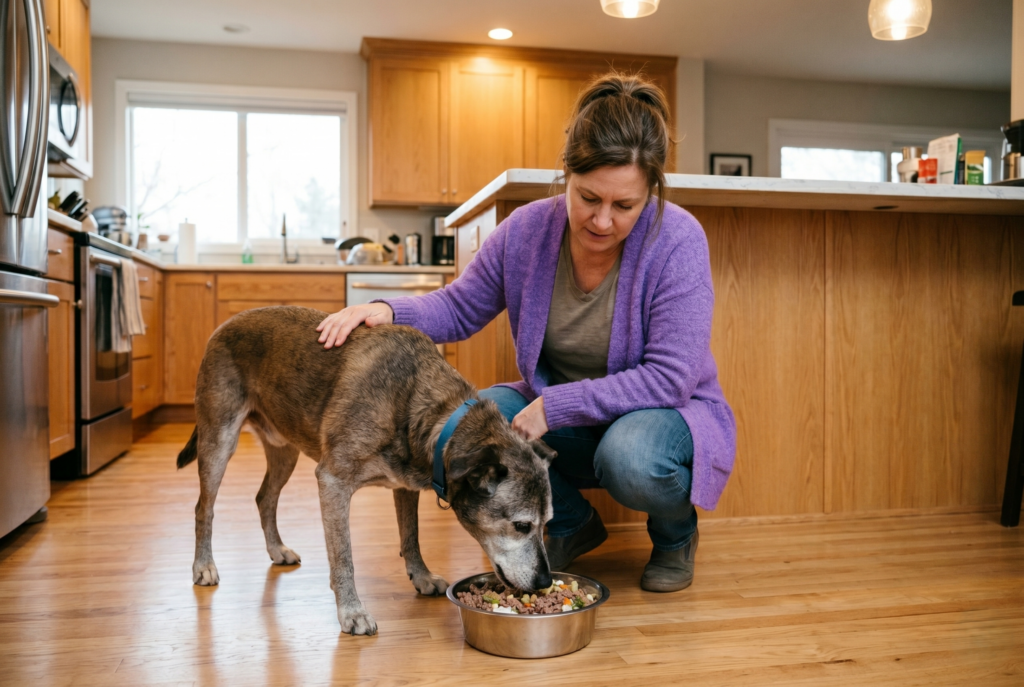
An older dog eats a bowl of fresh cooked food while its owner stays close, the kind of moisture-rich, easy-to-chew meal that suits many aging dogs.
Best senior dog food: three diets with the data to back them
We focused on fresh and human-grade brands that publish enough nutrient detail to verify the criteria above. All three meet AAFCO standards and let you check protein and fat figures before buying. The right one depends on your dog’s specific situation, which we note for each.
| Brand | Format | Protein focus | Omega-3 / joint support | Best for |
|---|---|---|---|---|
| Just Food for Dogs | Fresh, gently cooked | Whole-food animal protein; prescription diets available | Fish-based recipes supply EPA/DHA; vet-formulated | Seniors with health conditions needing veterinary diets |
| Ollie | Fresh, pre-portioned | High animal protein, calories tuned to the dog’s profile | Fish oil in select recipes; portioning controls weight | Seniors who need calorie control without losing protein |
| The Honest Kitchen | Human-grade dehydrated | Whole-food protein; rehydrate to add moisture | Fish recipes for omega-3; easy to chew when rehydrated | Picky eaters or dogs with dental wear |
*Exact protein, fat, and EPA/DHA figures vary by recipe. Confirm the guaranteed analysis for the specific formula before buying.
Best for veterinary oversight: Just Food for Dogs prepares evidence-based diets in open-to-the-public kitchens and offers prescription formulas, which matters for seniors managing kidney, heart, or joint disease. The deep dive on recipes, sourcing, and pricing is in our Just Food for Dogs review.
Best for weight and calorie control: Ollie portions meals to your dog’s exact caloric needs, which solves the senior trap of cutting calories and accidentally cutting protein. Because the meals are pre-measured, you control intake without guesswork. Our Ollie review covers customization, trial terms, and how the pricing compares across dog sizes.
Best for texture and palatability: The Honest Kitchen rehydrates into a soft, easy-to-eat meal, which helps seniors with worn teeth or reduced appetite, and the added water supports hydration. The full breakdown is in our The Honest Kitchen review.
Compare Options
Find the right diet for your aging dog
See how every brand we reviewed compares on nutrition, safety protocols, and price per day.
Why format matters more for seniors than for younger dogs
Aging changes how a dog eats, not just what it needs. Dental wear, reduced sense of smell, and lower appetite all make palatability and moisture more important in the senior years. This is where fresh and human-grade formats earn their higher price for some dogs.
Fresh and gently cooked diets carry higher moisture content than kibble, which helps hydration and makes meals easier to chew. They also tend to use minimally processed, recognizable ingredients. If you are weighing the broader category, our guide to fresh dog food breaks down every format, and the explainer on human-grade dog food covers what that label legally means.
The trade-off is real. Fresh delivery costs more per day than standard kibble, and not every senior needs it. A healthy older dog doing well on a quality maintenance diet may not require a switch at all. The case for fresh is strongest when palatability, moisture, or precise calorie control is the problem you are solving.
Signs it is time to change your senior dog’s diet
There is no fixed age that triggers a diet change. Small breeds are often considered senior around 10 to 12, large breeds closer to 6 or 7. Watch the dog, not the calendar. These signs suggest a conversation with your vet about adjusting the diet:
- Noticeable muscle loss along the spine or hind legs
- Stiffness, reluctance to climb stairs, or slower rising after rest
- Weight gain from reduced activity, or unexplained weight loss
- Reduced appetite, slower eating, or trouble chewing
- Digestive changes such as looser stool or more frequent upset
If digestive issues are the main concern, the criteria differ from joint or muscle support. Our guide to the best dog food for sensitive stomach walks through ingredients to favor and avoid. Persistent digestive problems, sudden weight changes, or signs of pain always warrant a veterinary visit before changing food.
How to choose, in practice
Start with your dog’s specific situation, not the label. If your senior is healthy and eating well, look for a complete adult or all-life-stages diet with high-quality protein around 28 to 30% dry matter and clearly listed EPA/DHA. Ollie fits dogs who need calorie control without losing protein. The Honest Kitchen fits picky eaters and dogs with dental wear. Just Food for Dogs fits seniors whose health conditions call for veterinary oversight or prescription formulas.
If your dog has kidney disease, heart disease, or diagnosed arthritis, the protein and nutrient targets change, and that decision belongs with your veterinarian. The “senior” label cannot make that call for you, and neither can this guide. When you are ready to compare the full field on nutrition and price, the complete dog food guide covers every type and format in one place.
Frequently asked questions
Do senior dogs need a special senior dog food?
Not necessarily. There is no AAFCO nutrient profile for the senior life stage, so “senior” food is formulated to meet adult maintenance or all-life-stages standards. What matters is matching the nutrient panel, especially protein quality, calorie density, and EPA/DHA, to your individual dog. Many healthy seniors do well on a quality adult diet. Dogs with health conditions need a diet chosen with their veterinarian.
How much protein should senior dog food have?
AAFCO sets a minimum of 18% protein on a dry matter basis for adult maintenance, which is a floor rather than a target. Veterinary nutrition research points toward roughly 28 to 30% dry matter protein for healthy senior dogs to help offset age-related muscle loss. Dogs with kidney disease may need moderated protein under veterinary guidance, so confirm the right level for your dog with your vet.
Is high protein bad for senior dogs?
For healthy senior dogs, higher protein is generally beneficial and helps preserve lean muscle. The old advice to restrict protein in aging dogs applied mainly to specific kidney conditions and is not a blanket rule. If your dog has diagnosed kidney or liver disease, protein levels should be set by your veterinarian.
Do glucosamine and omega-3 actually help aging dogs’ joints?
Omega-3 fatty acids (EPA and DHA) have the strongest research support, with controlled trials showing improvement in the clinical signs of osteoarthritis in dogs. Glucosamine and chondroitin are common in senior foods, but rigorous trials have not consistently shown they outperform placebo. Prioritize a diet with meaningful EPA/DHA, and treat glucosamine as a reasonable addition rather than the deciding factor.
When should I switch my dog to senior food?
Watch the dog rather than a fixed age. Small breeds are often considered senior around 10 to 12, large breeds closer to 6 or 7. Signs that a diet adjustment may help include muscle loss, stiffness, weight changes, reduced appetite, or trouble chewing. Talk to your veterinarian before making a change, especially if you notice pain or sudden weight loss.
 Dr. Marty Pets
 Evermore Pet Food
 Just Food for Dogs
 Maev
Maev Ollie
Ollie Open Farm
 PetPlate
 Raised Right
 Raw Paws Pet Food
 The Honest Kitchen
 The Pets Table
 We Feed Raw