

⚡ The Quick Answer
The best puppy food is one labeled complete and balanced for growth under AAFCO standards, with DHA for brain and eye development and calcium controlled for your puppy’s adult size. Among the fresh delivery services we reviewed and compared, Open Farm, Ollie, and PetPlate each meet AAFCO growth requirements and offer formulas portioned by weight and breed. The single most important rule: if your puppy will mature above 70 pounds, choose a food that states it is formulated for growth “including large size dogs,” because excess calcium during rapid growth can cause permanent skeletal problems.
Puppy food is not a marketing category. It is a nutritional standard. The Association of American Feed Control Officials, the body that sets U.S. pet food nutrient profiles, defines a separate “Growth and Reproduction” profile that every legitimate puppy food must meet. The question is not whether a bag says “puppy” on the front. It is whether the label carries an AAFCO statement for growth, and whether the formula fits your puppy’s projected adult size.
This guide walks through what actually changes between puppy and adult nutrition, why DHA and the calcium-to-phosphorus ratio carry more weight than most front-of-bag claims, and which fresh options fit small, medium, and large breeds. We reviewed and compared formulas on AAFCO growth compliance, named nutrient levels, and portioning by size.
Puppy nutrition differs from adult food in protein, fat, and minerals
Puppies build new tissue at a pace adult dogs never match, so their food is denser in the nutrients that growth consumes. Growth formulas carry more protein and the amino acids that support it, more fat for calories, and tighter mineral specifications. The same brand’s adult formula is not a substitute, and topping up an adult food with supplements is not a safe shortcut, because the mineral balance is what matters, not just the totals.
The clearest way to verify a food is appropriate is the AAFCO nutritional adequacy statement on the label. Look for wording that the food is formulated to meet AAFCO nutrient profiles for growth or all life stages. A food labeled for “maintenance” only is an adult food, regardless of how the bag is marketed.
If you want the broader context on how fresh formulas compare to kibble and raw on processing and ingredient quality, our overview of fresh dog food options breaks down each format and what the differences mean for a growing dog.
DHA supports brain, eye, and learning development in puppies
Docosahexaenoic acid, or DHA, is an omega-3 fatty acid that matters specifically during early growth. According to VCA Animal Hospitals, every puppy needs a source of EPA and DHA for brain and retinal development, and these omega-3 fatty acids should always be present in a puppy formula. Research summarized by veterinary nutrition sources also links DHA to improved trainability and learning in puppies.
This is a legitimate, sourced reason to read past the protein percentage on the front of the bag. A puppy food that names a DHA source, often fish oil or a marine ingredient, is doing something the label statement alone does not guarantee. When you compare formulas, DHA presence is a concrete differentiator, not a vague benefit.
Large-breed puppies need controlled calcium to protect skeletal growth
The single biggest puppy-food mistake involves large breeds. AAFCO defines a large-size dog as one expected to weigh 70 pounds or more as an adult, and it sets a stricter calcium ceiling for foods fed to these puppies. For the growth profile, calcium runs from a 1.2% minimum to a 1.8% maximum on a dry matter basis, a much narrower window than the 0.5% to 2.5% range allowed for adults.
The reason is medical, not regulatory caution. Excess calcium during rapid growth can cause developmental orthopedic diseases, including hip dysplasia and osteochondrosis, and the damage can be permanent. AAFCO requires large-breed-appropriate foods to state they are formulated for growth “including growth of large size dogs (70 lbs or more as an adult).” If your puppy will be large, that exact phrasing on the label is the thing to confirm. For dogs with diagnosed conditions or unusual growth patterns, this is a question for your veterinarian, not the bag.
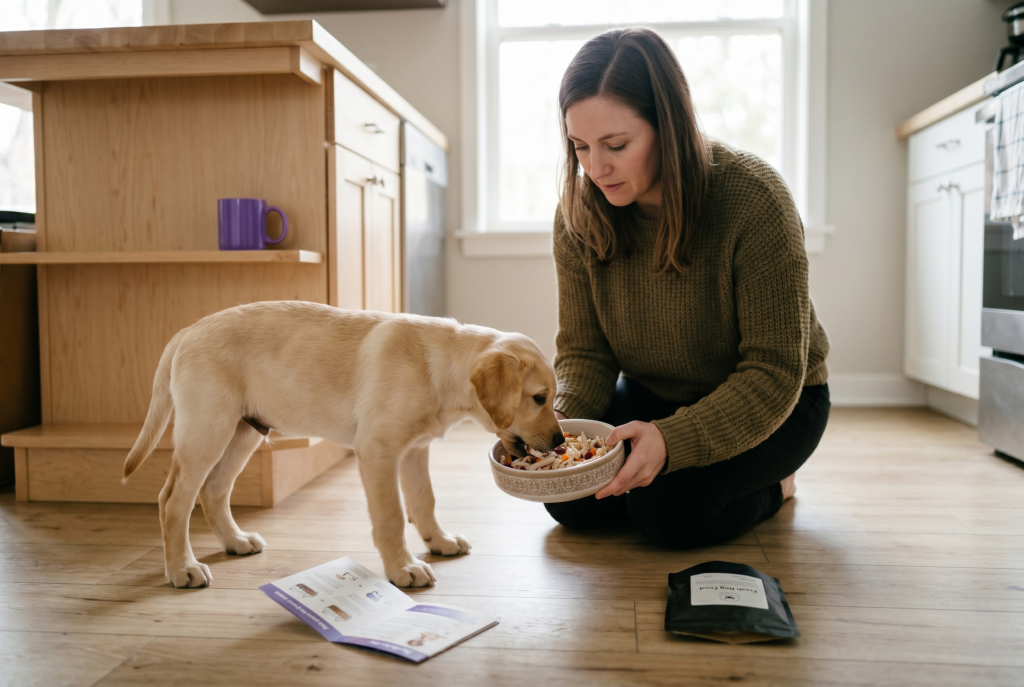
Fresh, growth-stage formulas portioned to a puppy’s size make the transition to solid food easier to manage at home.
Best puppy food picks by breed size
The fresh delivery services below each carry AAFCO growth-appropriate formulas and portion meals to a puppy’s weight, age, and projected adult size. We compared them on growth compliance, how they handle size-based portioning, and format. Pricing varies by your puppy’s weight and plan, so treat the cost column as directional rather than fixed.
| Brand | Best fit by size | Format | Growth standard | Portioning |
|---|---|---|---|---|
| Open Farm | Small to large, with traceable sourcing | Fresh, plus dry and freeze-dried lines | AAFCO growth / all life stages | By weight and life stage |
| Ollie | Small to medium, calorie-tailored plans | Fresh, gently cooked | AAFCO growth / all life stages | Custom plan to puppy profile |
| PetPlate | Small to medium, multi-dog households | Fresh, pre-portioned packs | Vet-formulated to AAFCO standards | Pre-portioned by plan |
*Confirm the specific formula’s label statement for large-breed growth (70+ lbs adult weight) before feeding a large or giant breed puppy.
Best for: owners who prioritize ingredient transparency. Open Farm’s draw is traceable, ethically sourced ingredients across fresh, dry, and freeze-dried lines, which gives you room to keep the same brand as your puppy grows. Our Open Farm review covers sourcing, formats, and how its pricing lands against the rest of the category.
Best for: small and medium puppies on a tailored plan. Ollie builds meals around your puppy’s weight, age, and activity, which simplifies the portioning math during the months when calorie needs change fastest. The full breakdown of plans and cost is in our Ollie review.
Best for: households that want pre-portioned convenience. PetPlate’s meals are formulated by veterinary nutritionists and arrive in ready-to-serve containers, which removes guesswork in homes feeding more than one dog. See our PetPlate review for plan tiers and how its formulas are built.
Compare Options
Find the Right Food for Your Growing Puppy
Compare growth-stage formulas side by side, with AAFCO compliance, ingredients, and pricing reviewed and ranked in one place.
When to transition your puppy to adult food
Timing the switch to adult food depends on size, not a fixed birthday. Small breeds often reach maturity around 9 to 12 months, medium breeds around 12 months, and large or giant breeds can keep growing until 18 to 24 months. Switching a large-breed puppy too early cuts off the controlled-growth nutrition it still needs.
Make the change gradually over about a week, mixing increasing amounts of the new food into the old. A puppy with a sensitive digestive system may need a slower transition, and our guide to dog food for sensitive stomachs covers how to read the signs and adjust. If digestive upset persists beyond the transition, that is a veterinary question.
How to choose: match the formula to your puppy’s adult size
The decision comes down to three checks, in order. First, confirm the AAFCO growth statement on the label, because that is the floor every puppy food must clear. Second, if your puppy will mature above 70 pounds, require the large-size growth wording so calcium stays within the safe range. Third, look for a named DHA source and portioning that adjusts as your puppy grows.
If you want the same brand to carry your dog from puppy to adult, Open Farm’s multi-format range fits. If you want the portioning handled for you, Ollie and PetPlate both build plans around the dog’s profile. Whichever you choose, the label statement is the non-negotiable, and a puppy with a diagnosed health condition should be fed on a veterinarian’s guidance rather than a guide’s.
Recommended
Start With a Growth-Stage Fresh Plan
See how the leading fresh puppy formulas compare on nutrition, sourcing, and price before you commit.
Frequently asked questions
What is the best food for a puppy?
The best puppy food is any formula labeled complete and balanced for growth under AAFCO standards, with a named DHA source and calcium controlled for your puppy’s adult size. Among the fresh delivery services we compared, Open Farm, Ollie, and PetPlate all meet AAFCO growth requirements and portion meals by weight. For a puppy expected to exceed 70 pounds as an adult, choose a formula stating it is for growth including large size dogs.
How is puppy food different from adult dog food?
Puppy food carries more protein, more fat for calories, and tighter mineral specifications than adult food, because puppies build new tissue rapidly. It also includes DHA for brain and eye development. An adult formula does not meet these growth requirements, and adding supplements to an adult food does not safely replicate a growth formula’s balance.
Why does DHA matter in puppy food?
DHA is an omega-3 fatty acid essential for brain and retinal development in puppies. Veterinary nutrition sources, including VCA Animal Hospitals, note that every puppy needs a source of EPA and DHA, and research links DHA to better trainability and learning. A puppy food that names a DHA source is meeting a need the basic AAFCO statement alone does not guarantee.
Do large-breed puppies need different food?
Yes. AAFCO defines a large-size dog as one expected to reach 70 pounds or more as an adult and sets a stricter calcium maximum of 1.8% on a dry matter basis for foods fed to these puppies. Excess calcium during rapid growth can cause permanent developmental orthopedic diseases. Look for a label stating the food is formulated for growth including large size dogs.
When should I switch my puppy to adult food?
It depends on size. Small breeds typically transition around 9 to 12 months, medium breeds around 12 months, and large or giant breeds at 18 to 24 months. Switch gradually over about a week by mixing increasing amounts of adult food into the puppy food, and slow the transition if your puppy shows digestive upset.
 Dr. Marty Pets
 Evermore Pet Food
 Just Food for Dogs
 Maev
Maev Ollie
Ollie Open Farm
 PetPlate
 Raised Right
 Raw Paws Pet Food
 The Honest Kitchen
 The Pets Table
 We Feed Raw