The Quick Answer
The cheapest fresh dog food usually costs $2 to $4 per day for a small dog and climbs with weight, because fresh meals are priced by your dog’s calorie needs. Lightly cooked and gently processed brands like Raised Right and Open Farm tend to land at the lower end of the fresh category. The single most effective way to cut the bill is the topper strategy: use fresh food as a mix-in over kibble instead of a full replacement, which can lower fresh-food spending by half or more while still upgrading the bowl.
Fresh dog food carries a reputation for being expensive, and for full-replacement feeding of a large dog, that reputation is earned. But the price gap narrows sharply once you account for dog size, feeding method, and the trial discounts most delivery services run. For a small dog fed full portions, fresh meals can cost as little as $2 to $3 per day. For an owner who uses fresh food as a topper rather than the entire diet, the daily cost can fall below that.
This guide breaks down what actually drives fresh-food pricing, compares the budget-friendly end of the category, and explains the topper approach that most cost articles skip. The goal is a concrete number you can plan around, not a vague “it depends.”
Why fresh dog food looks expensive, and when it isn’t
Fresh dog food is priced by calories, not by the bag. Delivery services calculate your dog’s daily energy requirement from weight, age, breed, and activity level, then portion meals to match. That pricing model is why a 12-pound terrier and a 75-pound retriever pay very different amounts for the same brand. The retriever eats roughly six times the food, so it costs roughly six times as much.
Across the category, fresh meals run about $2 to $12 per day depending on size, with medium dogs commonly landing between $5 and $10 per day for full-portion feeding. Kibble, by comparison, runs closer to $1 to $3 per day for a medium dog. That two-to-five-times multiplier is real, and it is the source of the “fresh food is expensive” perception.
The multiplier shrinks at the small end and when fresh food is not the entire diet. A small dog on full fresh portions can cost less per day than a medium dog on premium kibble. And an owner who treats fresh food as a supplement rather than a sole diet pays for a fraction of the calories. The price you see on a brand’s homepage assumes full-portion feeding for an average dog, which is the most expensive way to buy it.
Fresh dog food cost per day by dog size
The table below shows approximate full-portion daily costs for budget-friendly fresh brands across three dog sizes. These are planning estimates. Every delivery service generates an exact quote during signup based on your dog’s profile, and intro discounts (covered below) lower the first order substantially.
| Brand | Format | Small dog (~15 lb) | Medium dog (~40 lb) | Large dog (~70 lb) |
|---|---|---|---|---|
| Raised Right | Lightly cooked, low-carb | ~$3–$5/day | ~$7–$11/day | ~$12–$18/day |
| Open Farm | Gently cooked, dry, raw, toppers | ~$2–$4/day | ~$5–$9/day | ~$9–$15/day |
| The Honest Kitchen | Dehydrated (you add water) | ~$2–$4/day | ~$5–$8/day | ~$8–$13/day |
| Premium fresh delivery (category average) | Fully cooked, pre-portioned | ~$3–$5/day | ~$7–$10/day | ~$12–$20+/day |
*Estimates for full-portion feeding. Dehydrated formats like The Honest Kitchen often read as cheaper per day because you rehydrate a concentrated product at home, shifting cost away from shipping water weight. Actual cost depends on recipe, protein, and your dog’s exact calorie needs.
Two patterns stand out. First, dehydrated food is consistently among the lowest cost per day, because you pay for dry weight and add the water yourself. Second, the lower-carb and gently cooked brands stay competitive with premium delivery while using human-grade ingredients. If raw-leaning, low-carb formulas fit your dog, the Raised Right review covers recipe options, protein choices, and how its pricing compares within the fresh category.
The topper strategy: the biggest lever on fresh-food cost
The most effective way to make fresh dog food affordable is to stop treating it as all-or-nothing. Using fresh food as a topper, a portion mixed over a base of quality kibble, captures much of the palatability and ingredient upgrade at a fraction of the full-diet price. Cut the fresh portion to half, and you roughly halve the fresh-food cost.
This works because fresh meals are sold as complete diets, but they do not have to be fed that way. Under U.S. labeling rules, the U.S. Food and Drug Administration (FDA), the federal agency that oversees pet food safety, distinguishes between food labeled “complete and balanced” for sole-diet feeding and products meant for “intermittent or supplemental feeding only.” A complete fresh meal can be fed as a topper without nutritional risk, because the kibble base underneath is already carrying the complete-and-balanced load. You can read the FDA’s explanation of the complete and balanced standard for the exact label language to look for.
Several budget-friendly brands sell dedicated topper or mixer products at a lower price point than full meal plans, which makes the math even better. Open Farm, for example, offers freeze-dried and gently cooked products that work well as mixers over a dry base. The Open Farm review details its product lines, ingredient sourcing, and where the toppers sit on price.
Compare Options
Find the Fresh Dog Food That Fits Your Budget
See how budget-friendly and premium fresh brands stack up on price, ingredients, and value in one place.
More ways to lower the cost of fresh dog food
Beyond the topper approach, a few practical moves bring the price down without dropping ingredient quality.
- Choose a dehydrated or air-dried format. Because you rehydrate at home, you avoid paying to ship water weight, which lowers cost per serving and storage demands.
- Pick a single, lower-cost protein. Beef, chicken, and turkey recipes are typically cheaper than novel proteins like duck, venison, or lamb.
- Match portions to your dog’s ideal weight, not current weight. Overfeeding is one of the most common reasons fresh-food bills run high. The delivery service’s calculator targets a healthy weight if you enter it.
- Use subscription scheduling. Most services discount recurring deliveries versus one-time orders, and you can adjust frequency to avoid overstock.
For a deeper look at how the major services price plans by dog size and how their subscriptions compare on flexibility and cancellation terms, see our breakdown of fresh dog food delivery services. If you are weighing two specific premium options against each other, the Ollie vs. PetPlate comparison walks through cost and value differences in detail.
Promo and trial offers worth using
Nearly every fresh dog food delivery service runs an introductory discount, commonly 50% off the first box or a comparable starter offer. These are designed to offset the cost of trying a brand before you commit to a recurring plan, and they meaningfully lower the real cost of the first few weeks.
Two notes keep the savings honest. First, the headline discount applies only to the trial order, so calculate the ongoing per-day cost from the table above, not the promo price. Second, fresh diets should be introduced gradually over 7 to 10 days, so the trial box is a genuine test of how your dog tolerates the food, not just a price play. If your dog has a sensitive stomach or a medical condition, talk to your veterinarian before switching diets.
How to choose the cheapest fresh option for your dog
Start with your feeding goal. If you want a full fresh diet, a small or medium dog is where the economics work best, and a dehydrated or gently cooked, single-protein recipe will be the lowest cost per day. If you have a large dog or a tight budget, the topper strategy over quality kibble gives you most of the upgrade for a fraction of the spend. Either way, run the brand’s calculator with your dog’s ideal weight to get a real number, and use the intro discount to test tolerance before locking into a subscription. Owners who want one place to compare budget and premium brands side by side can start with the complete fresh dog food guide, which covers every format and how they trade off on price and nutrition.
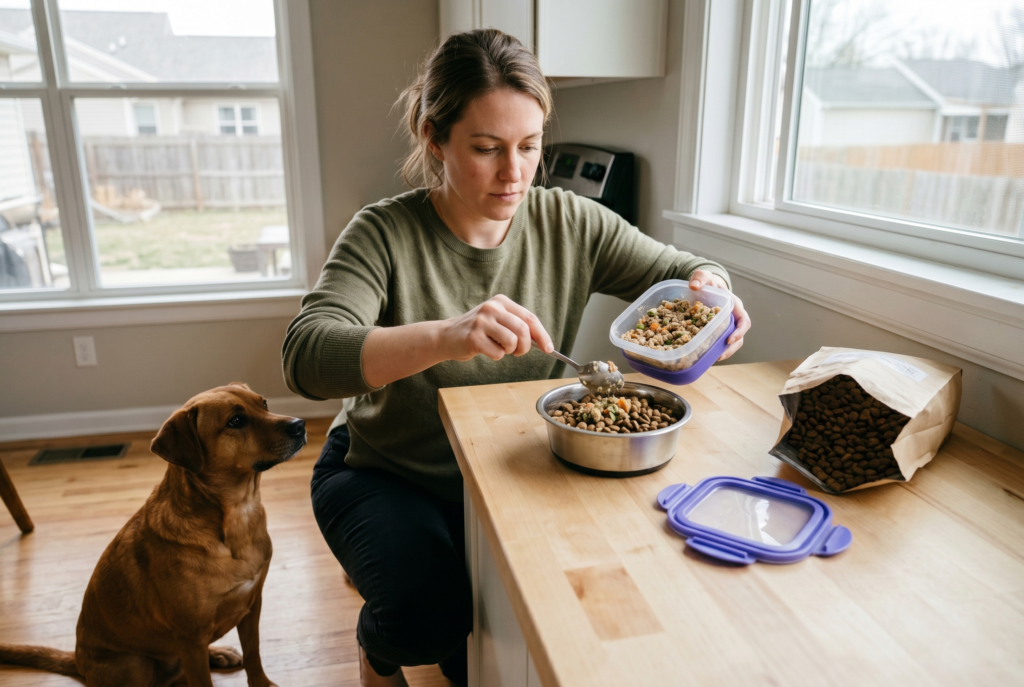
Using fresh food as a topper over kibble is the most effective way to lower the cost of feeding fresh.
Frequently asked questions
What is the cheapest fresh dog food brand?
Among budget-friendly fresh brands, dehydrated options like The Honest Kitchen and gently cooked brands like Open Farm tend to have the lowest cost per day, often around $2 to $4 for a small dog. Dehydrated food reads as cheaper because you rehydrate a concentrated product at home rather than paying to ship water weight. Raised Right is also competitive at the lower-carb end of the category. Exact pricing depends on your dog’s size, the protein you choose, and whether you feed full portions or use the food as a topper.
Is fresh dog food worth the extra cost over kibble?
Fresh food uses minimally processed, often human-grade ingredients with higher moisture and digestibility than most kibble, which is the case for the higher price. Whether that is worth it depends on your dog and your budget. Many AAFCO-compliant kibbles meet the same complete-and-balanced nutritional standard at a lower price, so the upgrade is about ingredient quality and palatability, not basic adequacy. The topper approach lets budget-conscious owners capture much of the benefit without paying full fresh-diet prices.
How much does fresh dog food cost per month?
For full-portion feeding, expect roughly $60 to $150 per month for a medium dog, less for a small dog and more for a large one. Budget-friendly brands like Raised Right and Open Farm tend to land at the lower end of that range. Using fresh food as a topper over kibble, rather than as the entire diet, can cut the monthly cost in half or more.
Can I feed fresh dog food as a topper to save money?
Yes. Mixing a smaller portion of fresh food over a base of complete-and-balanced kibble is the most effective way to lower fresh-food cost. The kibble carries the full nutritional load, so the fresh portion can be reduced without nutritional risk. The FDA’s labeling rules distinguish complete diets from supplemental feeding, and a complete fresh meal can safely be used as a mix-in over a complete base. For dogs with medical conditions, confirm any diet change with your veterinarian first.